
Advanced Certificate in Structural Bioinformatics: Protein Modeling and Analysis
Master protein modeling and analysis to drive breakthroughs in drug discovery and structural biology with this advanced certificate.
Advanced Certificate in Structural Bioinformatics: Protein Modeling and Analysis
Programme Summary
The Advanced Certificate in Structural Bioinformatics: Protein Modeling and Analysis targets bioinformaticians, structural biologists, and pharmaceutical researchers seeking to master computational techniques for deciphering protein architecture. This rigorous curriculum examines the physical principles governing protein folding, stability, and function through advanced molecular dynamics simulations and quantum mechanical calculations. Participants engage with high-performance computing environments to process large-scale genomic datasets and predict three-dimensional structures from amino acid sequences. The programme integrates theoretical frameworks with practical application, ensuring graduates can navigate the complex landscape of modern structural biology with confidence and precision.
Learners acquire proficiency in leading software suites such as Rosetta, GROMACS, and PyMOL for de novo protein design and ligand docking studies. Students develop the ability to critically evaluate experimental data from X-ray crystallography and cryo-electron microscopy against computational predictions. The course emphasises the statistical validation of models using Z-scores and root-mean-square deviation metrics to ensure structural accuracy. Participants also master the integration of machine learning algorithms to enhance the speed and reliability of homology modelling and ab initio structure prediction pipelines.
Completion of this certificate positions graduates for senior roles in drug discovery, enzyme engineering, and academic research institutions. Professionals leverage these specialised skills to accelerate lead compound identification and optimise binding affinities in therapeutic development. The credential demonstrates mastery of cutting-edge bioinformatic tools, distinguishing candidates in a competitive global job market. Employers value the ability to bridge the gap between raw biological data and actionable structural insights
Learning Outcomes
The Advanced Certificate in Structural Bioinformatics: Protein Modeling and Analysis represents a pivotal investment for professionals seeking to master the computational intricacies of molecular architecture. This rigorous programme bridges the gap between theoretical biochemistry and practical data science, equipping participants with the sophisticated tools required to decipher the three-dimensional structures that govern biological function. In an era where structural biology drives pharmaceutical innovation, understanding protein dynamics is no longer optional; it is essential.
Curriculum depth is paramount, covering critical areas such as homology modelling, molecular dynamics simulations, and docking studies. Participants engage extensively with industry-standard software suites, learning to interpret complex datasets and validate structural predictions with statistical rigour. The course emphasises the integration of machine learning algorithms into structural prediction workflows, reflecting the latest advancements in the field. By dissecting real-world case studies, learners develop the analytical acumen necessary to troubleshoot modelling errors and optimise computational parameters for high-throughput environments.
Graduates emerge capable of applying these specialised skills to accelerate drug discovery pipelines, design novel enzymes, and analyse pathogenic mechanisms. Employers value this expertise for its direct impact on reducing research timelines and enhancing the precision of therapeutic targets. Career prospects are robust, with opportunities spanning leading pharmaceutical corporations, academic research institutes, and specialised biotechnology startups. Roles often include positions as Structural Bioinformaticians, Computational Biologists, or R&D Scientists. This certificate not only enhances technical proficiency but also signals a commitment to excellence in a rapidly evolving scientific landscape. It provides a competitive
Programme Features
Industry-Aligned Curriculum
Developed with industry leaders for job-ready skills
Globally Recognised Certificate
Recognised by employers across 180+ countries
Flexible Online Learning
Study at your own pace with lifetime access
Instant Access
Start learning immediately, no application process
Constantly Updated Content
Latest industry trends and best practices
Career Advancement
87% report measurable career progression within 6 months
Course Modules
- Protein Structure Fundamentals: Reviews primary, secondary, tertiary, and quaternary structures and their biological significance.: Sequence Analysis and Homology Modeling: Teaches alignment algorithms and comparative modeling techniques to predict structures from known templates.
- Ab Initio and Free-Modeling Methods: Explores physics-based and fragment assembly approaches for predicting structures without homologous templates.: Molecular Dynamics and Flexibility Analysis: Introduces simulation techniques to study protein dynamics, stability, and conformational changes.
- Protein-Protein and Protein-Ligand Docking: Covers computational methods for predicting binding affinities and interaction interfaces in complexes.: Validation and Quality Assessment: Details metrics and tools for evaluating the accuracy and reliability of predicted protein models.
What's Included in This Programme
Here is what you get when you enrol with LSBR London
Programme Facts
Audience: Life scientists seeking advanced computational expertise.
Prerequisites: Basic molecular biology and programming proficiency.
Outcomes: Mastery of protein modelling and structural analysis.
Ready to advance your career?
Join thousands of professionals who have transformed their careers with LSBR London. Enrol today and start learning immediately.
Why Study This Programme
Securing the Advanced Certificate in Structural Bioinformatics: Protein Modeling and Analysis represents a strategic investment for professionals seeking to elevate their standing within the competitive life sciences sector. This programme bridges the critical gap between theoretical biochemistry and practical computational application, offering distinct advantages for career progression.
The curriculum delivers mastery over state-of-the-art modelling techniques, including AlphaFold and Rosetta. Participants gain the ability to predict protein structures with high accuracy, a skill that is increasingly indispensable in modern drug discovery pipelines. This technical proficiency allows practitioners to contribute directly to early-stage target identification, significantly enhancing their value to pharmaceutical and biotechnology employers.
Learners develop robust data analysis capabilities by engaging with complex structural datasets. The course emphasises rigorous validation methods, ensuring that models are not only generated but also critically assessed for biological relevance. This analytical rigour fosters a deeper understanding of structure-function relationships, enabling professionals to interpret experimental data more effectively and communicate findings with greater scientific authority.
The certification provides a recognised credential that distinguishes candidates in a crowded job market. Employers actively seek individuals who possess both domain knowledge and computational expertise. Holding this certificate signals a commitment to continuous professional development and technical excellence, thereby accelerating promotion trajectories and opening doors to senior roles in R&D departments.
Graduates join a network of industry experts and alumni, facilitating valuable professional connections. These relationships often lead to collaborative opportunities and insights into emerging industry trends, further solidifying one’s position as a forward-thinking
"This programme gave me the confidence and credentials to secure a senior role. Highly recommend LSBR London."
— Sarah M., United Kingdom
Course Brochure
Download our comprehensive course brochure with all details
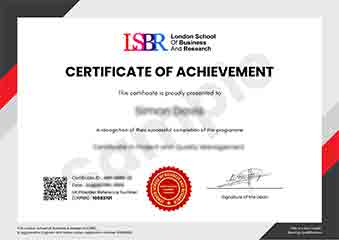
Sample Certificate
Preview the certificate you'll receive upon successful completion of this program.
Get Course Info
Receive the full course guide, pricing details, and enrolment instructions directly in your inbox.
Check your inbox!
Course details have been sent to your email.
Get Your Employer to Sponsor This Programme
Many employers offer professional development budgets. We make it easy for your company to invest in your growth with corporate invoicing and bulk enrolment options.
Email Template for Your Manager
Dear [Manager's Name],
I would like to request sponsorship for the Advanced Certificate in Structural Bioinformatics: Protein Modeling and Analysis programme offered by LSBR London - Executive Education.
The programme costs $149 (one-time) and can be completed in 3-4 weeks alongside my regular duties.
Key benefits to our team:
- Immediately applicable skills
- Globally recognised certificate
- Corporate invoice available
Best regards,
[Your Name]
What Our Students Say
Hear from our students about their experience with the Advanced Certificate in Structural Bioinformatics: Protein Modeling and Analysis at LSBR London - Executive Education.
Charlotte Williams
United Kingdom"The deep dive into homology modeling and molecular dynamics simulations provided me with a robust understanding of protein structure-function relationships. Mastering these computational tools has significantly boosted my confidence in analyzing complex biological data for my research projects."
Charlotte Williams
United Kingdom"Mastering protein structure prediction and molecular dynamics simulations with industry-standard tools, bridging the gap between theoretical bioinformatics and real-world drug discovery challenges. This advanced training directly accelerated my transition into a senior computational biology role by equipping me with the precise analytical skills needed to interpret complex structural data."
Ruby McKenzie
Australia"The logical progression from foundational principles to complex protein modeling techniques made the advanced concepts surprisingly accessible and intuitively clear. This comprehensive structure provided me with immediate, practical skills that I could directly apply to my current research projects, significantly accelerating my professional development in structural bioinformatics."
Your Certification Journey
Four simple steps from enrolment to your globally recognised certificate
Enrol Online
Complete your enrolment in under 2 minutes with secure checkout
Start Learning
Get instant access to all course materials and start at your own pace
Complete Modules
Work through the curriculum with expert support available throughout
Get Certified
Receive your LSBR London certificate recognised across 180+ countries
LSBR London by the Numbers
Join a global community of professionals advancing their careers
Students Enrolled
Countries Represented
Average Rating
Career Progression