
Executive Development Programme in The Math of Cultural Heritage Sites
This programme equips leaders with the strategic insights and quantitative skills to protect and manage cultural heritage sites sustainably.
Executive Development Programme in The Math of Cultural Heritage Sites
Programme Summary
The Executive Development Programme in The Math of Cultural Heritage Sites is a comprehensive, eight-month initiative designed for senior leaders and professionals in the cultural heritage sector, as well as those in related fields such as tourism, architecture, and conservation. The programme delves into the intersection of mathematics, data science, and cultural heritage management, equipping participants with advanced analytical tools to preserve and enhance heritage sites.
Participants will develop a robust understanding of geometric modeling, spatial analysis, and predictive analytics, enabling them to optimize resource allocation, predict visitor flows, and implement sustainable conservation strategies. The programme integrates case studies and real-world projects, allowing learners to apply mathematical models to complex heritage site challenges, from structural integrity assessments to visitor experience optimization. By the end of the programme, participants will be able to lead data-driven decision-making processes that not only preserve cultural heritage but also enhance visitor engagement and satisfaction.
The programme has a significant career impact, preparing participants to assume leadership roles in heritage institutions that require a balance of cultural sensitivity and mathematical innovation. Graduates will be well-positioned to drive the digitization of cultural heritage management, leading to more effective conservation practices and enhanced public engagement with historical and cultural sites.
Learning Outcomes
The Executive Development Programme in The Math of Cultural Heritage Sites is a pioneering initiative designed for professionals and executives passionate about preserving and enhancing cultural heritage through quantitative methods. This program leverages advanced mathematics and computational tools to analyze and protect historical sites, offering a unique blend of theoretical knowledge and practical application.
Key topics include the use of Geographic Information Systems (GIS), statistical analysis, and machine learning algorithms to assess site conditions, predict deterioration, and optimize conservation strategies. Participants will also explore the intersection of cultural heritage with urban planning, tourism, and sustainable development, gaining insights into how data-driven approaches can inform policy and practice.
Graduates of this program will be equipped to lead projects that integrate mathematical models with cultural heritage management, ensuring that preservation efforts are both effective and sustainable. They will have the skills to collaborate across disciplines, from archaeologists and historians to urban planners and policymakers, to develop innovative solutions for the protection and enhancement of cultural sites.
This program opens up a range of career opportunities, including roles in cultural heritage conservation, urban planning, policy development, and research. Graduates will be well-prepared to take on leadership positions in cultural institutions, government agencies, and non-profit organizations, contributing to the global effort to safeguard our shared cultural heritage for future generations.
Programme Features
Industry-Aligned Curriculum
Developed with industry leaders for job-ready skills
Globally Recognised Certificate
Recognised by employers across 180+ countries
Flexible Online Learning
Study at your own pace with lifetime access
Instant Access
Start learning immediately, no application process
Constantly Updated Content
Latest industry trends and best practices
Career Advancement
87% report measurable career progression within 6 months
Course Modules
- Foundational Concepts: Covers the core principles and key terminology.: Historical Context: Examines the historical significance and evolution of cultural heritage sites.
- Mathematical Models: Develops understanding of mathematical tools and models for site analysis.: Data Collection: Teaches methods for gathering and managing data related to heritage sites.
- Case Studies: Analyzes real-world examples of mathematical applications in heritage conservation.: Future Insights: Explores emerging trends and future directions in the math of cultural heritage preservation.
What's Included in This Programme
Here is what you get when you enrol with LSBR London
Programme Facts
Audience: Cultural heritage professionals, managers
Prerequisites: Basic knowledge of cultural heritage
Outcomes: Enhanced strategic thinking, improved data analysis skills
Ready to advance your career?
Join thousands of professionals who have transformed their careers with LSBR London. Enrol today and start learning immediately.
Why Study This Programme
Enhance Strategic Decision-Making: Professionals in the heritage sector can significantly benefit from understanding the quantitative aspects of cultural heritage sites. This program equips them with the skills to analyze visitor data, predict trends, and make informed decisions about resource allocation and conservation efforts. For instance, learning to use predictive analytics can help in planning maintenance schedules that minimize disruption to visitors while ensuring the preservation of cultural sites.
Foster Interdisciplinary Collaboration: The program bridges the gap between cultural and quantitative disciplines, promoting a collaborative approach among professionals from diverse backgrounds. By integrating knowledge from fields such as economics, mathematics, and cultural studies, participants can develop a more holistic understanding of heritage management. This collaborative mindset is crucial for addressing complex issues that require input from multiple stakeholders.
Improve Financial Sustainability: Understanding the financial implications of cultural heritage management is crucial for long-term sustainability. The program teaches professionals how to develop and manage budgets, secure funding, and evaluate the economic impact of heritage sites. For example, learning to calculate the return on investment for conservation projects can help in justifying the allocation of limited resources and securing financial support from various sources.
Strengthen Marketing and Outreach Strategies: With a deeper understanding of data analytics, professionals can create more effective marketing and outreach strategies. By analyzing visitor demographics, preferences, and behaviors, they can tailor marketing campaigns to attract a broader audience and enhance visitor experience. This data-driven approach not only boosts visitor numbers but also increases engagement and support for heritage sites.
"This programme gave me the confidence and credentials to secure a senior role. Highly recommend LSBR London."
— Sarah M., United Kingdom
Course Brochure
Download our comprehensive course brochure with all details
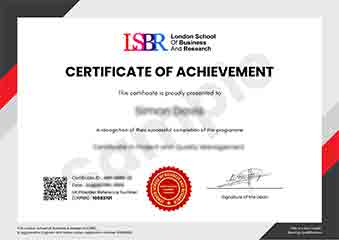
Sample Certificate
Preview the certificate you'll receive upon successful completion of this program.
Get Course Info
Receive the full course guide, pricing details, and enrolment instructions directly in your inbox.
Check your inbox!
Course details have been sent to your email.
Get Your Employer to Sponsor This Programme
Many employers offer professional development budgets. We make it easy for your company to invest in your growth with corporate invoicing and bulk enrolment options.
Email Template for Your Manager
Dear [Manager's Name],
I would like to request sponsorship for the Executive Development Programme in The Math of Cultural Heritage Sites programme offered by LSBR London - Executive Education.
The programme costs $199 (one-time) and can be completed in 3-4 weeks alongside my regular duties.
Key benefits to our team:
- Immediately applicable skills
- Globally recognised certificate
- Corporate invoice available
Best regards,
[Your Name]
What Our Students Say
Hear from our students about their experience with the Executive Development Programme in The Math of Cultural Heritage Sites at LSBR London - Executive Education.
Oliver Davies
United Kingdom"The course provided a deep dive into the mathematical principles underlying cultural heritage sites, which was incredibly enlightening. I gained practical skills in analyzing and preserving historical structures, which I believe will be invaluable in my future career in cultural preservation."
Ashley Rodriguez
United States"The Executive Development Programme in The Math of Cultural Heritage Sites has significantly enhanced my ability to analyze and preserve historical sites using modern mathematical techniques, making my work more industry-relevant and opening up new career opportunities in heritage management and conservation."
Jia Li Lim
Singapore"The course structure was meticulously organized, providing a clear path from foundational concepts to advanced applications in the preservation of cultural heritage sites. The knowledge gained has been invaluable, offering deep insights into the mathematical principles that underpin the conservation efforts of these sites, enhancing my professional growth significantly."
Your Certification Journey
Four simple steps from enrolment to your globally recognised certificate
Enrol Online
Complete your enrolment in under 2 minutes with secure checkout
Start Learning
Get instant access to all course materials and start at your own pace
Complete Modules
Work through the curriculum with expert support available throughout
Get Certified
Receive your LSBR London certificate recognised across 180+ countries
LSBR London by the Numbers
Join a global community of professionals advancing their careers
Students Enrolled
Countries Represented
Average Rating
Career Progression