
Postgraduate Certificate in Astronomy Data Visualization with Fractals
Master fractal techniques to transform complex astronomical data into compelling visual insights, enhancing research communication and analytical precision.
Postgraduate Certificate in Astronomy Data Visualization with Fractals
Programme Summary
The Postgraduate Certificate in Astronomy Data Visualization with Fractals targets astrophysicists, data scientists, and academic researchers seeking to master complex visual representations of celestial phenomena. This intensive curriculum integrates advanced fractal geometry principles with high-volume astronomical datasets, enabling participants to decode non-linear structures inherent in cosmic microwave background radiation and galactic distribution maps. Students engage directly with proprietary software tools designed to render multi-dimensional spatial data into interpretable two-dimensional formats, bridging the gap between raw observational metrics and intuitive graphical insights. The programme assumes prior proficiency in Python and basic statistical analysis, ensuring that all coursework focuses exclusively on advanced visualization techniques rather than foundational coding skills.
Learners will acquire specialized competencies in generating self-similar fractal models that accurately reflect the hierarchical nature of large-scale cosmic structures. Participants master the application of Mandelbrot and Julia sets to simulate turbulence in interstellar media, thereby enhancing the fidelity of simulation outputs for peer-reviewed publication. The course rigorously trains students in colour mapping strategies that preserve data integrity while maximizing visual contrast for both scientific audiences and public outreach materials. Graduates develop the ability to critique existing visualization methodologies, identifying biases introduced by linear scaling in non-Euclidean spaces. This technical mastery ensures that learners can independently produce publication-quality figures that withstand rigorous statistical scrutiny by international journal editors.
Completion of this certificate significantly elevates employability within competitive sectors such as space agency research divisions, advanced analytics firms, and university observatories. Employers increasingly prioritize candidates who
Learning Outcomes
This rigorous postgraduate certificate equips aspiring data scientists and astrophysicists with the advanced computational techniques necessary to decode complex cosmic structures. By integrating the mathematical elegance of fractal geometry with modern astronomical datasets, the curriculum bridges the gap between theoretical mathematics and practical visual analytics. Participants engage deeply with non-linear dynamics, exploring how self-similar patterns manifest in galactic filaments, nebulae, and large-scale cosmic web structures.
The programme emphasises hands-on proficiency with industry-standard Python libraries, including Matplotlib, Plotly, and custom fractal generation algorithms. Students learn to transform raw telemetry from space telescopes into intuitive, high-fidelity visual narratives. This skill set is indispensable for researchers seeking to identify subtle anomalies in massive datasets that traditional linear methods often overlook. The syllabus covers dimensional analysis, noise reduction in multi-wavelength observations, and the ethical considerations of data representation in public science communication.
Graduates emerge as specialists capable of translating abstract mathematical concepts into compelling visual evidence. This expertise is highly sought after by leading research institutions, such as the European Southern Observatory and NASA’s Jet Propulsion Laboratory, where clear visualisation drives discovery. Alumni frequently secure roles in scientific visualisation, data analytics, and research support within both academia and the burgeoning space technology sector.
Beyond traditional astronomy, the analytical frameworks acquired here apply directly to fields requiring complex pattern recognition, including financial modelling, climate science, and biomedical imaging. The certificate provides a distinct competitive advantage for professionals aiming to lead data
Programme Features
Industry-Aligned Curriculum
Developed with industry leaders for job-ready skills
Globally Recognised Certificate
Recognised by employers across 180+ countries
Flexible Online Learning
Study at your own pace with lifetime access
Instant Access
Start learning immediately, no application process
Constantly Updated Content
Latest industry trends and best practices
Career Advancement
87% report measurable career progression within 6 months
Course Modules
- Introduction to Fractal Geometry: Explores the mathematical foundations of self-similarity and scaling laws relevant to astronomical structures.: Computational Techniques in Fractal Analysis: Teaches algorithmic methods for calculating fractal dimensions and generating synthetic fractal models.
- Data Acquisition and Preprocessing: Covers strategies for cleaning, calibrating, and organizing large-scale astronomical datasets for visualization.: Visualizing Cosmic Structures: Applies fractal rendering techniques to map galaxy distributions, nebulae, and dark matter networks.
- Interactive Visualization Tools: Introduces software frameworks for creating dynamic, user-interactive fractal-based astronomical interfaces.: Ethical Representation and Interpretation: Examines biases in data visualization and best practices for accurately communicating complex fractal data.
What's Included in This Programme
Here is what you get when you enrol with LSBR London
Programme Facts
Audience: Senior professionals seeking advanced data analytics expertise.
Prerequisites: Master’s degree in physics or computer science.
Outcomes: Mastery of fractal-based astronomical visualisation techniques.
Ready to advance your career?
Join thousands of professionals who have transformed their careers with LSBR London. Enrol today and start learning immediately.
Why Study This Programme
Pursuing a Postgraduate Certificate in Astronomy Data Visualization with Fractals offers distinct strategic advantages for specialists seeking to elevate their analytical capabilities. This programme bridges the gap between theoretical astrophysics and practical data interpretation, ensuring graduates remain at the forefront of scientific communication.
Mastery of complex visual algorithms enhances professional credibility. By learning to apply fractal geometry to astronomical datasets, candidates develop a unique skill set that distinguishes them in competitive academic and industrial research sectors. This expertise allows for the precise representation of non-linear cosmic structures, thereby improving the accuracy of scientific presentations and peer-reviewed publications.
The curriculum fosters advanced computational proficiency. Participants engage with cutting-edge software tools designed for high-dimensional data rendering. Such technical competence is highly transferable, enabling professionals to adapt quickly to evolving technological landscapes within space agencies or data-intensive technology firms. This adaptability ensures long-term employability and positions individuals as leaders in digital transformation initiatives.
Enhanced decision-making capabilities arise from improved data clarity. Visualising intricate astronomical patterns through fractal lenses simplifies complex information for stakeholders. This skill is invaluable for securing funding, as clear visual narratives persuade investors and policy-makers more effectively than raw data alone. Professionals who can translate abstract concepts into compelling visual stories, driving strategic alignment and resource allocation.
Networking opportunities within a specialised cohort provide invaluable industry connections. Engaging with leading experts and peers creates a robust professional network. These relationships often lead to collaborative research projects, joint ventures, and exclusive
"This programme gave me the confidence and credentials to secure a senior role. Highly recommend LSBR London."
— Sarah M., United Kingdom
Course Brochure
Download our comprehensive course brochure with all details
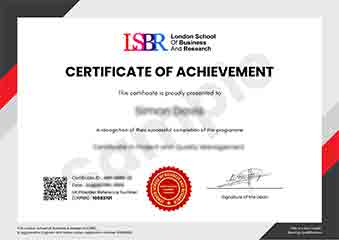
Sample Certificate
Preview the certificate you'll receive upon successful completion of this program.
Get Course Info
Receive the full course guide, pricing details, and enrolment instructions directly in your inbox.
Check your inbox!
Course details have been sent to your email.
Get Your Employer to Sponsor This Programme
Many employers offer professional development budgets. We make it easy for your company to invest in your growth with corporate invoicing and bulk enrolment options.
Email Template for Your Manager
Dear [Manager's Name],
I would like to request sponsorship for the Postgraduate Certificate in Astronomy Data Visualization with Fractals programme offered by LSBR London - Executive Education.
The programme costs $149 (one-time) and can be completed in 3-4 weeks alongside my regular duties.
Key benefits to our team:
- Immediately applicable skills
- Globally recognised certificate
- Corporate invoice available
Best regards,
[Your Name]
What Our Students Say
Hear from our students about their experience with the Postgraduate Certificate in Astronomy Data Visualization with Fractals at LSBR London - Executive Education.
Charlotte Williams
United Kingdom"The curriculum brilliantly bridges complex astronomical datasets with fractal geometry, offering a unique perspective on visualizing cosmic structures. I now possess the technical proficiency to create high-impact, mathematically rigorous visualizations that significantly enhance my research presentations."
Priya Sharma
India"Mastering fractal algorithms for astronomical data transformed my ability to communicate complex cosmic structures to non-specialist stakeholders. This specialized skill set directly accelerated my promotion to a lead visualization role at a major observatory, where clarity and aesthetic precision are paramount."
Rahul Singh
India"The logical progression from foundational fractal theory to complex astronomical data mapping provided a robust framework for understanding non-linear patterns in cosmic structures. This comprehensive approach significantly enhanced my ability to translate abstract mathematical concepts into meaningful visual narratives for professional research contexts."
Your Certification Journey
Four simple steps from enrolment to your globally recognised certificate
Enrol Online
Complete your enrolment in under 2 minutes with secure checkout
Start Learning
Get instant access to all course materials and start at your own pace
Complete Modules
Work through the curriculum with expert support available throughout
Get Certified
Receive your LSBR London certificate recognised across 180+ countries
LSBR London by the Numbers
Join a global community of professionals advancing their careers
Students Enrolled
Countries Represented
Average Rating
Career Progression