
Postgraduate Certificate in High Performance Computing for Physics
Master advanced HPC techniques to accelerate physics research, enhancing computational efficiency and driving innovative scientific discoveries.
Postgraduate Certificate in High Performance Computing for Physics
Programme Summary
This rigorous postgraduate certificate targets physics researchers, computational scientists, and industry analysts seeking to master parallel processing architectures and distributed systems. The curriculum addresses the critical gap between theoretical physics models and their efficient implementation on modern supercomputing clusters. Participants engage with advanced topics in numerical analysis, linear algebra optimisation, and GPU acceleration techniques tailored for large-scale simulations. The programme suits professionals who require robust technical expertise to handle petabyte-scale datasets generated by particle physics experiments or astrophysical modelling projects.
Learners acquire proficiency in programming with MPI, OpenMP, and CUDA to exploit heterogeneous computing environments effectively. Students develop the ability to profile code performance, identify bottlenecks, and implement algorithmic improvements that reduce computational time significantly. The course emphasises the integration of machine learning libraries within high-performance workflows to enhance predictive modelling accuracy. Participants gain hands-on experience with cluster job schedulers and resource management tools essential for managing complex computational tasks. This training ensures graduates can navigate the intricate landscape of scientific computing infrastructure with confidence and precision.
Completion of this qualification positions candidates for senior roles in national laboratories, CERN, and leading technology firms specialising in computational services. Employers value the candidate’s ability to translate complex physical phenomena into optimised code that runs efficiently on exascale systems. Graduates often secure positions as HPC specialists, computational physicists, or data infrastructure architects within research-intensive organisations. The credential signals a high level of technical competence, distinguishing professionals in a competitive job market that demands advanced computational literacy
Learning Outcomes
This rigorous Postgraduate Certificate equips aspiring physicists with the computational expertise required to navigate the complexities of modern scientific research. As experimental data volumes expand exponentially, the ability to harness high-performance computing (HPC) resources becomes indispensable. The curriculum bridges the gap between theoretical physics and practical implementation, ensuring graduates can model intricate systems with precision and efficiency.
Students engage with advanced parallel programming techniques, focusing on industry-standard frameworks such as MPI and OpenMP. The programme emphasises algorithmic optimisation, memory hierarchy management, and scalable code development for large-scale cluster environments. Participants also explore GPU acceleration strategies, learning to leverage heterogeneous architectures for computationally intensive simulations. Case studies drawn from condensed matter physics, astrophysics, and particle physics provide concrete contexts for applying these technical skills.
Graduates emerge capable of designing robust simulation pipelines that accelerate discovery processes. They learn to diagnose performance bottlenecks and implement efficient solutions that maximise hardware utilisation. This practical competency allows them to contribute immediately to research teams working on grand challenges, from climate modelling to quantum material design.
Career prospects for certificate holders are extensive and varied. Alumni frequently secure positions as computational physicists within leading academic institutions, where they drive innovation in numerical methods. Many also transition into roles at national research laboratories, contributing to major infrastructure projects. The private sector increasingly values these specialised skills, with opportunities arising in financial modelling, engineering simulation, and data-intensive industries. By mastering the intersection of physics and high-performance computing, graduates position themselves at the forefront of
Programme Features
Industry-Aligned Curriculum
Developed with industry leaders for job-ready skills
Globally Recognised Certificate
Recognised by employers across 180+ countries
Flexible Online Learning
Study at your own pace with lifetime access
Instant Access
Start learning immediately, no application process
Constantly Updated Content
Latest industry trends and best practices
Career Advancement
87% report measurable career progression within 6 months
Course Modules
- Parallel Programming Fundamentals: Introduces core concepts of parallelism and concurrent execution models.: High-Performance Computing Architectures: Examines the hardware components and system designs of modern supercomputers.
- MPI for Physics Simulations: Focuses on Message Passing Interface standards for distributed memory systems.: GPU Acceleration Techniques: Covers programming models like CUDA and OpenCL for heterogeneous computing.
- Numerical Methods for Computational Physics: Applies advanced algorithms for solving differential equations in physics.: Performance Optimization and Profiling: Teaches strategies for analyzing bottlenecks and maximizing code efficiency.
What's Included in This Programme
Here is what you get when you enrol with LSBR London
Programme Facts
Audience: Physics graduates seeking advanced computational expertise.
Prerequisites: Honours degree in physics or related STEM field.
Outcomes: Mastery of parallel computing and simulation techniques.
Ready to advance your career?
Join thousands of professionals who have transformed their careers with LSBR London. Enrol today and start learning immediately.
Why Study This Programme
The Postgraduate Certificate in High Performance Computing for Physics represents a strategic investment for professionals seeking to elevate their technical proficiency and marketability. This qualification bridges the critical gap between theoretical physics and practical computational application, ensuring graduates remain competitive in an increasingly data-driven landscape.
Mastery of advanced parallel computing architectures equips candidates with the ability to optimise complex simulations on supercomputing facilities. This technical competence directly translates to enhanced efficiency in research and industrial R&D, allowing professionals to solve large-scale problems that single-node systems cannot address.
The curriculum emphasises robust software engineering practices within scientific contexts. Learners develop proficiency in version control, modular coding, and automated testing, which are essential for collaborative projects. These skills reduce debugging time and improve code maintainability, a trait highly valued by leading technology firms and national laboratories.
Exposure to real-world case studies from sectors such as renewable energy and particle physics provides immediate practical relevance. Participants learn to translate abstract physical models into executable algorithms, fostering a problem-solving mindset that is directly applicable to cross-disciplinary teams.
Completion of this certificate signals a commitment to continuous professional development. It differentiates candidates in a crowded job market by demonstrating specialised expertise in HPC, thereby opening doors to senior technical roles and leadership positions in computational science.
"This programme gave me the confidence and credentials to secure a senior role. Highly recommend LSBR London."
— Sarah M., United Kingdom
Course Brochure
Download our comprehensive course brochure with all details
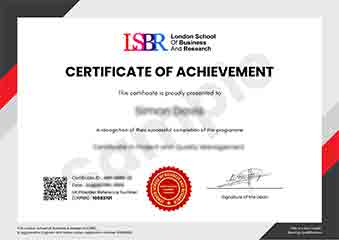
Sample Certificate
Preview the certificate you'll receive upon successful completion of this program.
Get Course Info
Receive the full course guide, pricing details, and enrolment instructions directly in your inbox.
Check your inbox!
Course details have been sent to your email.
Get Your Employer to Sponsor This Programme
Many employers offer professional development budgets. We make it easy for your company to invest in your growth with corporate invoicing and bulk enrolment options.
Email Template for Your Manager
Dear [Manager's Name],
I would like to request sponsorship for the Postgraduate Certificate in High Performance Computing for Physics programme offered by LSBR London - Executive Education.
The programme costs $149 (one-time) and can be completed in 3-4 weeks alongside my regular duties.
Key benefits to our team:
- Immediately applicable skills
- Globally recognised certificate
- Corporate invoice available
Best regards,
[Your Name]
What Our Students Say
Hear from our students about their experience with the Postgraduate Certificate in High Performance Computing for Physics at LSBR London - Executive Education.
Oliver Davies
United Kingdom"The curriculum provided a rigorous yet accessible deep dive into parallel computing architectures, bridging the gap between theoretical physics and high-performance implementation. Mastering MPI and OpenMP through hands-on simulations has significantly enhanced my ability to optimize complex computational models for large-scale research projects."
Charlotte Williams
United Kingdom"Mastering parallel computing architectures and optimization techniques gave me the technical edge needed to secure a lead researcher role in computational physics. The curriculum’s direct alignment with industry standards allowed me to immediately contribute to large-scale simulation projects, significantly accelerating my career progression."
Charlotte Williams
United Kingdom"The logical progression from foundational parallel computing concepts to advanced optimization techniques provided a robust framework for tackling complex physics simulations. This structured approach not only deepened my technical expertise but also equipped me with practical skills directly applicable to high-performance research environments."
Your Certification Journey
Four simple steps from enrolment to your globally recognised certificate
Enrol Online
Complete your enrolment in under 2 minutes with secure checkout
Start Learning
Get instant access to all course materials and start at your own pace
Complete Modules
Work through the curriculum with expert support available throughout
Get Certified
Receive your LSBR London certificate recognised across 180+ countries
LSBR London by the Numbers
Join a global community of professionals advancing their careers
Students Enrolled
Countries Represented
Average Rating
Career Progression