
Undergraduate Certificate in Mathematics of Computer Vision Systems
Develops mathematical foundations for computer vision systems, enhancing analytical and problem-solving skills.
Undergraduate Certificate in Mathematics of Computer Vision Systems
Programme Overview
The Undergraduate Certificate in Mathematics of Computer Vision Systems is a specialized programme designed for students with a strong foundation in mathematics and computer science, seeking to develop expertise in the mathematical principles underlying computer vision systems. This programme covers the fundamental concepts of computer vision, including image formation, feature extraction, and object recognition, as well as advanced topics such as deep learning and D reconstruction.
Through a combination of lectures, tutorials, and project-based learning, learners will develop practical skills in mathematical modelling, algorithm design, and software implementation, using industry-standard tools and programming languages such as Python, MATLAB, and C++. They will also acquire a deep understanding of the mathematical theories that underpin computer vision, including linear algebra, differential equations, and statistical inference, enabling them to design and develop innovative computer vision systems.
This programme will equip graduates with the skills and knowledge required to pursue careers in computer vision, robotics, and artificial intelligence, with potential applications in fields such as healthcare, finance, and transportation. Graduates will be well-prepared to work in industry or pursue further study in this rapidly evolving field, with the ability to design, develop, and deploy computer vision systems that can transform a wide range of industries and applications.
What You'll Learn
The Undergraduate Certificate in Mathematics of Computer Vision Systems equips students with a deep understanding of the mathematical foundations underlying computer vision, a field that is revolutionizing industries such as robotics, healthcare, and autonomous vehicles. This programme is highly valuable and relevant in today's professional landscape, where the ability to extract insights from visual data is becoming increasingly crucial.
Key topics covered include geometric transformations, camera calibration, and D reconstruction, as well as competencies in programming languages such as Python and C++, and experience with popular computer vision frameworks like OpenCV. Students also develop skills in machine learning and deep learning techniques, including convolutional neural networks (CNNs) and object detection algorithms.
Graduates of this programme apply their skills in real-world settings, such as developing autonomous vehicles that can detect and respond to their environment, or creating medical imaging systems that can diagnose diseases more accurately. They work with industry-standard tools and technologies, including TensorFlow and PyTorch, to design and implement computer vision systems that can solve complex problems.
Upon completion of this certificate, graduates have a wide range of career advancement opportunities, including roles such as computer vision engineer, robotics engineer, or data scientist. They can work in various industries, including technology, healthcare, and finance, and can pursue further studies in fields like artificial intelligence and machine learning.
Programme Highlights
Industry-Aligned Curriculum
Developed with industry leaders for job-ready skills
Globally Recognised Certificate
Recognised by employers across 180+ countries
Flexible Online Learning
Study at your own pace with lifetime access
Instant Access
Start learning immediately, no application process
Constantly Updated Content
Latest industry trends and best practices
Career Advancement
87% report measurable career progression within 6 months
Topics Covered
- Introduction to Mathematics: Maths fundamentals for computer vision.
- Linear Algebra: Vectors and matrices for vision.
- Calculus and Optimisation: Calculating and optimising functions.
- Computer Vision Basics: Fundamentals of vision systems.
- Image Processing: Manipulating digital images.
- Machine Learning: Learning from data sets.
Everything Included in Your Enrolment
Here is what you get when you enrol with LSBR London
Key Facts
Target Audience: Students and professionals in computer science, engineering, and related fields seeking to develop skills in computer vision systems.
Prerequisites: No formal prerequisites required, but basic knowledge of mathematics and programming is recommended.
Learning Outcomes:
Apply mathematical concepts to computer vision problems
Develop algorithms for image processing and analysis
Implement computer vision systems using programming languages
Analyze and interpret visual data from various sources
Design and evaluate computer vision models
Assessment Method: Quiz-based assessment to! evaluate understanding of mathematical concepts and computer vision systems.
Certification: Industry-recognised digital certificate awarded upon successful completion of the programme.
Ready to advance your career?
Join thousands of professionals who have transformed their careers with LSBR London. Enrol today and start learning immediately.
Why This Course
The 'Undergraduate Certificate in Mathematics of Computer Vision Systems' programme offers a unique opportunity for professionals to enhance their skills in a field that is revolutionizing industries such as healthcare, finance, and transportation. By mastering the mathematical foundations of computer vision, professionals can unlock new career opportunities and stay ahead of the curve in a rapidly evolving technological landscape.
The programme provides a deep understanding of mathematical concepts such as linear algebra, calculus, and probability, which are essential for developing and implementing computer vision systems. This knowledge enables professionals to design and optimize algorithms for image and video processing, object detection, and scene understanding. With this expertise, professionals can develop innovative solutions for applications such as autonomous vehicles, medical imaging, and surveillance systems.
The programme covers the mathematical principles underlying machine learning and deep learning techniques, which are crucial for computer vision applications such as image classification, segmentation, and generation. By learning how to apply these techniques, professionals can develop skills in data analysis, model development, and performance evaluation. This expertise is highly valued in industries such as robotics, healthcare, and finance, where computer vision is being used to drive business decisions and improve outcomes.
The programme focuses on the development of problem-solving skills, which are critical for tackling complex computer vision challenges. Professionals learn how to analyze problems, identify key issues, and develop effective solutions using mathematical and computational techniques. This skillset is essential for working in interdisciplinary teams and collaborating with engineers, scientists, and domain experts to develop innovative computer vision
"This programme gave me the confidence and credentials to secure a senior role. Highly recommend LSBR London."
— Sarah M., United Kingdom
Course Brochure
Download our comprehensive course brochure with all details
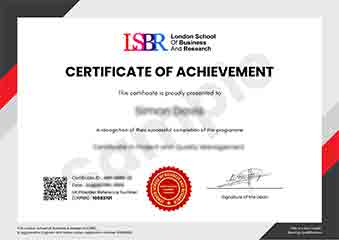
Sample Certificate
Preview the certificate you'll receive upon successful completion of this program.
Get Course Info
Receive the full course guide, pricing details, and enrolment instructions directly in your inbox.
Check your inbox!
Course details have been sent to your email.
Get Your Employer to Sponsor This Programme
Many employers offer professional development budgets. We make it easy for your company to invest in your growth with corporate invoicing and bulk enrolment options.
Email Template for Your Manager
Dear [Manager's Name],
I would like to request sponsorship for the Undergraduate Certificate in Mathematics of Computer Vision Systems programme offered by LSBR London - Executive Education.
The programme costs $99 (one-time) and can be completed in 3-4 weeks alongside my regular duties.
Key benefits to our team:
- Immediately applicable skills
- Globally recognised certificate
- Corporate invoice available
Best regards,
[Your Name]
What People Say About Us
Hear from our students about their experience with the Undergraduate Certificate in Mathematics of Computer Vision Systems at LSBR London - Executive Education.
James Thompson
United Kingdom"The course material was incredibly comprehensive, covering a wide range of topics from geometric transformations to machine learning algorithms, which significantly enhanced my understanding of computer vision systems. Through this program, I gained hands-on experience with image processing techniques and developed practical skills in implementing mathematical models to solve real-world problems. The knowledge I acquired has not only deepened my understanding of the subject but also opened up new career opportunities in the field of computer vision and artificial intelligence."
Liam O'Connor
Australia"The Undergraduate Certificate in Mathematics of Computer Vision Systems has been instrumental in bridging the gap between theoretical concepts and real-world applications, enabling me to develop a unique blend of mathematical and computational skills that are highly sought after in the industry. As a result, I've been able to transition into a role that involves designing and implementing computer vision algorithms, which has not only boosted my career prospects but also given me a competitive edge in the job market. This specialized knowledge has opened up new avenues for me to explore innovative solutions in fields like robotics, healthcare, and autonomous systems."
Tyler Johnson
United States"The course structure was well-organized, allowing me to seamlessly transition between topics and gain a comprehensive understanding of the mathematical principles underlying computer vision systems. I appreciated how the curriculum balanced theoretical foundations with real-world applications, providing me with a deeper insight into the field and its practical implications. Through this course, I have developed a solid foundation in mathematical concepts that I can apply to drive innovation and growth in my future career."
Your Path to Certification
Four simple steps from enrolment to your globally recognised certificate
Enrol Online
Complete your enrolment in under 2 minutes with secure checkout
Start Learning
Get instant access to all course materials and start at your own pace
Complete Modules
Work through the curriculum with expert support available throughout
Get Certified
Receive your LSBR London certificate recognised across 180+ countries
LSBR London by the Numbers
Join a global community of professionals advancing their careers
Students Enrolled
Countries Represented
Average Rating
Career Progression
Join Thousands Who Transformed Their Careers
Our graduates consistently report measurable career growth and professional advancement after completing their programmes.
Still deciding?
Join 23,000+ professionals who advanced their careers. Enroll today and start learning immediately.
Enroll NowSecure payment • Instant access • Certificate included