
Advanced Certificate in Crystallographic Texture Analysis Methods
This certificate equips professionals with advanced techniques for analyzing crystallographic texture, enhancing material characterization and processing optimization.
Advanced Certificate in Crystallographic Texture Analysis Methods
Programme Summary
The Advanced Certificate in Crystallographic Texture Analysis Methods is designed for professionals and researchers in materials science, metallurgy, and related fields who require advanced training in the latest techniques for analyzing crystallographic textures. This program equips participants with the skills to interpret complex crystallographic data, understand texture evolution in materials, and apply these insights to improve material performance.
Course content is rich in both theoretical and practical aspects, covering advanced computational methods, state-of-the-art experimental techniques, and the use of specialized software for texture analysis. Learners will develop a deep understanding of texture characterization methods, including electron backscatter diffraction (EBSD), X-ray diffraction (XRD), and texture analysis software. They will also learn to interpret texture data in the context of materials science and engineering, enhancing their ability to optimize material properties for specific applications.
Upon completion, professionals will be well-prepared to lead research and development projects involving crystallographic texture analysis, contributing to advancements in material science and engineering. The program's focus on practical skills and real-world applications ensures that graduates can immediately apply their knowledge to enhance material performance in various industries, from automotive to aerospace, and from electronics to construction.
Learning Outcomes
The Advanced Certificate in Crystallographic Texture Analysis Methods is a comprehensive program designed for scientists, engineers, and materials researchers seeking to enhance their skills in advanced crystallographic texture analysis. This program provides an in-depth understanding of the latest techniques and methodologies in crystallographic texture analysis, including electron backscatter diffraction (EBSD), X-ray diffraction (XRD), and pole figure analysis. Participants will learn how to interpret complex data, analyze microstructural textures, and correlate these insights with the mechanical properties of materials.
Throughout the course, you will engage in hands-on laboratory sessions where you will analyze real-world materials using state-of-the-art equipment. The program emphasizes practical problem-solving skills, enabling you to apply crystallographic texture analysis to optimize material performance in industries such as automotive, aerospace, and electronics. Graduates will be equipped to conduct advanced research, improve material design, and contribute to the development of innovative solutions for complex engineering challenges.
Upon completion, you will be well-prepared for advanced roles in materials science, research and development, quality assurance, and engineering. Potential career opportunities include materials development specialist, research scientist, and technical consultant. The skills and knowledge gained will also support further academic pursuits, such as PhD studies, or contribute to professional certifications. This program is a valuable investment in your professional growth, offering a robust foundation to advance your career in materials science and engineering.
Programme Features
Industry-Aligned Curriculum
Developed with industry leaders for job-ready skills
Globally Recognised Certificate
Recognised by employers across 180+ countries
Flexible Online Learning
Study at your own pace with lifetime access
Instant Access
Start learning immediately, no application process
Constantly Updated Content
Latest industry trends and best practices
Career Advancement
87% report measurable career progression within 6 months
Course Modules
- Foundational Concepts: Covers the core principles and key terminology.: Texture Measurement Techniques: Discusses methods for measuring texture in materials.
- Texture Modeling: Introduces models and theories for understanding texture.: Experimental Design: Focuses on planning experiments for texture analysis.
- Data Analysis: Teaches statistical methods for analyzing texture data.: Case Studies: Examines real-world applications of texture analysis methods.
What's Included in This Programme
Here is what you get when you enrol with LSBR London
Programme Facts
Audience: Research scientists, materials engineers
Prerequisites: Bachelor’s degree in materials science
Outcomes: Proficient in texture analysis techniques, able to interpret results
Ready to advance your career?
Join thousands of professionals who have transformed their careers with LSBR London. Enrol today and start learning immediately.
Why Study This Programme
Enhanced Career Prospects: Acquiring an Advanced Certificate in Crystallographic Texture Analysis Methods can significantly boost career progression, especially for professionals in materials science, metallurgy, and engineering. This certification equips individuals with specialized knowledge and practical skills in advanced analytical techniques, making them more competitive in the job market. For instance, professionals can apply these skills to optimize material properties in aerospace and automotive industries, leading to better product design and performance.
Advanced Analytical Skills: The certificate program focuses on developing robust analytical skills, including the use of X-ray diffraction and electron backscatter diffraction techniques. These skills are crucial for interpreting complex crystal structures and textures, which are essential for understanding and predicting material behavior under various conditions. For example, engineers can use these techniques to evaluate the texture of metals during manufacturing processes, ensuring they meet specific mechanical and physical requirements.
Research and Development Advantages: For professionals involved in research and development, this certification enhances their ability to contribute to cutting-edge projects. The course covers the latest methodologies and software tools, enabling researchers to conduct sophisticated texture analysis and contribute to advancements in fields such as nanomaterials, biomaterials, and composite materials. This expertise can lead to innovative solutions and patents, which are valuable for both academic and industrial settings.
Interdisciplinary Collaboration: The advanced certificate encourages collaboration across disciplines, fostering a comprehensive understanding of how crystallographic texture analysis influences various industries. Professionals can better communicate with colleagues from different backgrounds, such
"This programme gave me the confidence and credentials to secure a senior role. Highly recommend LSBR London."
— Sarah M., United Kingdom
Course Brochure
Download our comprehensive course brochure with all details
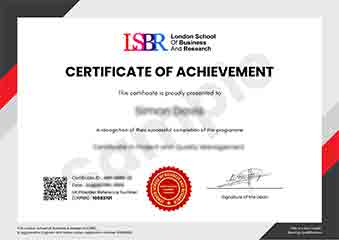
Sample Certificate
Preview the certificate you'll receive upon successful completion of this program.
Get Course Info
Receive the full course guide, pricing details, and enrolment instructions directly in your inbox.
Check your inbox!
Course details have been sent to your email.
Get Your Employer to Sponsor This Programme
Many employers offer professional development budgets. We make it easy for your company to invest in your growth with corporate invoicing and bulk enrolment options.
Email Template for Your Manager
Dear [Manager's Name],
I would like to request sponsorship for the Advanced Certificate in Crystallographic Texture Analysis Methods programme offered by LSBR London - Executive Education.
The programme costs $149 (one-time) and can be completed in 3-4 weeks alongside my regular duties.
Key benefits to our team:
- Immediately applicable skills
- Globally recognised certificate
- Corporate invoice available
Best regards,
[Your Name]
What Our Students Say
Hear from our students about their experience with the Advanced Certificate in Crystallographic Texture Analysis Methods at LSBR London - Executive Education.
Sophie Brown
United Kingdom"The course content was incredibly thorough, providing a deep understanding of crystallographic texture analysis methods that have directly enhanced my analytical skills. Gaining hands-on experience with real-world applications has been invaluable for my career in materials science."
Arjun Patel
India"This course has been incredibly valuable, equipping me with advanced techniques in crystallographic texture analysis that are directly applicable in my field. It has not only enhanced my analytical skills but also opened up new opportunities for career advancement in materials science research."
Zoe Williams
Australia"The course structure is well-organized, providing a comprehensive overview of crystallographic texture analysis methods that seamlessly blend theoretical concepts with practical applications, significantly enhancing my understanding and professional skills in materials science."
Your Certification Journey
Four simple steps from enrolment to your globally recognised certificate
Enrol Online
Complete your enrolment in under 2 minutes with secure checkout
Start Learning
Get instant access to all course materials and start at your own pace
Complete Modules
Work through the curriculum with expert support available throughout
Get Certified
Receive your LSBR London certificate recognised across 180+ countries
LSBR London by the Numbers
Join a global community of professionals advancing their careers
Students Enrolled
Countries Represented
Average Rating
Career Progression