
Advanced Certificate in Machine Learning for Language Translation
Master advanced ML techniques to build robust translation systems, enhancing accuracy and efficiency in global language processing.
Advanced Certificate in Machine Learning for Language Translation
Programme Summary
This advanced certificate equips computational linguists and software engineers with the sophisticated techniques required to build state-of-the-art neural machine translation systems. The curriculum targets professionals seeking to transition from traditional statistical methods to contemporary deep learning architectures, including transformer models and attention mechanisms. Participants engage with real-world datasets to tackle complex challenges in low-resource language pairs and domain-specific terminology adaptation.
Learners master the end-to-end pipeline of natural language processing, spanning data preprocessing, model training, and rigorous evaluation metrics such as BLEU and chrF. The programme emphasises practical proficiency in Python libraries like PyTorch and TensorFlow, enabling students to implement and optimise sequence-to-sequence models for production environments. Candidates also explore advanced topics such as multilingual embedding spaces, back-translation strategies, and the ethical implications of automated translation in global communications.
Graduates emerge prepared to lead translation technology initiatives within multinational corporations, tech startups, or academic research institutions. This qualification significantly enhances employability by demonstrating expertise in a high-demand niche that bridges artificial intelligence and linguistic precision. Alumni typically secure roles as NLP engineers, AI researchers, or technical leads, driving innovation in global content localisation and cross-border digital communication strategies.
Learning Outcomes
The Advanced Certificate in Machine Learning for Language Translation equips professionals with the sophisticated technical expertise required to navigate the rapidly evolving landscape of computational linguistics. This rigorous programme bridges the gap between traditional translation studies and modern artificial intelligence, offering a unique value proposition for those seeking to lead in digital communication. Participants engage deeply with neural machine translation architectures, sequence-to-sequence models, and transformer-based systems that underpin contemporary translation engines.
The curriculum delves into critical topics such as attention mechanisms, transfer learning, and domain adaptation, ensuring learners understand not only how these models function but also how to optimise them for specific industry needs. Students analyse large-scale multilingual datasets, evaluate model performance using standardised metrics, and explore the ethical implications of automated translation. This hands-on approach ensures that graduates possess both theoretical knowledge and practical application skills.
Graduates emerge capable of designing robust translation pipelines, fine-tuning pre-trained models for niche sectors, and integrating machine translation outputs into broader localisation workflows. They are prepared to address complex challenges in low-resource languages and maintain human-in-the-loop quality assurance processes. The demand for such expertise spans across diverse industries, including software development, e-commerce, healthcare, and global media organisations.
Career opportunities abound for those who complete this certificate. Alumni frequently secure roles as Machine Learning Engineers, NLP Specialists, or Technical Leads within localisation agencies and technology firms. Others advance into strategic positions such as Product Managers for language technology solutions or consultants advising multinational corporations on global communication strategies
Programme Features
Industry-Aligned Curriculum
Developed with industry leaders for job-ready skills
Globally Recognised Certificate
Recognised by employers across 180+ countries
Flexible Online Learning
Study at your own pace with lifetime access
Instant Access
Start learning immediately, no application process
Constantly Updated Content
Latest industry trends and best practices
Career Advancement
87% report measurable career progression within 6 months
Course Modules
- Neural Machine Translation Architectures: Examines the evolution from statistical models to modern transformer-based systems.: Pre-trained Language Models: Analyzes the adaptation of large language models for specific translation tasks.
- Data Engineering for MT: Focuses on corpus collection, cleaning, alignment, and augmentation strategies.: Evaluation and Metrics: Explores quantitative measures like BLEU and COMET alongside human assessment protocols.
- Domain Adaptation and Fine-tuning: Details techniques for optimizing models for specialized fields such as legal or medical text.: Deployment and Ethical Considerations: Covers model serving, latency optimization, and addressing bias in automated translation.
What's Included in This Programme
Here is what you get when you enrol with LSBR London
Programme Facts
Audience: Senior linguists and NLP engineers.
Prerequisites: Proficiency in Python and linear algebra.
Outcomes: Mastery of neural machine translation architectures.
Ready to advance your career?
Join thousands of professionals who have transformed their careers with LSBR London. Enrol today and start learning immediately.
Why Study This Programme
Pursuing the Advanced Certificate in Machine Learning for Language Translation represents a strategic investment for professionals seeking to navigate the evolving linguistic technology landscape. This programme equips candidates with rigorous technical expertise while fostering a deep understanding of cross-cultural communication nuances.
Mastery of Neural Machine Translation architectures enables practitioners to design robust systems that significantly outperform legacy statistical models. Learners gain hands-on experience with transformer-based models, allowing them to optimise translation accuracy and fluency for enterprise-level applications.
The curriculum emphasises the critical integration of domain-specific knowledge, ensuring that automated outputs meet industry standards in legal, medical, and financial sectors. Participants learn to curate high-quality parallel corpora, a skill that directly enhances model performance and reduces post-editing costs for global organisations.
Ethical considerations and bias mitigation form a core component of the syllabus. Professionals develop the capacity to audit algorithms for cultural sensitivity and fairness, thereby safeguarding corporate reputation and ensuring compliance with emerging international data protection regulations.
Graduates emerge with a competitive edge in the artificial intelligence job market. The certificate validates proficiency in both theoretical underpinnings and practical deployment, making holders attractive to multinational corporations seeking to streamline localisation workflows. This qualification bridges the gap between data science and linguistics, positioning recipients as indispensable assets in driving digital transformation initiatives.
"This programme gave me the confidence and credentials to secure a senior role. Highly recommend LSBR London."
— Sarah M., United Kingdom
Course Brochure
Download our comprehensive course brochure with all details
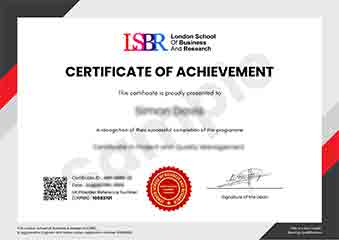
Sample Certificate
Preview the certificate you'll receive upon successful completion of this program.
Get Course Info
Receive the full course guide, pricing details, and enrolment instructions directly in your inbox.
Check your inbox!
Course details have been sent to your email.
Get Your Employer to Sponsor This Programme
Many employers offer professional development budgets. We make it easy for your company to invest in your growth with corporate invoicing and bulk enrolment options.
Email Template for Your Manager
Dear [Manager's Name],
I would like to request sponsorship for the Advanced Certificate in Machine Learning for Language Translation programme offered by LSBR London - Executive Education.
The programme costs $149 (one-time) and can be completed in 3-4 weeks alongside my regular duties.
Key benefits to our team:
- Immediately applicable skills
- Globally recognised certificate
- Corporate invoice available
Best regards,
[Your Name]
What Our Students Say
Hear from our students about their experience with the Advanced Certificate in Machine Learning for Language Translation at LSBR London - Executive Education.
Charlotte Williams
United Kingdom"The curriculum dives deep into transformer architectures and neural machine translation, providing a robust theoretical foundation that immediately translates into practical coding skills. I now feel confident building and fine-tuning translation models for real-world applications, which has significantly boosted my readiness for specialized AI roles."
Liam O'Connor
Australia"Mastering neural machine translation architectures gave me the technical confidence to lead localization projects at a global tech firm. The curriculum’s focus on real-world deployment challenges directly accelerated my transition into a senior AI engineering role."
Liam O'Connor
Australia"The logical progression of modules seamlessly bridged theoretical foundations with practical implementation, making complex translation architectures accessible. This structured approach significantly enhanced my ability to deploy robust NLP solutions, directly accelerating my professional readiness in the field."
Your Certification Journey
Four simple steps from enrolment to your globally recognised certificate
Enrol Online
Complete your enrolment in under 2 minutes with secure checkout
Start Learning
Get instant access to all course materials and start at your own pace
Complete Modules
Work through the curriculum with expert support available throughout
Get Certified
Receive your LSBR London certificate recognised across 180+ countries
LSBR London by the Numbers
Join a global community of professionals advancing their careers
Students Enrolled
Countries Represented
Average Rating
Career Progression