
Advanced Certificate in Mathematical Misconceptions and Biases Awareness
Develop deep insights into mathematical misconceptions and biases, enhancing critical thinking and pedagogical skills.
Advanced Certificate in Mathematical Misconceptions and Biases Awareness
Programme Summary
The Advanced Certificate in Mathematical Misconceptions and Biases Awareness is designed for educators, researchers, and professionals seeking to deepen their understanding of common mathematical misconceptions and the biases that influence mathematical reasoning. This program focuses on critical thinking, pedagogical strategies, and psychological insights, aiming to equip participants with the knowledge and skills needed to enhance mathematical education and foster a more inclusive learning environment.
Participants will develop a comprehensive understanding of various mathematical misconceptions across different age groups and learning levels, including algebraic thinking, geometry, and statistics. They will also gain expertise in identifying and addressing cognitive biases that can affect problem-solving and decision-making processes. Through hands-on activities, case studies, and interactive sessions, learners will enhance their ability to design effective interventions, create supportive learning environments, and promote equitable access to mathematical knowledge.
This program has a significant impact on career trajectories, particularly for educators and researchers. Graduates will be well-prepared to implement innovative teaching strategies, contribute to curriculum development, and engage in professional research aimed at improving mathematical education. They will also be equipped to lead workshops and seminars, mentor colleagues, and advocate for policy changes that support evidence-based mathematical practices.
Learning Outcomes
The Advanced Certificate in Mathematical Misconceptions and Biases Awareness is a transformative program designed to equip participants with the tools necessary to address common mathematical misconceptions and biases. This program is invaluable for educators, researchers, and professionals seeking to enhance their understanding of mathematical concepts and their application in diverse contexts.
Key topics include the exploration of cognitive biases in mathematical reasoning, the identification and correction of common misconceptions in algebra, geometry, and statistics, and the integration of evidence-based pedagogical strategies to foster deeper mathematical comprehension. Participants will learn to analyze the psychological and cultural factors that influence mathematical learning and apply this knowledge to create inclusive and effective educational environments.
Graduates of this program will be able to design and implement interventions that reduce mathematical anxiety, improve student engagement, and promote equitable access to mathematical education. They will also be well-prepared to contribute to research on mathematical education and to advocate for evidence-based practices in the field.
Career opportunities for program graduates are expansive, including roles in educational consulting, curriculum development, research, and policy-making. Graduates may also pursue advanced studies or further certifications in mathematics education, cognitive psychology, or related fields. This program not only enhances professional skills but also fosters a deeper appreciation for the importance of accurate mathematical thinking in today’s data-driven world.
Programme Features
Industry-Aligned Curriculum
Developed with industry leaders for job-ready skills
Globally Recognised Certificate
Recognised by employers across 180+ countries
Flexible Online Learning
Study at your own pace with lifetime access
Instant Access
Start learning immediately, no application process
Constantly Updated Content
Latest industry trends and best practices
Career Advancement
87% report measurable career progression within 6 months
Course Modules
- Historical Perspectives: Explores the evolution of mathematical misconceptions and biases.: Cognitive Biases: Analyzes common cognitive biases affecting mathematical reasoning.
- Pedagogical Strategies: Develops methods to teach mathematics without perpetuating misconceptions.: Cultural Impacts: Investigates how cultural factors influence mathematical understanding and biases.
- Statistical Fallacies: Identifies and addresses common fallacies in statistical analysis and interpretation.: Technology in Education: Examines the role of technology in mitigating mathematical misconceptions and biases.
What's Included in This Programme
Here is what you get when you enrol with LSBR London
Programme Facts
Target audience: Educators, psychologists, data analysts
Prerequisites: Basic math skills, interest in education
Outcomes: Identify common mathematical misconceptions, understand cognitive biases, enhance critical thinking skills
Ready to advance your career?
Join thousands of professionals who have transformed their careers with LSBR London. Enrol today and start learning immediately.
Why Study This Programme
Enhanced Critical Thinking: Acquiring an Advanced Certificate in Mathematical Misconceptions and Biases Awareness equips professionals with robust analytical skills. This certification helps in identifying and correcting common mathematical misconceptions and biases, which is crucial in fields like finance, data science, and research. For instance, in finance, understanding and avoiding biases in financial modeling can lead to more accurate risk assessments and investment strategies.
Improved Decision-Making: This certification sharpens the ability to make informed decisions based on sound mathematical principles. Professionals can develop a deeper understanding of statistical methods, probability, and data analysis, enabling them to interpret data more effectively. In healthcare, for example, accurate statistical analysis can improve patient care and treatment outcomes.
Career Advancement: Gaining this advanced certification can set professionals apart in the job market. It demonstrates a commitment to continuous learning and a high standard of professional development. Employers in sectors like tech, finance, and academia value candidates who can critically assess and apply mathematical concepts to solve complex problems. This certification can open doors to higher positions and increased responsibility.
Stronger Communication Skills: The course emphasizes the importance of clear communication when presenting mathematical concepts and findings. This skill is invaluable in team settings and presentations. For instance, in educational settings, teachers who can effectively communicate mathematical ideas reduce student confusion and improve learning outcomes.
"This programme gave me the confidence and credentials to secure a senior role. Highly recommend LSBR London."
— Sarah M., United Kingdom
Course Brochure
Download our comprehensive course brochure with all details
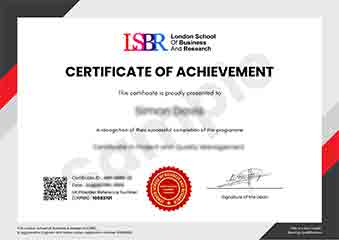
Sample Certificate
Preview the certificate you'll receive upon successful completion of this program.
Get Course Info
Receive the full course guide, pricing details, and enrolment instructions directly in your inbox.
Check your inbox!
Course details have been sent to your email.
Get Your Employer to Sponsor This Programme
Many employers offer professional development budgets. We make it easy for your company to invest in your growth with corporate invoicing and bulk enrolment options.
Email Template for Your Manager
Dear [Manager's Name],
I would like to request sponsorship for the Advanced Certificate in Mathematical Misconceptions and Biases Awareness programme offered by LSBR London - Executive Education.
The programme costs $149 (one-time) and can be completed in 3-4 weeks alongside my regular duties.
Key benefits to our team:
- Immediately applicable skills
- Globally recognised certificate
- Corporate invoice available
Best regards,
[Your Name]
What Our Students Say
Hear from our students about their experience with the Advanced Certificate in Mathematical Misconceptions and Biases Awareness at LSBR London - Executive Education.
James Thompson
United Kingdom"The course content was incredibly thorough, offering deep insights into mathematical misconceptions and biases, which has significantly enhanced my analytical skills and critical thinking. Gaining this knowledge has opened up new avenues in my career, allowing me to approach problems from a more nuanced perspective."
Ryan MacLeod
Canada"This course has been incredibly valuable in helping me identify and address common mathematical misconceptions in my field, which has significantly enhanced my ability to communicate complex ideas more effectively. It has opened up new opportunities for me to contribute to interdisciplinary projects and has made my work more impactful in the industry."
Oliver Davies
United Kingdom"The course structure is meticulously organized, making it easy to navigate through complex topics, and the content is incredibly comprehensive, offering deep insights into mathematical misconceptions and biases. It has significantly enhanced my ability to apply this knowledge in real-world scenarios, fostering a more nuanced understanding of mathematical thinking."
Your Certification Journey
Four simple steps from enrolment to your globally recognised certificate
Enrol Online
Complete your enrolment in under 2 minutes with secure checkout
Start Learning
Get instant access to all course materials and start at your own pace
Complete Modules
Work through the curriculum with expert support available throughout
Get Certified
Receive your LSBR London certificate recognised across 180+ countries
LSBR London by the Numbers
Join a global community of professionals advancing their careers
Students Enrolled
Countries Represented
Average Rating
Career Progression