
Certificate in Medical Anthropology in Disaster and Humanitarian Settings
This certificate equips professionals with cultural competency and practical skills to improve health outcomes in disaster and humanitarian contexts.
Certificate in Medical Anthropology in Disaster and Humanitarian Settings
Programme Overview
This course is for healthcare professionals, aid workers, and anyone interested in understanding the cultural aspects of disaster and humanitarian responses. First, participants will gain a solid foundation in medical anthropology. Next, they will explore how cultural beliefs and practices influence health outcomes in crisis situations.
The course also equips you with practical skills to apply cultural knowledge. Furthermore, you will learn to design and implement culturally sensitive interventions. Upon completion, you will be better prepared to navigate the complex cultural landscapes of disaster and humanitarian settings.
What You'll Learn
Dive into the dynamic field of medical anthropology with our 'Certificate in Medical Anthropology in Disaster and Humanitarian Settings'. Gain a unique perspective on health, illness, and humanitarian response. First, you'll explore cultural understandings of health and disease. Then, you'll analyze real-world case studies. Additionally, you'll learn to navigate ethical dilemmas. Moreover, you'll develop practical skills in disaster response and humanitarian aid. This certificate opens doors to diverse career paths, including roles in NGOs, international health organizations, and disaster response teams. Imagine yourself on the frontlines of global health crises. You'll be well-prepared to make a meaningful difference. Join us and become a catalyst for change in vulnerable communities. Enroll now and transform your passion into action!
Programme Highlights
Industry-Aligned Curriculum
Developed with industry leaders to ensure practical, job-ready skills valued by employers worldwide.
Expert Faculty
Learn from experienced professionals with real-world expertise in your chosen field.
Flexible Learning
Study at your own pace, from anywhere in the world, with our flexible online platform.
Industry Focus
Practical, real-world knowledge designed to meet the demands of today's competitive job market.
Latest Curriculum
Stay ahead with constantly updated content reflecting the latest industry trends and best practices.
Career Advancement
Unlock new opportunities with a globally recognized qualification respected by employers.
Topics Covered
- Introduction to Medical Anthropology: Explore the basics of medical anthropology and its relevance to disaster and humanitarian settings.
- Cultural Aspects of Health and Illness: Understand how cultural beliefs and practices influence health and illness in diverse communities.
- Disaster Preparedness and Response: Learn about disaster preparedness, response, and recovery from an anthropological perspective.
- Humanitarian Aid and Ethics: Examine the ethical considerations and challenges in humanitarian aid delivery.
- Health Systems and Vulnerable Populations: Analyze health systems and their interactions with vulnerable populations in crisis situations.
- Case Studies in Disaster and Humanitarian Settings: Study real-world case studies to apply anthropological theories and methods to practical scenarios.
Key Facts
Audience:
This certificate is for professionals and students alike.
It is designed for individuals working in healthcare, humanitarian aid, and disaster response.
Additionally, it caters to those who are deeply interested in cultural aspects of healthcare.
Prerequisites:
Firstly, a bachelor's degree in a related field is required.
Secondly, a strong interest in anthropology and healthcare.
Lastly, you need to be proficient in English.
Outcomes:
Firstly, you will gain a deep understanding of how culture affects healthcare.
Secondly, you will be equipped to work effectively in disaster and humanitarian settings.
Lastly, you will actively contribute to better healthcare outcomes in diverse communities.
Why This Course
First, gain a deep understanding of how cultures impact healthcare and disaster response. This insight enables learners to navigate diverse settings effectively. Consequently, you will be able to provide culturally sensitive care.
Next, develop practical skills for humanitarian work. Learn to assess needs, coordinate efforts, and implement programs. This hands-on knowledge prepares you for real-world scenarios.
Finally, join a supportive community of professionals. Network with experts and peers. This fosters collaboration and opens doors to career opportunities.
Programme Title
Certificate in Medical Anthropology in Disaster and Humanitarian Settings
Course Brochure
Download our comprehensive course brochure with all details
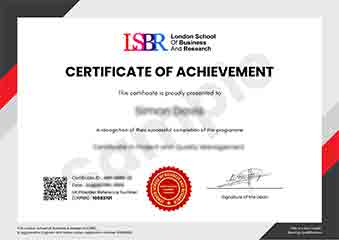
Sample Certificate
Preview the certificate you'll receive upon successful completion of this program.
Pay as an Employer
Request an invoice for your company to pay for this course. Perfect for corporate training and professional development.
What People Say About Us
Hear from our students about their experience with the Certificate in Medical Anthropology in Disaster and Humanitarian Settings at LSBR London - Executive Education.
James Thompson
United Kingdom"The course content was incredibly comprehensive, covering a wide range of topics from cultural sensitivity in healthcare to the logistics of humanitarian aid. I gained practical skills in assessing community needs and designing culturally appropriate interventions, which I believe will be invaluable in my future career in global health."
Liam O'Connor
Australia"This course has been instrumental in honing my ability to navigate complex humanitarian settings with a nuanced understanding of cultural dynamics. The practical applications of medical anthropology have significantly enhanced my resume, opening doors to roles in global health organizations where I can directly apply what I've learned to improve disaster response strategies."
Sophie Brown
United Kingdom"The course structure was exceptionally well-organized, with each module seamlessly building upon the last, which made complex topics in medical anthropology accessible and engaging. The comprehensive content not only deepened my understanding of disaster and humanitarian settings but also provided practical insights that I can directly apply to my future professional endeavors."