
Executive Development Programme in Anthropology of Disease and Healing
This program equips executives with a deep understanding of cultural and social factors influencing health, enhancing their ability to lead in global health initiatives.
Executive Development Programme in Anthropology of Disease and Healing
Programme Overview
The Executive Development Programme in Anthropology of Disease and Healing is designed for professionals in healthcare, social work, and related fields. First, participants will explore the cultural dimensions of health and illness. This will include understanding how different societies perceive and manage health. Next, participants will gain skills to apply anthropological insights in their work.
Moreover, they will learn to design and implement culturally sensitive healthcare programs. The programme promotes a deeper understanding of the social and cultural factors influencing health outcomes. This, in turn, empowers professionals to bridge gaps in care and improve patient outcomes.
What You'll Learn
Join us on a transformative journey with our 'Executive Development Programme in Anthropology of Disease and Healing.' First, discover how cultural, social, and political factors shape health and illness. Next, immerse yourself in real-world case studies. Learn to apply anthropological insights to improve healthcare outcomes. Meanwhile, develop critical thinking and cultural sensitivity skills. Furthermore, gain a competitive edge in your career. This program opens doors to roles in global health, public policy, and healthcare management.
Moreover, connect with a diverse network of professionals. Share ideas and collaborate on projects. Additionally, our expert faculty bring a wealth of experience. They guide you through interactive workshops. Finally, advance your career in a field that's crucial to our world's health. Enroll today. Make a difference tomorrow.
Programme Highlights
Industry-Aligned Curriculum
Developed with industry leaders to ensure practical, job-ready skills valued by employers worldwide.
Expert Faculty
Learn from experienced professionals with real-world expertise in your chosen field.
Flexible Learning
Study at your own pace, from anywhere in the world, with our flexible online platform.
Industry Focus
Practical, real-world knowledge designed to meet the demands of today's competitive job market.
Latest Curriculum
Stay ahead with constantly updated content reflecting the latest industry trends and best practices.
Career Advancement
Unlock new opportunities with a globally recognized qualification respected by employers.
Topics Covered
- Historical Anthropology of Disease and Healing: Explore the historical development of disease and healing practices across cultures.
- Cultural Beliefs and Health Practices: Examine how cultural beliefs influence health practices and healing.
- Medical Anthropology Theories and Methods: Understand key theories and research methods in medical anthropology.
- Global Health and Social Inequalities: Analyze global health issues and the role of social inequalities.
- Anthropology of Biomedicine: Investigate the cultural and social aspects of biomedical practices.
- Healing Systems and Therapeutic Encounters: Study diverse healing systems and therapeutic encounters.
Key Facts
Audience: Mid to senior-level professionals from healthcare, social sciences, and public health. Moreover, individuals eager to broaden their understanding of cultural aspects of health.
Prerequisites: First, a bachelor's degree in a related field is necessary. Additionally, you should have at least years of relevant work experience. Also, basic knowledge of social science theories is required.
Outcomes: Firstly, understand cultural influences on health and healing. Secondly, develop cross-cultural communication skills. Finally, apply anthropological insights to improve health outcomes and healthcare systems.
Why This Course
First, this programme offers a unique perspective. It actively explores how culture shapes disease and healing. Therefore, learners gain insights into global health issues from a fresh angle.
Next, the programme actively encourages critical thinking. It pushes learners to challenge conventional medical views. Consequently, it helps learners develop analytical skills and question assumptions in their careers.
Finally, this programme actively promotes cross-cultural understanding. It brings together diverse learners and faculty. Thus, it creates a rich learning environment that celebrates variety.
Programme Title
Executive Development Programme in Anthropology of Disease and Healing
Course Brochure
Download our comprehensive course brochure with all details
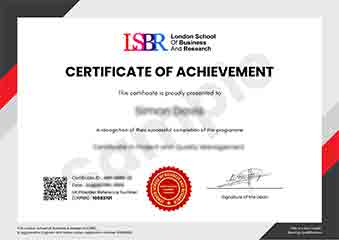
Sample Certificate
Preview the certificate you'll receive upon successful completion of this program.
Pay as an Employer
Request an invoice for your company to pay for this course. Perfect for corporate training and professional development.
What People Say About Us
Hear from our students about their experience with the Executive Development Programme in Anthropology of Disease and Healing at LSBR London - Executive Education.
Charlotte Williams
United Kingdom"The course content was incredibly comprehensive, covering a wide range of topics from cultural beliefs about health to modern medical anthropology. I gained practical skills in analyzing health systems and understanding the social determinants of disease, which have been invaluable in my current role in public health."
Connor O'Brien
Canada"The Executive Development Programme in Anthropology of Disease and Healing has been instrumental in refining my analytical skills, enabling me to approach healthcare challenges with a more holistic and culturally sensitive perspective. This program has significantly enhanced my industry relevance, opening up new avenues for career advancement by equipping me with practical tools to navigate the complexities of global health dynamics."
Greta Fischer
Germany"The course structure was exceptionally well-organized, allowing for a seamless progression through complex topics. The comprehensive content not only broadened my understanding of disease and healing from an anthropological perspective but also provided practical insights that I can directly apply to my professional work, enhancing my ability to approach health issues with a more holistic mindset."