
Executive Development Programme in Computational Music Theory and Modeling
Enhance musical expertise with computational skills, fostering innovation and creativity in music theory and modeling applications.
Executive Development Programme in Computational Music Theory and Modeling
Programme Overview
The Executive Development Programme in Computational Music Theory and Modeling is designed for professionals and executives seeking to enhance their understanding of music theory and its applications in computational modeling. This programme covers the fundamental principles of music theory, including harmony, counterpoint, and composition, as well as advanced topics in computational modeling, such as machine learning, data analysis, and algorithmic composition. It is tailored for individuals with a background in music, computer science, or a related field, who wish to develop a deeper understanding of the intersection of music and computation.
Through a combination of lectures, workshops, and project-based learning, participants will develop practical skills in music programming languages, such as Python and Max/MSP, and learn to apply machine learning algorithms to music data. They will also gain knowledge of music information retrieval, audio signal processing, and human-computer interaction, enabling them to create innovative music technologies and applications. The programme's curriculum is designed to equip learners with the technical expertise and creative skills necessary to drive innovation in the music industry.
Upon completing the programme, graduates will be well-positioned to pursue careers in music technology, audio software development, and music informatics, or to leverage their new skills to enhance their existing careers in music composition, production, or performance. The programme's unique blend of music theory and computational modeling will also prepare graduates to pursue advanced research in music cognition, music perception, and human-computer interaction.
What You'll Learn
The Executive Development Programme in Computational Music Theory and Modeling equips professionals with a unique blend of music theory, computational skills, and data analysis expertise, enabling them to drive innovation in the music industry. This programme is highly valuable in today's professional landscape, where the convergence of technology and music is creating new opportunities for music creation, production, and consumption.
Key topics covered include music information retrieval, audio signal processing, machine learning, and music generation, providing participants with a comprehensive understanding of computational music theory and its applications. Graduates develop competencies in programming languages such as Python and MATLAB, as well as expertise in music-specific frameworks like Music21 and Mido.
Upon completion of the programme, graduates apply their skills in real-world settings, such as music composition, audio production, and music technology development. They work with industry leaders to develop intelligent music systems, design novel musical interfaces, and create personalized music recommendation systems.
The programme opens up career advancement opportunities in the music industry, including roles such as music data scientist, audio software developer, and music technology consultant. With their expertise in computational music theory and modeling, graduates are well-positioned to lead innovation in the music industry, driving the development of new music technologies and products that transform the way music is created, produced, and consumed.
Programme Highlights
Industry-Aligned Curriculum
Developed with industry leaders for job-ready skills
Globally Recognised Certificate
Recognised by employers across 180+ countries
Flexible Online Learning
Study at your own pace with lifetime access
Instant Access
Start learning immediately, no application process
Constantly Updated Content
Latest industry trends and best practices
Career Advancement
87% report measurable career progression within 6 months
Topics Covered
- Introduction to Music Theory: Fundamentals of music theory explained.
- Computational Modeling: Using computers to model music.
- Algorithmic Composition: Generating music with algorithms.
- Music Information Retrieval: Accessing musical data efficiently.
- Machine Learning Applications: Applying machine learning to music.
- Advanced Music Analysis: In-depth analysis of musical structures.
Everything Included in Your Enrolment
Here is what you get when you enrol with LSBR London
Key Facts
Target Audience: Music professionals, composers, and researchers seeking to enhance their skills in computational music theory and modeling.
Prerequisites: No formal prerequisites required, but basic understanding of music theory and programming concepts is beneficial.
Learning Outcomes:
Develop skills in music data analysis and visualization.
Understand computational models of music theory and their applications.
Learn to design and implement music information retrieval systems.
Apply machine learning techniques to music modeling and generation.
Create interactive music systems using programming languages.
Assessment Method: Quiz-based assessment to evaluate understanding of key concepts and techniques.
Certification: Industry-recognised digital certificate awarded upon successful completion of the programme.
Ready to advance your career?
Join thousands of professionals who have transformed their careers with LSBR London. Enrol today and start learning immediately.
Why This Course
The 'Executive Development Programme in Computational Music Theory and Modeling' offers a unique opportunity for professionals to expand their skill set and stay ahead in the rapidly evolving music industry. By combining music theory and computational modeling, this programme enables participants to develop innovative solutions and gain a competitive edge in their careers.
Career advancement: This programme allows professionals to develop advanced skills in computational music theory and modeling, enabling them to take on leadership roles in the music industry, such as music producer, composer, or sound designer. With a deep understanding of music theory and computational modeling, participants can create complex music models and algorithms, leading to new career opportunities. This expertise can also lead to collaborations with other artists, technologists, and researchers, expanding their professional network.
Skill development: The programme focuses on developing practical skills in programming languages such as Python, Java, and C++, as well as music-specific software like Max/MSP, SuperCollider, and Ableton Live. Participants learn to design and implement algorithms for music analysis, generation, and processing, enhancing their ability to work with complex music data and systems. This skill set is highly valued in the industry, where professionals with expertise in both music theory and programming are in high demand.
Industry relevance: The programme's emphasis on computational music theory and modeling reflects the growing importance of technology in the music industry, where professionals need to be proficient in using software and algorithms to create, produce, and distribute music. By gaining expertise in this area
"This programme gave me the confidence and credentials to secure a senior role. Highly recommend LSBR London."
— Sarah M., United Kingdom
Course Brochure
Download our comprehensive course brochure with all details
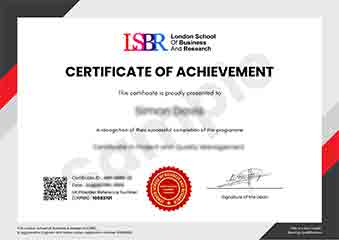
Sample Certificate
Preview the certificate you'll receive upon successful completion of this program.
Get Course Info
Receive the full course guide, pricing details, and enrolment instructions directly in your inbox.
Check your inbox!
Course details have been sent to your email.
Get Your Employer to Sponsor This Programme
Many employers offer professional development budgets. We make it easy for your company to invest in your growth with corporate invoicing and bulk enrolment options.
Email Template for Your Manager
Dear [Manager's Name],
I would like to request sponsorship for the Executive Development Programme in Computational Music Theory and Modeling programme offered by LSBR London - Executive Education.
The programme costs $199 (one-time) and can be completed in 3-4 weeks alongside my regular duties.
Key benefits to our team:
- Immediately applicable skills
- Globally recognised certificate
- Corporate invoice available
Best regards,
[Your Name]
What People Say About Us
Hear from our students about their experience with the Executive Development Programme in Computational Music Theory and Modeling at LSBR London - Executive Education.
James Thompson
United Kingdom"The course content was incredibly comprehensive, covering a wide range of topics in computational music theory and modeling that significantly enhanced my understanding of music analysis and generation. Through this program, I gained hands-on experience with various algorithms and tools, which has greatly improved my ability to model and analyze musical patterns, and I feel more confident in applying these skills to real-world projects. The knowledge and practical skills I acquired have been invaluable, opening up new career opportunities in music technology and research."
Charlotte Williams
United Kingdom"The Executive Development Programme in Computational Music Theory and Modeling has been a game-changer for my career, equipping me with a unique blend of technical and creative skills that are highly sought after in the music industry. I've been able to apply the concepts and techniques learned in the programme to develop innovative music models and algorithms, significantly enhancing my professional portfolio and opening up new opportunities for collaboration and advancement. As a result, I've seen a notable increase in my career prospects, with leading music technology companies taking notice of my expertise in computational music theory and modeling."
Zoe Williams
Australia"The course structure was well-organized, allowing me to seamlessly transition between foundational concepts and advanced topics in computational music theory, which significantly enhanced my understanding of the subject. The comprehensive content covered a wide range of topics, from music modeling to algorithmic composition, providing me with a broad and in-depth knowledge base that I can apply to real-world music projects. Through this programme, I gained valuable insights into the latest developments in the field, enabling me to expand my professional capabilities and explore new avenues in music technology."
Your Path to Certification
Four simple steps from enrolment to your globally recognised certificate
Enrol Online
Complete your enrolment in under 2 minutes with secure checkout
Start Learning
Get instant access to all course materials and start at your own pace
Complete Modules
Work through the curriculum with expert support available throughout
Get Certified
Receive your LSBR London certificate recognised across 180+ countries
LSBR London by the Numbers
Join a global community of professionals advancing their careers
Students Enrolled
Countries Represented
Average Rating
Career Progression
Join Thousands Who Transformed Their Careers
Our graduates consistently report measurable career growth and professional advancement after completing their programmes.
Still deciding?
Join 23,000+ professionals who advanced their careers. Enroll today and start learning immediately.
Enroll NowSecure payment • Instant access • Certificate included