
Executive Development Programme in Integrating Control Theory in Robotics
Master advanced control strategies to optimize robotic precision, stability, and performance for next-generation industrial automation solutions.
Executive Development Programme in Integrating Control Theory in Robotics
Programme Summary
The Executive Development Programme in Integrating Control Theory in Robotics addresses the critical convergence of advanced mathematical modelling and autonomous system design. This intensive curriculum targets senior engineers, product leaders, and technical directors within the advanced manufacturing and autonomous vehicles sectors. Participants engage with rigorous modules on state-space analysis, feedback loop optimisation, and real-time system stability. The programme bridges the gap between theoretical control engineering and practical robotic implementation. Learners examine case studies from leading robotics firms to understand complex integration challenges. This course demands a strong foundation in linear algebra and dynamics. It prepares executives to lead teams developing next-generation industrial robots and service automation solutions. The syllabus emphasises both classical PID tuning and modern adaptive control strategies.
Participants master the application of Lyapunov stability theory to ensure robust performance in uncertain environments. They acquire proficiency in designing observers and controllers for non-linear robotic systems using MATLAB and Simulink. The curriculum develops expertise in sensor fusion techniques that enhance positional accuracy and operational safety. Learners analyse trade-offs between computational efficiency and control precision in embedded systems. They gain strategic insights into selecting appropriate control architectures for specific robotic applications. The programme also covers the integration of machine learning algorithms within traditional control frameworks. Attendees learn to validate system performance through rigorous simulation and hardware-in-the-loop testing. These competencies enable leaders to mitigate risks associated with autonomous system deployment.
Graduates position themselves as pivotal figures in the transition towards Industry and autonomous operations. The qualification significantly enhances credibility when leading large-scale robotics
Learning Outcomes
This rigorous Executive Development Programme equips senior engineering leaders with the advanced mathematical frameworks necessary to bridge the gap between abstract control theory and practical robotic implementation. As autonomous systems redefine industrial landscapes, the ability to design robust, adaptive control architectures becomes a critical competitive advantage. Participants engage with complex dynamics, non-linear system modelling, and real-time feedback mechanisms, ensuring their organisations remain at the forefront of technological innovation.
The curriculum delves deeply into modern control strategies, including model predictive control, adaptive systems, and robust H-infinity design. Learners examine the intricate interplay between sensor fusion, actuator dynamics, and computational latency, gaining proficiency in simulating multi-body robotic systems using industry-standard software. Case studies drawn from aerospace, automotive manufacturing, and precision medical robotics illustrate how theoretical principles translate into tangible operational efficiencies. By mastering stability analysis and optimisation techniques, delegates learn to mitigate risk while enhancing system performance under uncertain conditions.
Graduates emerge capable of leading cross-functional teams in the development of next-generation autonomous platforms. They apply these sophisticated skills to optimise production lines, reduce downtime through predictive maintenance algorithms, and accelerate the deployment of collaborative robots in hazardous environments. The programme fosters a strategic mindset, enabling leaders to evaluate the trade-offs between computational complexity and real-time responsiveness effectively.
Career trajectories for alumni span diverse sectors, including senior roles in robotics R&D, technical directorships within automation firms, and consultancy positions advising multinational corporations on digital transformation. Participants often assume leadership in strategic planning for intelligent manufacturing initiatives
Programme Features
Industry-Aligned Curriculum
Developed with industry leaders for job-ready skills
Globally Recognised Certificate
Recognised by employers across 180+ countries
Flexible Online Learning
Study at your own pace with lifetime access
Instant Access
Start learning immediately, no application process
Constantly Updated Content
Latest industry trends and best practices
Career Advancement
87% report measurable career progression within 6 months
Course Modules
- Control Theory Fundamentals: Reviews classical and modern control principles essential for robotic systems.: Robotic Kinematics and Dynamics: Analyzes motion equations and force interactions in multi-body robotic structures.
- Sensor Integration and State Estimation: Examines methods for fusing sensor data to accurately determine system states.: Advanced Control Algorithms: Explores PID, LQR, and model predictive control techniques for precise robot manipulation.
- Autonomous Navigation and Planning: Covers path planning, obstacle avoidance, and decision-making in dynamic environments.: Implementation and Case Studies: Applies theoretical concepts to real-world robotics projects and industrial applications.
What's Included in This Programme
Here is what you get when you enrol with LSBR London
Programme Facts
Audience: Senior robotics engineers and technical leaders.
Prerequisites: Advanced degree in control systems engineering.
Outcomes: Strategic integration of control theory frameworks.
Ready to advance your career?
Join thousands of professionals who have transformed their careers with LSBR London. Enrol today and start learning immediately.
Why Study This Programme
The 'Executive Development Programme in Integrating Control Theory in Robotics' offers a strategic imperative for senior professionals seeking to lead next-generation automation initiatives. This course bridges the critical gap between abstract mathematical frameworks and practical industrial application, ensuring graduates possess the technical fluency required to drive innovation.
The curriculum cultivates advanced proficiency in non-linear control systems and adaptive algorithms. Participants gain the ability to design robust controllers for complex robotic manipulators, directly enhancing system stability and precision in high-stakes manufacturing environments.
Attendees develop a sophisticated understanding of model predictive control techniques. This expertise enables leaders to optimise real-time decision-making processes, significantly reducing operational latency and improving overall production efficiency within automated supply chains.
The programme emphasises the integration of control theory with machine learning paradigms. Professionals learn to implement hybrid control strategies that enhance robotic adaptability, allowing organisations to deploy flexible automation solutions capable of handling unstructured tasks with minimal human intervention.
Graduates acquire the strategic vocabulary necessary to align technical R&D outputs with broader corporate objectives. This capability facilitates more effective cross-functional communication, ensuring that engineering projects deliver tangible commercial value and maintain competitive advantage in rapidly evolving markets.
Enrolment in this rigorous executive programme positions leaders at the forefront of technological transformation. It equips them with the analytical rigour and practical insights needed to navigate the complexities of modern robotics, fostering sustainable growth and operational excellence in their respective organisations.
"This programme gave me the confidence and credentials to secure a senior role. Highly recommend LSBR London."
— Sarah M., United Kingdom
Course Brochure
Download our comprehensive course brochure with all details
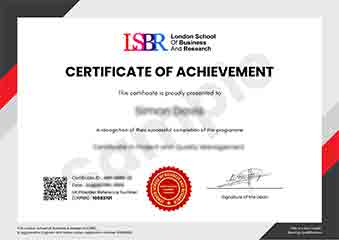
Sample Certificate
Preview the certificate you'll receive upon successful completion of this program.
Get Course Info
Receive the full course guide, pricing details, and enrolment instructions directly in your inbox.
Check your inbox!
Course details have been sent to your email.
Get Your Employer to Sponsor This Programme
Many employers offer professional development budgets. We make it easy for your company to invest in your growth with corporate invoicing and bulk enrolment options.
Email Template for Your Manager
Dear [Manager's Name],
I would like to request sponsorship for the Executive Development Programme in Integrating Control Theory in Robotics programme offered by LSBR London - Executive Education.
The programme costs $199 (one-time) and can be completed in 3-4 weeks alongside my regular duties.
Key benefits to our team:
- Immediately applicable skills
- Globally recognised certificate
- Corporate invoice available
Best regards,
[Your Name]
What Our Students Say
Hear from our students about their experience with the Executive Development Programme in Integrating Control Theory in Robotics at LSBR London - Executive Education.
Oliver Davies
United Kingdom"The rigorous focus on advanced control algorithms provided a deep theoretical foundation that immediately translated into tangible skills for stabilizing robotic systems. I now feel fully equipped to design robust feedback loops for complex autonomous platforms, significantly boosting my confidence in tackling real-world engineering challenges."
Jia Li Lim
Singapore"Mastering the integration of control theory into robotic systems has significantly sharpened my ability to design stable, high-performance autonomous solutions. This deep technical expertise directly accelerated my transition into a senior robotics engineering role, where I now lead complex control architecture projects."
Siti Abdullah
Malaysia"The logical progression of the modules made complex control algorithms accessible and directly applicable to modern robotic systems. This structured approach significantly enhanced my ability to design stable, efficient controllers for real-world automation challenges."
Your Certification Journey
Four simple steps from enrolment to your globally recognised certificate
Enrol Online
Complete your enrolment in under 2 minutes with secure checkout
Start Learning
Get instant access to all course materials and start at your own pace
Complete Modules
Work through the curriculum with expert support available throughout
Get Certified
Receive your LSBR London certificate recognised across 180+ countries
LSBR London by the Numbers
Join a global community of professionals advancing their careers
Students Enrolled
Countries Represented
Average Rating
Career Progression