
Executive Development Programme in Mathematical Modeling for City Planning
This program equips city planners with advanced mathematical modeling skills to optimize urban development, enhance sustainability, and drive data-driven decision-making.
Executive Development Programme in Mathematical Modeling for City Planning
Programme Summary
The Executive Development Programme in Mathematical Modeling for City Planning is designed for senior city planners, urban policymakers, and executives who seek to leverage advanced mathematical and computational tools to enhance strategic decision-making and sustainable urban development. This programme equips participants with a comprehensive understanding of mathematical modeling techniques, including optimization, simulation, and data analytics, tailored to the complex challenges of modern city planning. Through hands-on workshops, case studies, and collaborative projects, participants will learn to apply these techniques to real-world urban scenarios, from transportation networks to environmental sustainability.
Key skills and knowledge developed through this programme include proficiency in mathematical modeling software, ability to analyze large datasets for urban planning purposes, and the capacity to design and implement simulations to predict the outcomes of various urban development strategies. Participants will also gain expertise in integrating multidisciplinary data sources and using advanced analytics to inform policy decisions, ensuring that urban development initiatives are not only innovative but also sustainable and equitable.
The programme has a profound impact on the careers of its participants, providing them with the strategic tools and enhanced analytical capabilities to lead transformative urban development initiatives. Graduates are well-prepared to address contemporary urban challenges, such as climate change, population growth, and economic disparities, making them invaluable leaders in the field of urban planning.
Learning Outcomes
Embark on a transformative journey with the Executive Development Programme in Mathematical Modeling for City Planning, a pioneering initiative designed to equip professionals with the cutting-edge skills needed to navigate complex urban challenges. This program combines advanced mathematical modeling techniques with urban planning principles, offering a unique blend that bridges the gap between theoretical knowledge and practical application.
Key topics include urban dynamics, data analytics, geographic information systems (GIS), and predictive modeling. Participants will learn to leverage mathematical tools to forecast population growth, assess infrastructure needs, and optimize resource allocation. The curriculum is designed to foster innovation, encouraging participants to develop sustainable solutions that address issues such as urban sprawl, transportation congestion, and environmental sustainability.
Graduates of this program will be well-prepared to excel in a variety of roles, including urban planner, data analyst, and policy advisor. They will be equipped to lead projects that enhance the livability and sustainability of cities, contributing to the development of smarter, more resilient urban environments. Whether you are a seasoned planner looking to enhance your analytical toolkit or a recent graduate aiming to make an immediate impact, this program provides the foundation for a rewarding career in urban development.
Programme Features
Industry-Aligned Curriculum
Developed with industry leaders for job-ready skills
Globally Recognised Certificate
Recognised by employers across 180+ countries
Flexible Online Learning
Study at your own pace with lifetime access
Instant Access
Start learning immediately, no application process
Constantly Updated Content
Latest industry trends and best practices
Career Advancement
87% report measurable career progression within 6 months
Course Modules
- Introduction to Mathematical Modeling: Introduces the basics of mathematical modeling and its relevance to city planning.: Data Collection and Analysis: Focuses on methods for collecting and analyzing data relevant to city planning.
- Spatial Analysis Techniques: Discusses spatial data analysis tools and their application in city planning.: Optimization Models: Explores the use of optimization techniques in solving city planning problems.
- Decision Support Systems: Covers the development and use of decision support systems in city planning.: Case Studies in City Planning: Analyzes real-world case studies to demonstrate the application of mathematical modeling in urban planning.
What's Included in This Programme
Here is what you get when you enrol with LSBR London
Programme Facts
Target Audience: City planners, data analysts
Prerequisites: Basic math skills, city planning knowledge
Outcomes: Advanced modeling techniques, improved planning efficiency
Ready to advance your career?
Join thousands of professionals who have transformed their careers with LSBR London. Enrol today and start learning immediately.
Why Study This Programme
Enhance Strategic Decision-Making: Professionals in city planning can significantly improve their strategic decision-making skills by participating in the Executive Development Programme in Mathematical Modeling for City Planning. This program equips them with advanced mathematical tools and techniques, enabling them to analyze complex urban data more effectively. For instance, understanding predictive models can help planners anticipate future needs and challenges, such as population growth or infrastructure demands.
Optimize Resource Allocation: The programme's focus on mathematical modeling allows participants to optimize resource allocation in city planning projects. By learning how to apply optimization algorithms, professionals can make informed decisions that maximize the use of limited resources. For example, they can use these skills to determine the most efficient routes for public transportation, thereby reducing traffic congestion and improving service quality.
Foster Innovation and Creativity: Engaging in mathematical modeling encourages a deeper understanding of urban systems, which can foster innovation and creativity in urban planning. Participants learn to approach problems from a quantitative perspective, which can lead to novel solutions that traditional methods might overlook. This innovative mindset can be crucial in designing sustainable and resilient cities that adapt to changing circumstances.
"This programme gave me the confidence and credentials to secure a senior role. Highly recommend LSBR London."
— Sarah M., United Kingdom
Course Brochure
Download our comprehensive course brochure with all details
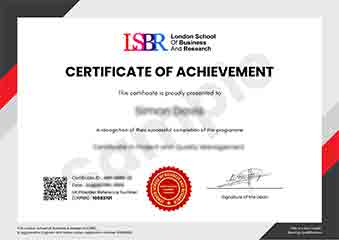
Sample Certificate
Preview the certificate you'll receive upon successful completion of this program.
Get Course Info
Receive the full course guide, pricing details, and enrolment instructions directly in your inbox.
Check your inbox!
Course details have been sent to your email.
Get Your Employer to Sponsor This Programme
Many employers offer professional development budgets. We make it easy for your company to invest in your growth with corporate invoicing and bulk enrolment options.
Email Template for Your Manager
Dear [Manager's Name],
I would like to request sponsorship for the Executive Development Programme in Mathematical Modeling for City Planning programme offered by LSBR London - Executive Education.
The programme costs $199 (one-time) and can be completed in 3-4 weeks alongside my regular duties.
Key benefits to our team:
- Immediately applicable skills
- Globally recognised certificate
- Corporate invoice available
Best regards,
[Your Name]
What Our Students Say
Hear from our students about their experience with the Executive Development Programme in Mathematical Modeling for City Planning at LSBR London - Executive Education.
Oliver Davies
United Kingdom"The course provided high-quality, detailed material that significantly enhanced my ability to apply mathematical modeling in city planning, equipping me with practical tools to tackle real-world urban development challenges. I've gained valuable skills that will undoubtedly benefit my career in urban planning."
Madison Davis
United States"The Executive Development Programme in Mathematical Modeling for City Planning has significantly enhanced my ability to apply complex models to real-world urban challenges, making my solutions more data-driven and effective. This skill set has been invaluable in my recent promotion to a senior planning analyst role, where I now lead projects that require sophisticated modeling techniques."
Hans Weber
Germany"The course structure was meticulously organized, providing a clear pathway from foundational concepts to advanced applications in city planning, which greatly enhanced my understanding and practical skills. The comprehensive content and real-world case studies were particularly beneficial, offering valuable insights into how mathematical modeling can drive effective urban development."
Your Certification Journey
Four simple steps from enrolment to your globally recognised certificate
Enrol Online
Complete your enrolment in under 2 minutes with secure checkout
Start Learning
Get instant access to all course materials and start at your own pace
Complete Modules
Work through the curriculum with expert support available throughout
Get Certified
Receive your LSBR London certificate recognised across 180+ countries
LSBR London by the Numbers
Join a global community of professionals advancing their careers
Students Enrolled
Countries Represented
Average Rating
Career Progression