
Executive Development Programme in Medical Anthropology: Fieldwork and Data Collection
This program equips medical professionals with advanced anthropological fieldwork skills to enhance patient-centered care and cultural competency.
Executive Development Programme in Medical Anthropology: Fieldwork and Data Collection
Programme Overview
This course is for healthcare professionals, researchers, and students aiming to enhance their understanding of medical anthropology. First, they will learn to design and conduct fieldwork. Participants will gain practical skills in data collection methods.
Next, they will analyze and interpret qualitative data. Finally, they will apply these skills to real-world health scenarios. Participants will gain confidence in navigating cultural complexities within healthcare settings.
What You'll Learn
Unlock the power of cultural understanding in healthcare. Enroll in our Executive Development Programme in Medical Anthropology: Fieldwork and Data Collection. First, you will immerse yourself in the dynamic world of medical anthropology. Then, gain hands-on experience with real-world fieldwork. Most importantly, learn to collect and analyze data that drives meaningful change in healthcare systems.
This programme actively engages you in a supportive community. Furthermore, you will work alongside professionals from diverse backgrounds. Thus, fostering a rich exchange of ideas and experiences. Next, you will develop skills highly sought after in today's global healthcare landscape. From there, career opportunities will emerge in areas such as public health, healthcare management, and policy development.
Moreover, our unique blend of theoretical knowledge and practical application sets this programme apart. Most notably, you will conduct fieldwork under expert guidance. Finally, you will graduate with a robust toolkit. This will empower you to navigate complex healthcare challenges with confidence and empathy. Join us and become a catalyst for change in healthcare.
Programme Highlights
Industry-Aligned Curriculum
Developed with industry leaders to ensure practical, job-ready skills valued by employers worldwide.
Expert Faculty
Learn from experienced professionals with real-world expertise in your chosen field.
Flexible Learning
Study at your own pace, from anywhere in the world, with our flexible online platform.
Industry Focus
Practical, real-world knowledge designed to meet the demands of today's competitive job market.
Latest Curriculum
Stay ahead with constantly updated content reflecting the latest industry trends and best practices.
Career Advancement
Unlock new opportunities with a globally recognized qualification respected by employers.
Topics Covered
- Introduction to Medical Anthropology: Explore the foundations of medical anthropology and its relevance to global health.
- Cultural Competency in Healthcare: Develop skills to understand and navigate cultural differences in medical settings.
- Research Design and Ethics in Fieldwork: Learn to design ethical research projects and navigate fieldwork challenges.
- Qualitative Data Collection Methods: Master techniques such as interviews, focus groups, and participant observation.
- Data Analysis and Interpretation: Analyze qualitative data using thematic analysis, grounded theory, and other methods.
- Writing and Publishing in Medical Anthropology: Develop skills to write and publish research findings in academic journals and books.
Key Facts
### Key Facts
Audience:
Aspiring researchers in medical anthropology.
Professionals aiming to enhance their fieldwork skills.
Students eager to conduct effective data collection.
Prerequisites:
Basic understanding of medical anthropology.
Completion of an introductory research methods course.
First-degree in social sciences or related field is beneficial.
Outcomes:
Learn to plan and execute fieldwork in diverse settings.
Develop skills in ethical data collection and analysis.
Gain confidence in applying anthropological methods to medical research.
Why This Course
Learners should pick 'Executive Development Programme in Medical Anthropology: Fieldwork and Data Collection' due to several compelling reasons.
First, this programme equips you with practical skills. You will learn to gather and analyse data first-hand. Then, you will apply these skills in real-world settings. This makes you more effective in your work.
Second, it broadens your perspective. You will engage with diverse communities. This will enhance your understanding of cultural factors in healthcare. Consequently, this will improve your ability to work inclusively with people from different backgrounds.
Finally, it fosters professional growth. You will develop leadership skills in conducting fieldwork. This will allow you to manage projects. Consequently, you will be better prepared for more senior roles.
Programme Title
Executive Development Programme in Medical Anthropology: Fieldwork and Data Collection
Course Brochure
Download our comprehensive course brochure with all details
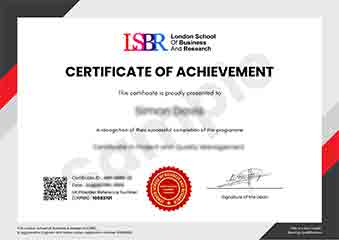
Sample Certificate
Preview the certificate you'll receive upon successful completion of this program.
Pay as an Employer
Request an invoice for your company to pay for this course. Perfect for corporate training and professional development.
What People Say About Us
Hear from our students about their experience with the Executive Development Programme in Medical Anthropology: Fieldwork and Data Collection at LSBR London - Executive Education.
James Thompson
United Kingdom"The course content was incredibly comprehensive, covering a wide range of topics in medical anthropology that I found both fascinating and relevant to my career. I particularly appreciated the emphasis on practical skills in fieldwork and data collection, which has already proven invaluable in my current research projects."
Zoe Williams
Australia"The Executive Development Programme in Medical Anthropology: Fieldwork and Data Collection has been instrumental in honing my skills in cultural sensitivity and data interpretation, which have significantly enhanced my ability to navigate diverse healthcare settings and contribute more effectively to policy development. The practical applications of the course have directly impacted my career, opening doors to new opportunities in global health initiatives and community health projects."
Ruby McKenzie
Australia"The course structure was exceptionally well-organized, with a clear progression from theoretical foundations to practical fieldwork techniques. The comprehensive content not only deepened my understanding of medical anthropology but also provided valuable insights into real-world applications, significantly enhancing my professional growth."