
Executive Development Programme in Medical Anthropology in Disaster and Humanitarian Aid
This program equips medical professionals with cultural competency and disaster response skills to enhance humanitarian aid effectiveness.
Executive Development Programme in Medical Anthropology in Disaster and Humanitarian Aid
Programme Overview
This course targets healthcare professionals and humanitarian workers. First, it prepares participants to tackle disasters and crises. Participants will also gain knowledge of medical anthropology. They will learn to respond thoughtfully to disasters and crises. Next, they will learn to address the cultural aspects of health in disaster settings.
Moreover, they will acquire practical skills in disaster management and humanitarian aid. This is achieved through real-world case studies. Finally, participants will be able to design and implement effective healthcare and aid programs.
What You'll Learn
Dive into the heart of global health challenges with our Executive Development Programme in Medical Anthropology in Disaster and Humanitarian Aid. This immersive experience equips you with the tools to understand and act in crises. First, you'll explore the cultural and social dynamics of health and illness. Next, you'll learn how to navigate disasters and humanitarian crises. Most importantly, you'll gain practical skills in project management and policy advocacy.
Career opportunities await in international aid organizations, NGOs, and government agencies. Moreover, you'll become a leader in shaping health policies and interventions. Furthermore, our faculty of renowned experts provides real-world insights and mentorship. Join us to make a tangible difference in the lives of people affected by disasters.
We are a highly responsive and hands-on institution. You will work on real disaster and humanitarian challenges, gain access to cutting-edge research and networks. Be at the forefront of medical anthropology. Be a beacon of hope in times of crisis. Enroll today.
Programme Highlights
Industry-Aligned Curriculum
Developed with industry leaders to ensure practical, job-ready skills valued by employers worldwide.
Expert Faculty
Learn from experienced professionals with real-world expertise in your chosen field.
Flexible Learning
Study at your own pace, from anywhere in the world, with our flexible online platform.
Industry Focus
Practical, real-world knowledge designed to meet the demands of today's competitive job market.
Latest Curriculum
Stay ahead with constantly updated content reflecting the latest industry trends and best practices.
Career Advancement
Unlock new opportunities with a globally recognized qualification respected by employers.
Topics Covered
- Introduction to Medical Anthropology: Understand the fundamentals of medical anthropology and its relevance to disaster and humanitarian aid.
- Cultural Competency in Healthcare: Develop skills to provide culturally sensitive care in diverse disaster and humanitarian settings.
- Disaster Management and Response: Learn the principles of disaster management and response strategies tailored to medical needs.
- Anthropological Approaches to Health Systems: Explore how anthropological methods can improve health systems in crisis and post-crisis environments.
- Ethical Considerations in Disaster and Humanitarian Aid: Examine the ethical dilemmas faced in medical decision-making during disasters and humanitarian crises.
- Case Studies in Medical Anthropology and Disaster: Analyze real-world case studies to apply theoretical knowledge to practical scenarios.
Key Facts
Audience
Open to professionals worldwide
First step for beginners in the field
Also suitable for practitioners seeking a refresh
Prerequisites
Undergraduate degree preferred
Medical or humanitarian background
Applicants lacking these may be considered. Contact us
for more info.
Outcomes
Gain a solid understanding of medical anthropology
Learn to apply this knowledge in disaster and humanitarian contexts
Develop skills to assess and improve aid programs
Engage with a global network of professionals
Why This Course
Learners should pick the 'Executive Development Programme in Medical Anthropology in Disaster and Humanitarian Aid' because it offers unique benefits. Firstly, it equips students with crucial skills needed for humanitarian response. It allows learners to understand people's needs better through medical anthropology. Secondly, it provides hands-on training so students learn to act in emergencies. This prepares them to work in the field. Thirdly, it offers networking opportunities to connect with professionals in the field. This is vital for career growth.
Programme Title
Executive Development Programme in Medical Anthropology in Disaster and Humanitarian Aid
Course Brochure
Download our comprehensive course brochure with all details
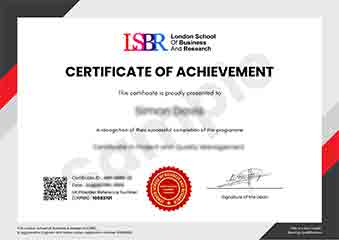
Sample Certificate
Preview the certificate you'll receive upon successful completion of this program.
Pay as an Employer
Request an invoice for your company to pay for this course. Perfect for corporate training and professional development.
What People Say About Us
Hear from our students about their experience with the Executive Development Programme in Medical Anthropology in Disaster and Humanitarian Aid at LSBR London - Executive Education.
James Thompson
United Kingdom"The course content was incredibly comprehensive, covering a wide range of topics that provided a deep understanding of medical anthropology in disaster and humanitarian contexts. I gained practical skills in assessing community needs and designing culturally sensitive interventions, which I believe will be invaluable in my future career in global health."
James Thompson
United Kingdom"This programme has been a game-changer for my career in humanitarian aid. The industry-relevant insights and practical skills I gained, such as understanding cultural dynamics in disaster zones and applying anthropological methods to aid work, have not only made me more effective in my role but also opened up new opportunities for career advancement."
Ryan MacLeod
Canada"The course structure was exceptionally well-organized, with each module building seamlessly on the previous one, which made complex topics in medical anthropology accessible and engaging. The comprehensive content, enriched with real-world case studies, provided invaluable insights into disaster and humanitarian aid, significantly enhancing my professional growth and preparedness for future challenges."