
Executive Development Programme in Modeling Human Diseases in Vivo Systems
This program equips executives with insights into modeling human diseases in vivo, enhancing strategic decision-making and innovation in healthcare.
Executive Development Programme in Modeling Human Diseases in Vivo Systems
Programme Summary
The Executive Development Programme in Modeling Human Diseases in Vivo Systems is designed for senior scientists, researchers, and executives in the pharmaceutical, biotech, and medical device industries who seek to deepen their understanding and capability in developing in vivo models for mimicking human diseases. This program focuses on advanced methodologies and technologies used in the creation and analysis of in vivo models, including gene editing, stem cell technology, and advanced imaging techniques, to enhance the translation of preclinical research into clinical success.
Participants will acquire key skills in designing and implementing in vivo models that accurately represent human disease conditions, understanding the biological mechanisms underlying various diseases, and interpreting complex data from in vivo studies. They will also learn about regulatory considerations and best practices for model validation and application in drug discovery and development. By the end of the program, learners will be equipped to lead cross-disciplinary teams, contribute to innovative research, and drive impactful decisions that can accelerate the development of new therapies.
This program significantly enhances career prospects by enabling professionals to assume leadership roles in research and development, particularly in areas requiring expertise in in vivo modeling. It also prepares participants for roles that involve strategic decision-making, innovation, and the integration of diverse scientific and technical knowledge to advance the field of disease modeling and treatment.
Learning Outcomes
The Executive Development Programme in Modeling Human Diseases in Vivo Systems is a transformative educational initiative designed to equip healthcare professionals and researchers with cutting-edge knowledge and practical skills in translational research. This program focuses on the latest methodologies and technologies for modeling human diseases within in vivo systems, providing a robust framework for understanding disease mechanisms and developing effective therapeutic strategies.
Key topics include advanced genomics, stem cell biology, organoid technology, and the use of animal models to simulate human physiology and pathology. Participants will engage in hands-on laboratory sessions, interactive workshops, and collaborative projects that foster innovation and interdisciplinary collaboration.
Upon completion, graduates will be well-prepared to lead research initiatives, develop new treatments, and contribute to the advancement of personalized medicine. They will have the skills to design and execute experiments in vivo, interpret complex data, and communicate findings effectively to both scientific and non-scientific audiences.
Career opportunities for programme graduates are diverse and include positions in academic research institutions, pharmaceutical companies, biotech firms, and regulatory agencies. The programme also offers networking opportunities with industry leaders, enabling participants to forge valuable connections and advance their professional goals.
Programme Features
Industry-Aligned Curriculum
Developed with industry leaders for job-ready skills
Globally Recognised Certificate
Recognised by employers across 180+ countries
Flexible Online Learning
Study at your own pace with lifetime access
Instant Access
Start learning immediately, no application process
Constantly Updated Content
Latest industry trends and best practices
Career Advancement
87% report measurable career progression within 6 months
Course Modules
- Introduction to In Vivo Modeling: Provides an overview of in vivo models and their importance in disease research.: Cellular and Molecular Mechanisms: Explores the cellular and molecular basis of diseases.
- Animal Models and Ethics: Discusses the ethical considerations and types of animal models used in in vivo research.: Pharmacokinetics and Pharmacodynamics: Analyzes the absorption, distribution, metabolism, and excretion of drugs and their effects on the body.
- Experimental Design in In Vivo Studies: Covers the principles and practices of designing robust in vivo experiments.: Data Analysis and Interpretation: Teaches statistical methods and tools for analyzing in vivo data and interpreting results.
What's Included in This Programme
Here is what you get when you enrol with LSBR London
Programme Facts
Audience: Medical researchers, pharmaceutical scientists
Prerequisites: Basic biology knowledge, lab experience
Outcomes: Understand in vivo models, develop disease models, enhance research skills
Ready to advance your career?
Join thousands of professionals who have transformed their careers with LSBR London. Enrol today and start learning immediately.
Why Study This Programme
Enhanced Understanding of Complex Diseases: The Executive Development Programme in Modeling Human Diseases in Vivo Systems provides a comprehensive understanding of how diseases develop and progress within living organisms. This deep knowledge is invaluable for professionals aiming to innovate in fields such as drug discovery, biotechnology, and personalized medicine, thereby increasing their career impact by equipping them with the latest scientific methodologies and insights.
Advanced Modeling Techniques: Participants in this program gain expertise in advanced modeling techniques, including computational biology and systems biology. These skills are crucial for creating accurate in vivo models that can simulate human disease dynamics, reducing the need for animal testing and accelerating drug development processes. This not only enhances professional capabilities but also aligns with growing industry trends towards more ethical and efficient research practices.
Networking Opportunities: The program offers extensive networking opportunities with leading researchers, industry professionals, and academics. These connections can lead to collaborations, mentorship, and career advancement. For instance, professionals can form partnerships that facilitate joint research projects or access to new funding opportunities, significantly boosting their career prospects and impact in the scientific community.
"This programme gave me the confidence and credentials to secure a senior role. Highly recommend LSBR London."
— Sarah M., United Kingdom
Course Brochure
Download our comprehensive course brochure with all details
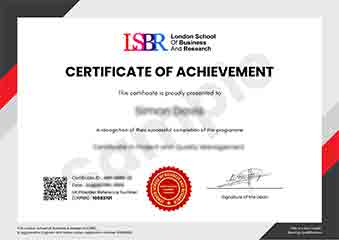
Sample Certificate
Preview the certificate you'll receive upon successful completion of this program.
Get Course Info
Receive the full course guide, pricing details, and enrolment instructions directly in your inbox.
Check your inbox!
Course details have been sent to your email.
Get Your Employer to Sponsor This Programme
Many employers offer professional development budgets. We make it easy for your company to invest in your growth with corporate invoicing and bulk enrolment options.
Email Template for Your Manager
Dear [Manager's Name],
I would like to request sponsorship for the Executive Development Programme in Modeling Human Diseases in Vivo Systems programme offered by LSBR London - Executive Education.
The programme costs $199 (one-time) and can be completed in 3-4 weeks alongside my regular duties.
Key benefits to our team:
- Immediately applicable skills
- Globally recognised certificate
- Corporate invoice available
Best regards,
[Your Name]
What Our Students Say
Hear from our students about their experience with the Executive Development Programme in Modeling Human Diseases in Vivo Systems at LSBR London - Executive Education.
James Thompson
United Kingdom"The course provided a comprehensive understanding of modeling human diseases in vivo, equipping me with valuable practical skills that I can directly apply in my research. It has significantly enhanced my ability to design and interpret in vivo experiments, opening up new avenues for my career in biomedical research."
Kai Wen Ng
Singapore"This program has been incredibly valuable, equipping me with the latest tools and techniques in modeling human diseases, which has directly enhanced my ability to contribute to innovative research projects at my company. It has opened up new career opportunities in the biotech sector, where my skills are now in high demand."
Liam O'Connor
Australia"The course structure was meticulously organized, providing a seamless transition from theoretical concepts to practical applications, which significantly enhanced my understanding of modeling human diseases. The comprehensive content and real-world examples were particularly beneficial for my professional growth, equipping me with valuable skills for my career in biotechnology."
Your Certification Journey
Four simple steps from enrolment to your globally recognised certificate
Enrol Online
Complete your enrolment in under 2 minutes with secure checkout
Start Learning
Get instant access to all course materials and start at your own pace
Complete Modules
Work through the curriculum with expert support available throughout
Get Certified
Receive your LSBR London certificate recognised across 180+ countries
LSBR London by the Numbers
Join a global community of professionals advancing their careers
Students Enrolled
Countries Represented
Average Rating
Career Progression