
Executive Development Programme in Spatial Modeling for Climate Change
This program equips executives with advanced spatial modeling skills to effectively address and mitigate climate change impacts in their industries.
Executive Development Programme in Spatial Modeling for Climate Change
Programme Overview
The Executive Development Programme in Spatial Modeling for Climate Change is designed to equip senior professionals and emerging leaders in the fields of environmental science, urban planning, and policy with advanced knowledge and practical skills in spatial modeling techniques relevant to addressing climate change. This program targets individuals who wish to enhance their capabilities in using spatial data and models to inform decision-making processes and strategic planning.
Participants will develop a robust understanding of spatial data analysis, statistical modeling, and geographic information systems (GIS). They will learn to apply these tools to assess climate risks, predict climate impacts, and develop effective mitigation and adaptation strategies. The curriculum covers topics such as climate data interpretation, spatial interpolation techniques, climate model outputs, and the integration of remote sensing data. Advanced topics include the application of machine learning algorithms for climate modeling and the use of spatial-temporal analysis to forecast climate-related phenomena.
This program has a profound impact on careers, preparing participants to lead innovative climate resilience initiatives, contribute to policy development, and drive sustainable development projects. Graduates will be well-equipped to manage complex spatial data, collaborate across disciplines, and drive evidence-based decision-making in the context of climate change. The skills acquired will enable them to lead impactful initiatives that can significantly reduce the adverse effects of climate change and foster sustainable development.
What You'll Learn
The Executive Development Programme in Spatial Modeling for Climate Change is designed to equip professionals with advanced skills in spatial analysis and modeling, essential for addressing the complex challenges of climate change. This program is a unique blend of theoretical knowledge and practical application, making it invaluable for leaders in environmental science, urban planning, and policy-making.
Key topics include advanced spatial data analysis, climate change impact assessment, and the use of Geographic Information Systems (GIS) and remote sensing technologies. Participants will learn to develop and apply spatial models to predict and mitigate the effects of climate change, offering insights that can inform policy and drive sustainable development.
Graduates of this program are well-prepared to implement spatial modeling techniques in various sectors. They can contribute to environmental impact assessments, urban planning initiatives, and policy development, ensuring that decisions are data-driven and effective. Career opportunities abound, from roles in research institutions and government agencies to positions in non-profit organizations and consulting firms focused on sustainability and environmental conservation.
By mastering these skills, participants will be at the forefront of addressing global environmental challenges, positioning themselves as leaders in the field of climate change mitigation and adaptation.
Programme Highlights
Industry-Aligned Curriculum
Developed with industry leaders for job-ready skills
Globally Recognised Certificate
Recognised by employers across 180+ countries
Flexible Online Learning
Study at your own pace with lifetime access
Instant Access
Start learning immediately, no application process
Constantly Updated Content
Latest industry trends and best practices
Career Advancement
87% report measurable career progression within 6 months
Topics Covered
- Introduction to Spatial Modeling: Introduces the basic concepts and applications of spatial modeling in climate change.: Data Collection and Management: Covers the process of collecting, processing, and managing climate data.
- Geospatial Analysis Techniques: Explores various analytical methods for spatial data.: Climate Change Scenarios: Discusses different scenarios and their implications for spatial modeling.
- Modeling Tools and Software: Reviews software and tools used in spatial modeling.: Case Studies in Climate Change: Analyzes real-world case studies to apply spatial modeling techniques.
Everything Included in Your Enrolment
Here is what you get when you enrol with LSBR London
Key Facts
Audience: Climate scientists, urban planners, data analysts
Prerequisites: Basic knowledge of GIS, Python
Outcomes: Proficient in spatial modeling techniques, able to analyze climate data
Ready to advance your career?
Join thousands of professionals who have transformed their careers with LSBR London. Enrol today and start learning immediately.
Why This Course
Enhance Expertise: The Executive Development Programme in Spatial Modeling for Climate Change equips professionals with advanced skills in spatial modeling techniques, crucial for understanding and addressing climate change impacts. This specialization can significantly enhance one's expertise, positioning them as key leaders in environmental science and policy.
Career Advancement: Participants gain knowledge in cutting-edge technologies and methodologies, such as Geographic Information Systems (GIS) and remote sensing. These skills are highly valued in the job market, opening up opportunities for career advancement in sectors like environmental consulting, urban planning, and climate research.
Strategic Decision-Making: The program provides tools for analyzing and visualizing climate data, enabling professionals to make informed strategic decisions. Whether in governmental roles, non-profits, or private industries, these skills are essential for developing and implementing effective climate adaptation and mitigation strategies.
Network Expansion: Engaging in this program allows professionals to connect with a global network of experts and peers. These connections can lead to collaborations, mentorship opportunities, and a broader perspective on global climate challenges, fostering a more collaborative and impactful approach to addressing these issues.
"This programme gave me the confidence and credentials to secure a senior role. Highly recommend LSBR London."
— Sarah M., United Kingdom
Course Brochure
Download our comprehensive course brochure with all details
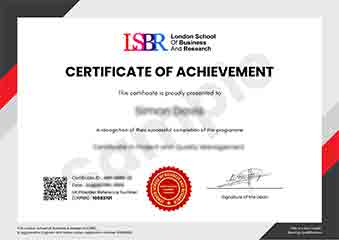
Sample Certificate
Preview the certificate you'll receive upon successful completion of this program.
Get Course Info
Receive the full course guide, pricing details, and enrolment instructions directly in your inbox.
Check your inbox!
Course details have been sent to your email.
Get Your Employer to Sponsor This Programme
Many employers offer professional development budgets. We make it easy for your company to invest in your growth with corporate invoicing and bulk enrolment options.
Email Template for Your Manager
Dear [Manager's Name],
I would like to request sponsorship for the Executive Development Programme in Spatial Modeling for Climate Change programme offered by LSBR London - Executive Education.
The programme costs $199 (one-time) and can be completed in 3-4 weeks alongside my regular duties.
Key benefits to our team:
- Immediately applicable skills
- Globally recognised certificate
- Corporate invoice available
Best regards,
[Your Name]
What People Say About Us
Hear from our students about their experience with the Executive Development Programme in Spatial Modeling for Climate Change at LSBR London - Executive Education.
Oliver Davies
United Kingdom"The course provided high-quality material that significantly enhanced my understanding of spatial modeling techniques crucial for climate change analysis. I gained practical skills that I can directly apply to real-world projects, which I believe will greatly benefit my career in environmental consultancy."
Greta Fischer
Germany"The Executive Development Programme in Spatial Modeling for Climate Change has significantly enhanced my ability to analyze and predict climate impacts, making my work in environmental consulting much more effective and in high demand. This program has not only deepened my technical skills but also provided me with practical tools that I immediately applied to real-world projects, leading to faster and more accurate results for my clients."
Kai Wen Ng
Singapore"The course structure was meticulously organized, providing a seamless transition from theoretical concepts to practical applications, which significantly enhanced my understanding of spatial modeling in climate change. The comprehensive content and real-world case studies were particularly beneficial, offering valuable insights that have accelerated my professional growth in this field."
Your Path to Certification
Four simple steps from enrolment to your globally recognised certificate
Enrol Online
Complete your enrolment in under 2 minutes with secure checkout
Start Learning
Get instant access to all course materials and start at your own pace
Complete Modules
Work through the curriculum with expert support available throughout
Get Certified
Receive your LSBR London certificate recognised across 180+ countries
LSBR London by the Numbers
Join a global community of professionals advancing their careers
Students Enrolled
Countries Represented
Average Rating
Career Progression
Join Thousands Who Transformed Their Careers
Our graduates consistently report measurable career growth and professional advancement after completing their programmes.
Still deciding?
Join 23,000+ professionals who advanced their careers. Enroll today and start learning immediately.
Enroll NowSecure payment • Instant access • Certificate included