
Global Certificate in Computational Methods for Trajectory
Master advanced computational trajectory methods to optimize complex systems, enhance predictive accuracy, and drive data-informed strategic decision-making.
Global Certificate in Computational Methods for Trajectory
Programme Summary
The Global Certificate in Computational Methods for Trajectory equips quantitative analysts and engineering specialists with advanced algorithms for modelling complex dynamic systems. This rigorous curriculum targets professionals operating within aerospace, financial modelling, or logistics sectors who require precise predictive capabilities. Participants engage with differential equations, numerical integration techniques, and stochastic process simulations to solve real-world trajectory challenges. The programme demands a foundational understanding of linear algebra and programming, ensuring that candidates possess the technical prerequisites for high-level computational work.
Learners master the implementation of Runge-Kutta methods and finite difference schemes to approximate solutions for non-linear ordinary differential equations. Students acquire proficiency in Python and MATLAB libraries designed for high-performance scientific computing and large-scale data analysis. The curriculum emphasizes error analysis, stability criteria, and convergence rates, enabling participants to validate their numerical results against theoretical benchmarks. Trainees also develop expertise in visualising multi-dimensional phase spaces, which facilitates the interpretation of chaotic behaviour and long-term system stability.
Completion of this certificate significantly enhances employability in sectors reliant on high-fidelity simulation and predictive analytics. Graduates command higher salaries due to their specialised ability to optimise fuel efficiency in orbital mechanics or refine risk models in algorithmic trading. Employers value this credential as evidence of rigorous analytical discipline and technical competence in handling complex computational tasks. This qualification positions candidates for leadership roles in research and development, where accurate trajectory prediction drives strategic decision-making and operational excellence.
Learning Outcomes
The Global Certificate in Computational Methods for Trajectory represents a rigorous academic pathway designed for professionals seeking to master the sophisticated analytical techniques required in modern dynamic systems. This programme distinguishes itself through its exclusive focus on the numerical simulation and optimisation of complex trajectories, a capability increasingly vital across aerospace engineering, autonomous vehicle navigation, and advanced robotics. Participants engage with a curriculum that bridges theoretical mathematics and practical application, ensuring they possess the technical depth necessary to solve high-stakes operational challenges.
Core modules explore advanced numerical integration schemes, optimal control theory, and stochastic modelling techniques. Students develop proficiency in implementing these methods using industry-standard computational environments, such as Python and MATLAB, while critically evaluating algorithmic efficiency and stability. The coursework emphasises real-world problem-solving, requiring learners to design robust simulation frameworks that can handle non-linear dynamics and uncertainty with precision. By grounding abstract concepts in tangible engineering scenarios, the certificate ensures that theoretical knowledge translates directly into actionable insights.
Graduates emerge equipped to lead technical teams in sectors demanding high-fidelity predictive modelling. They apply their expertise to optimise flight paths for commercial aviation, enhance the safety protocols of autonomous drones, or refine mission planning for space exploration initiatives. The skills acquired enable professionals to reduce computational costs while improving accuracy, a balance that defines competitive advantage in today’s data-driven markets.
Career opportunities span a diverse array of high-growth industries. Alumni frequently secure senior roles as computational engineers, data scientists, or systems architects within leading aerospace firms, defence contractors, and technology
Programme Features
Industry-Aligned Curriculum
Developed with industry leaders for job-ready skills
Globally Recognised Certificate
Recognised by employers across 180+ countries
Flexible Online Learning
Study at your own pace with lifetime access
Instant Access
Start learning immediately, no application process
Constantly Updated Content
Latest industry trends and best practices
Career Advancement
87% report measurable career progression within 6 months
Course Modules
- Introduction to Computational Trajectory Analysis: Establishes the fundamental definitions, historical context, and primary objectives of trajectory computation in global systems.: Numerical Integration Techniques: Examines standard algorithms such as Runge-Kutta and Verlet methods for solving differential equations governing motion.
- Coordinate Systems and Transformations: Details the conversion between Cartesian, spherical, and celestial coordinates essential for accurate spatial tracking.: Perturbation Theory and Orbital Mechanics: Analyzes gravitational influences from third bodies and non-spherical mass distributions on trajectory paths.
- Error Propagation and Sensitivity Analysis: Investigates how initial condition uncertainties and numerical rounding errors affect long-term prediction accuracy.: Practical Simulation and Case Studies: Applies learned methods to real-world scenarios including satellite deployment and interplanetary mission planning.
What's Included in This Programme
Here is what you get when you enrol with LSBR London
Programme Facts
Audience: Senior engineers and data scientists.
Prerequisites: Advanced mathematics and programming skills.
Outcomes: Mastery of trajectory computation techniques.
Ready to advance your career?
Join thousands of professionals who have transformed their careers with LSBR London. Enrol today and start learning immediately.
Why Study This Programme
Pursuing the Global Certificate in Computational Methods for Trajectory represents a strategic investment for professionals seeking to enhance their analytical capabilities in dynamic environments. This programme equips candidates with advanced technical proficiency, enabling them to model complex systems with precision and clarity.
Mastery of sophisticated simulation algorithms allows practitioners to predict system behaviours accurately, thereby reducing operational risks and optimising resource allocation across engineering and logistics sectors. This technical expertise directly translates into improved decision-making processes within high-stakes projects.
The curriculum fosters robust data interpretation skills, enabling graduates to extract meaningful insights from large-scale trajectory datasets. Such competence is increasingly valued by employers who require evidence-based strategies to navigate volatile markets and enhance competitive advantage.
Engagement with global case studies cultivates a nuanced understanding of international standards and best practices. This broadened perspective enhances cross-cultural collaboration and positions professionals as versatile assets within multinational organisations.
Completion of the certificate signals a commitment to continuous professional development, distinguishing candidates in a crowded job market. It demonstrates adaptability and a proactive approach to integrating emerging computational technologies into traditional workflows.
This qualification bridges the gap between theoretical knowledge and practical application, ensuring that professionals remain at the forefront of industry innovation. By acquiring these specialised skills, individuals can drive organisational efficiency and contribute significantly to strategic objectives, securing a sustainable trajectory for their career advancement.
"This programme gave me the confidence and credentials to secure a senior role. Highly recommend LSBR London."
— Sarah M., United Kingdom
Course Brochure
Download our comprehensive course brochure with all details
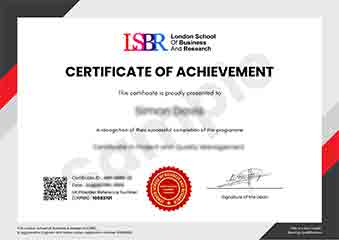
Sample Certificate
Preview the certificate you'll receive upon successful completion of this program.
Get Course Info
Receive the full course guide, pricing details, and enrolment instructions directly in your inbox.
Check your inbox!
Course details have been sent to your email.
Get Your Employer to Sponsor This Programme
Many employers offer professional development budgets. We make it easy for your company to invest in your growth with corporate invoicing and bulk enrolment options.
Email Template for Your Manager
Dear [Manager's Name],
I would like to request sponsorship for the Global Certificate in Computational Methods for Trajectory programme offered by LSBR London - Executive Education.
The programme costs $99 (one-time) and can be completed in 3-4 weeks alongside my regular duties.
Key benefits to our team:
- Immediately applicable skills
- Globally recognised certificate
- Corporate invoice available
Best regards,
[Your Name]
What Our Students Say
Hear from our students about their experience with the Global Certificate in Computational Methods for Trajectory at LSBR London - Executive Education.
James Thompson
United Kingdom"The curriculum provides a rigorous yet accessible deep dive into numerical integration techniques, bridging the gap between theoretical mechanics and actual coding implementation. I now feel confident applying these computational methods to complex orbital dynamics problems, which has significantly enhanced my technical portfolio for aerospace engineering roles."
Brandon Wilson
United States"Mastering the computational techniques in this program gave me the confidence to optimize complex trajectory simulations for my aerospace projects. This specialized knowledge directly accelerated my promotion to a senior engineering role by bridging the gap between theoretical models and real-world flight dynamics."
Kavya Reddy
India"The logical progression of the modules provided a solid foundation for understanding complex trajectory optimization techniques. This structured approach significantly enhanced my ability to apply computational methods to real-world aerospace challenges, directly boosting my professional confidence."
Your Certification Journey
Four simple steps from enrolment to your globally recognised certificate
Enrol Online
Complete your enrolment in under 2 minutes with secure checkout
Start Learning
Get instant access to all course materials and start at your own pace
Complete Modules
Work through the curriculum with expert support available throughout
Get Certified
Receive your LSBR London certificate recognised across 180+ countries
LSBR London by the Numbers
Join a global community of professionals advancing their careers
Students Enrolled
Countries Represented
Average Rating
Career Progression