
Global Certificate in Managing Health Disparities: Anthropological Approaches
This certificate equips professionals with anthropological tools to identify, address, and mitigate health disparities, fostering more equitable healthcare outcomes.
Global Certificate in Managing Health Disparities: Anthropological Approaches
Programme Overview
The 'Global Certificate in Managing Health Disparities: Anthropological Approaches' is tailored for healthcare professionals, public health workers, and policymakers. The course equips participants with tools to understand and address health disparities. First, you will gain skills to analyze health disparities within diverse cultural contexts to identify their root causes. Next, you will learn to apply anthropological theories and methods to develop culturally appropriate strategies. You will actively engage in case studies and practical exercises.
Moreover, the course guides you through designing and implementing interventions. Firstly, you will create policies aimed at reducing health disparities. Then, you will evaluate the effectiveness of these interventions. Finally, you will be ready to lead efforts that promote health equity and justice.
What You'll Learn
Explore the critical intersection of health and culture. Our Global Certificate in Managing Health Disparities: Anthropological Approaches empowers you to bridge gaps in healthcare. First, dive deep into anthropological methods. Next, analyze how social, cultural, and economic factors shape health outcomes. Furthermore, learn to design and implement effective interventions. Gain hands-on experience through case studies and interactive workshops. Boost your career with skills highly valued in public health, NGOs, and policy-making. Moreover, become a champion for health equity worldwide. Enroll now. Make a global impact. Transform lives. Start your journey today!
Programme Highlights
Industry-Aligned Curriculum
Developed with industry leaders to ensure practical, job-ready skills valued by employers worldwide.
Expert Faculty
Learn from experienced professionals with real-world expertise in your chosen field.
Flexible Learning
Study at your own pace, from anywhere in the world, with our flexible online platform.
Industry Focus
Practical, real-world knowledge designed to meet the demands of today's competitive job market.
Latest Curriculum
Stay ahead with constantly updated content reflecting the latest industry trends and best practices.
Career Advancement
Unlock new opportunities with a globally recognized qualification respected by employers.
Topics Covered
- Introduction to Health Disparities: Students will understand the basic concepts and definitions of health disparities.
- Anthropological Perspectives: Explore how anthropological theories and methods can be applied to study health disparities.
- Cultural Competency in Healthcare: Learn strategies for providing culturally sensitive and appropriate healthcare services.
- Structural Determinants of Health: Examine how social, economic, and political factors influence health outcomes.
- Community Engagement and Participatory Research: Develop skills in engaging communities and conducting participatory research to address health disparities.
- Policy and Advocacy: Understand the role of policy in shaping health disparities and learn advocacy strategies for change.
Key Facts
Audience: This course is for healthcare providers, public health workers, and anyone interested in reducing health disparities. It welcomes all who want to make a difference in health equity.
Prerequisites: Firstly, you need basic computer skills. Additionally, some knowledge of social sciences can be helpful, but it is not required. After that, you're ready to enroll. If you have completed an undergraduate degree, this course is ideal for you.
Outcomes: First, you will gain a deep understanding of anthropological approaches to health disparities. Next, you will learn to apply these approaches in real-world settings. Finally, you will be equipped to advocate for and implement change. In essence, you will be a catalyst for health equity.
Why This Course
Firstly, this certificate empowers learners to tackle major health issues. It equips participants with unique tools to understand and address health disparities.
Moreover, it fosters a diverse community of learners. Through interactive sessions it encourages sharing different perspectives and experiences.
Lastly, it guides learners to develop practical skills. This certificate helps participants to apply what they've learned as they work towards improving health outcomes.
Programme Title
Global Certificate in Managing Health Disparities: Anthropological Approaches
Course Brochure
Download our comprehensive course brochure with all details
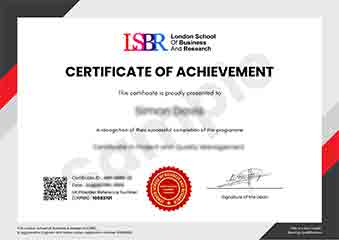
Sample Certificate
Preview the certificate you'll receive upon successful completion of this program.
Pay as an Employer
Request an invoice for your company to pay for this course. Perfect for corporate training and professional development.
What People Say About Us
Hear from our students about their experience with the Global Certificate in Managing Health Disparities: Anthropological Approaches at LSBR London - Executive Education.
Charlotte Williams
United Kingdom"The course material was incredibly comprehensive, providing a deep dive into the anthropological perspectives on health disparities. I gained practical skills in analyzing and addressing health inequities, which I believe will be invaluable in my future career."
Oliver Davies
United Kingdom"This course has been a game-changer for my career in public health. The anthropological approaches I learned have given me a unique perspective on health disparities, making me more effective in my role and opening up new opportunities for career advancement. I now feel confident in applying these skills to real-world situations, from community health projects to policy development."
Connor O'Brien
Canada"The course structure was exceptionally well-organized, with modules that flowed seamlessly from one topic to the next, making complex concepts easy to grasp. The comprehensive content not only deepened my understanding of health disparities but also provided practical insights that I can directly apply to my future professional endeavors."