
Global Certificate in Mathematical Simulation of Materials Processing
Master advanced simulation techniques to optimize materials processing, driving innovation and efficiency in global manufacturing industries.
Global Certificate in Mathematical Simulation of Materials Processing
Programme Summary
The Global Certificate in Mathematical Simulation of Materials Processing targets senior engineers, research scientists, and technical leaders seeking to bridge the gap between theoretical modelling and industrial application. This rigorous programme delivers advanced training in computational methods for solidification, casting, and additive manufacturing processes. Participants engage with complex numerical algorithms that govern heat transfer, fluid dynamics, and microstructural evolution during material formation. The curriculum addresses the critical need for predictive accuracy in modern manufacturing environments where trial-and-error approaches incur prohibitive costs. Professionals from aerospace, automotive, and energy sectors will find this course essential for optimising production workflows. The programme structure accommodates working experts by integrating modular learning pathways with intensive computational workshops.
Learners master the formulation of partial differential equations that describe multiphase flow and phase transformation phenomena. Students gain proficiency in finite element and finite volume methods using industry-standard software platforms. The course emphasises the validation of simulation models against experimental data to ensure reliability in design decisions. Participants develop the ability to interpret complex simulation outputs for process parameter optimisation. Critical thinking skills are sharpened through case studies involving defect prediction and mitigation strategies. Graduates learn to communicate technical findings effectively to multidisciplinary teams comprising metallurgists, software developers, and production managers.
Completion of this certificate significantly enhances employability in high-tech manufacturing and R&D divisions. Alumni secure roles in process engineering, simulation consultancy, and product development leadership. The credential signals mastery of digital twin technologies that drive Industry transformation initiatives. Organisations benefit
Learning Outcomes
This rigorous Global Certificate equips professionals with the advanced computational techniques required to model complex materials processing phenomena. In an era where physical prototyping is increasingly costly and time-consuming, the ability to simulate material behaviour with high fidelity represents a significant competitive advantage. Participants gain mastery over numerical methods and thermodynamic principles, enabling them to predict microstructural evolution and mechanical properties before manufacturing begins.
The curriculum delves into critical areas such as finite element analysis, computational fluid dynamics, and phase-field modelling. Students engage with real-world case studies involving additive manufacturing, casting, and heat treatment processes. By bridging the gap between theoretical physics and practical engineering, the programme fosters a deep understanding of how process parameters influence final product quality. Learners utilise industry-standard software to solve multi-physics problems, ensuring they are prepared for the technical demands of modern engineering environments.
Graduates emerge with the capacity to optimise production lines, reduce waste, and accelerate time-to-market for new materials. These skills are directly applicable in sectors ranging from aerospace and automotive engineering to biomedical device manufacturing. Professionals can leverage their expertise to troubleshoot defects, enhance material performance, and drive innovation in sustainable manufacturing practices.
Career prospects are robust for those who complete this certificate. Alumni often secure roles as simulation engineers, process developers, or R&D specialists within leading multinational corporations. Many also advance into technical leadership positions, guiding strategic decisions on manufacturing technologies. This qualification serves as a powerful differentiator for engineers seeking to specialise in digital twin technologies and
Programme Features
Industry-Aligned Curriculum
Developed with industry leaders for job-ready skills
Globally Recognised Certificate
Recognised by employers across 180+ countries
Flexible Online Learning
Study at your own pace with lifetime access
Instant Access
Start learning immediately, no application process
Constantly Updated Content
Latest industry trends and best practices
Career Advancement
87% report measurable career progression within 6 months
Course Modules
- Fundamentals of Computational Materials Science: Introduces the basic principles of numerical methods and material behavior modeling.: Thermodynamics and Phase Transformations: Examines the thermodynamic driving forces and kinetic models of phase changes during processing.
- Fluid Dynamics and Heat Transfer: Focuses on the simulation of flow fields and thermal profiles in casting and forming operations.: Solid Mechanics and Deformation Analysis: Covers the mechanical response of materials under stress, including plasticity and fracture modeling.
- Microstructure Evolution Modeling: Explores techniques for simulating grain growth, recrystallization, and microstructural development.: Industrial Applications and Case Studies: Applies simulation tools to real-world manufacturing scenarios, validating results against experimental data.
What's Included in This Programme
Here is what you get when you enrol with LSBR London
Programme Facts
Audience: Engineering professionals advancing materials processing expertise.
Prerequisites: Fundamental knowledge of mathematics and physics.
Outcomes: Mastery of computational simulation techniques for industrial application.
Ready to advance your career?
Join thousands of professionals who have transformed their careers with LSBR London. Enrol today and start learning immediately.
Why Study This Programme
Acquiring the Global Certificate in Mathematical Simulation of Materials Processing represents a strategic investment in high-value technical expertise. This qualification equips professionals with the analytical rigour necessary to navigate the complexities of modern materials engineering. The following points delineate the distinct advantages of this programme.
Mastery of advanced computational modelling techniques enables practitioners to predict material behaviour with unprecedented accuracy. By utilising finite element analysis and computational fluid dynamics, candidates learn to optimise manufacturing processes before physical prototyping. This capability significantly reduces development costs and accelerates time-to-market for new products, making certified individuals indispensable to R&D teams seeking efficiency and innovation.
The curriculum fosters a deep understanding of thermodynamic and kinetic principles within industrial contexts. Graduates develop the ability to interpret complex data sets and translate mathematical outputs into actionable engineering decisions. Such proficiency bridges the gap between theoretical science and practical application, enhancing problem-solving skills that are highly sought after in sectors ranging from aerospace to automotive manufacturing.
Certification signals a commitment to professional excellence and continuous learning. In a competitive job market, this distinction differentiates candidates by demonstrating verified competence in niche, high-demand skills. Employers value this credential as evidence of a candidate’s ability to handle sophisticated simulation tools, thereby increasing opportunities for leadership roles in technical management and strategic planning.
The global perspective embedded in the certificate prepares professionals for international collaboration. Understanding diverse industrial standards and simulation methodologies allows graduates to operate effectively within multinational teams. This broadened outlook enhances adaptability and
"This programme gave me the confidence and credentials to secure a senior role. Highly recommend LSBR London."
— Sarah M., United Kingdom
Course Brochure
Download our comprehensive course brochure with all details
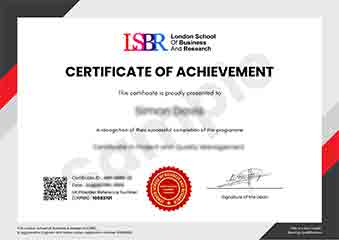
Sample Certificate
Preview the certificate you'll receive upon successful completion of this program.
Get Course Info
Receive the full course guide, pricing details, and enrolment instructions directly in your inbox.
Check your inbox!
Course details have been sent to your email.
Get Your Employer to Sponsor This Programme
Many employers offer professional development budgets. We make it easy for your company to invest in your growth with corporate invoicing and bulk enrolment options.
Email Template for Your Manager
Dear [Manager's Name],
I would like to request sponsorship for the Global Certificate in Mathematical Simulation of Materials Processing programme offered by LSBR London - Executive Education.
The programme costs $99 (one-time) and can be completed in 3-4 weeks alongside my regular duties.
Key benefits to our team:
- Immediately applicable skills
- Globally recognised certificate
- Corporate invoice available
Best regards,
[Your Name]
What Our Students Say
Hear from our students about their experience with the Global Certificate in Mathematical Simulation of Materials Processing at LSBR London - Executive Education.
Sophie Brown
United Kingdom"The curriculum provided a rigorous yet accessible deep dive into the computational modeling of complex material behaviors, bridging the gap between theoretical physics and real-world engineering applications. I gained invaluable proficiency in simulating phase transformations and thermal processes, which has significantly enhanced my ability to optimize manufacturing workflows in my current role."
Muhammad Hassan
Malaysia"Mastering the simulation techniques in this program allowed me to significantly reduce physical prototyping costs for my team, directly impacting our production efficiency. This practical expertise not only streamlined our material processing workflows but also positioned me for a senior role focused on digital manufacturing optimization."
Kavya Reddy
India"The logical progression of modules provided a solid foundation for understanding complex material behaviors through simulation. This structured approach significantly enhanced my ability to apply theoretical concepts to practical engineering challenges, directly boosting my professional confidence."
Your Certification Journey
Four simple steps from enrolment to your globally recognised certificate
Enrol Online
Complete your enrolment in under 2 minutes with secure checkout
Start Learning
Get instant access to all course materials and start at your own pace
Complete Modules
Work through the curriculum with expert support available throughout
Get Certified
Receive your LSBR London certificate recognised across 180+ countries
LSBR London by the Numbers
Join a global community of professionals advancing their careers
Students Enrolled
Countries Represented
Average Rating
Career Progression