
Postgraduate Certificate in Calculus in Genetic Analysis and Modeling
Master calculus-driven genetic modeling to unlock advanced analytical skills and drive impactful, data-led breakthroughs in modern biological research.
Postgraduate Certificate in Calculus in Genetic Analysis and Modeling
Programme Summary
The Postgraduate Certificate in Calculus in Genetic Analysis and Modeling targets advanced biologists, data scientists, and healthcare professionals seeking rigorous quantitative training. This intensive curriculum integrates differential equations, stochastic processes, and numerical methods directly into the study of complex genetic systems. Participants engage with advanced computational frameworks designed to simulate gene expression dynamics, population genetics, and hereditary disease progression. The programme demands a strong foundational understanding of mathematics and biology, ensuring that only candidates prepared for high-level analytical challenges succeed.
Learners acquire mastery in constructing predictive models for phenotypic variation and genomic instability using partial differential equations. Students develop proficiency in Python and R libraries tailored for high-throughput sequencing data analysis and simulation. The course emphasises the derivation of kinetic models for DNA replication and repair mechanisms, fostering deep insight into molecular biological processes. Participants also learn to validate theoretical predictions against empirical datasets, bridging the gap between abstract mathematical theory and observable biological phenomena.
Graduates emerge as highly specialised analysts capable of leading quantitative research in pharmaceutical companies and academic institutions. This qualification significantly enhances employability in bioinformatics roles, where precise mathematical modelling drives drug discovery and personalised medicine initiatives. Alumni frequently secure positions as lead geneticists or quantitative researchers within leading biotechnology firms and public health organisations. The certificate distinguishes holders as experts who can translate complex genetic data into actionable strategic insights for clinical and commercial applications.
Learning Outcomes
This Postgraduate Certificate equips advanced practitioners with the rigorous mathematical frameworks essential for modern genomic research. As biological data expands exponentially, the ability to interpret complex genetic patterns through precise calculus-based modeling becomes a critical differentiator in the life sciences sector. The curriculum bridges the gap between abstract mathematical theory and tangible biological application, ensuring students gain a competitive edge in an increasingly data-driven industry.
Core modules focus on differential equations governing population genetics, stochastic processes in mutation analysis, and optimization techniques for high-dimensional genomic datasets. Students engage with real-world case studies, utilizing sophisticated software tools to simulate evolutionary trajectories and predict gene expression outcomes. This hands-on approach ensures that theoretical knowledge translates directly into practical analytical competence. Graduates emerge with the capacity to deconstruct noisy biological signals, identifying subtle genetic markers that traditional statistical methods might overlook.
Professionals completing this certificate are uniquely positioned to drive innovation within pharmaceutical R&D, bioinformatics firms, and academic research institutions. They apply their skills to design more effective gene therapies, optimize crop resilience in agricultural biotechnology, and enhance personalized medicine protocols. The programme’s emphasis on computational modeling prepares graduates to lead interdisciplinary teams, fostering collaboration between mathematicians, biologists, and clinicians.
Career trajectories for alumni include roles as quantitative geneticists, bioinformatics analysts, and research scientists in leading global health organizations. The demand for experts who can navigate the intersection of calculus and genetics continues to rise, offering robust employment prospects and significant influence over future healthcare strategies. By mastering these advanced analytical tools
Programme Features
Industry-Aligned Curriculum
Developed with industry leaders for job-ready skills
Globally Recognised Certificate
Recognised by employers across 180+ countries
Flexible Online Learning
Study at your own pace with lifetime access
Instant Access
Start learning immediately, no application process
Constantly Updated Content
Latest industry trends and best practices
Career Advancement
87% report measurable career progression within 6 months
Course Modules
- Advanced Differential Calculus for Biological Systems: Applies multivariable calculus to model dynamic changes in gene expression and cellular processes.: Integral Calculus in Genomic Data Integration: Utilizes integration techniques to aggregate and analyze large-scale genomic datasets.
- Differential Equations in Population Genetics: Models the evolution of allele frequencies and population dynamics using ordinary and partial differential equations.: Numerical Methods for Genetic Modeling: Implements computational algorithms to solve complex calculus-based problems in genetic simulations.
- Optimization Techniques in Genetic Algorithms: Uses calculus-based optimization to refine parameters in genetic mapping and sequence alignment.: Statistical Calculus in Heritability Analysis: Combines probability theory with calculus to estimate genetic variance and heritability in complex traits.
What's Included in This Programme
Here is what you get when you enrol with LSBR London
Programme Facts
Audience: Experienced life-scientists seeking advanced quantitative modelling proficiency.
Prerequisites: Undergraduate degree in biology with strong mathematical foundations.
Outcomes: Mastery of calculus applications in complex genetic system analysis.
Ready to advance your career?
Join thousands of professionals who have transformed their careers with LSBR London. Enrol today and start learning immediately.
Why Study This Programme
The Postgraduate Certificate in Calculus in Genetic Analysis and Modeling offers a distinct strategic advantage for professionals seeking to bridge the gap between advanced mathematics and biological science. This rigorous programme equips candidates with the quantitative precision required to navigate the complexities of modern genomics.
It cultivates mastery in differential equations and stochastic processes, enabling practitioners to model gene expression dynamics with unprecedented accuracy. This technical proficiency allows for the prediction of cellular behaviour under varying conditions, a skill highly prized in pharmaceutical research and development sectors.
The curriculum emphasises the application of multivariate calculus to high-dimensional genetic datasets. Professionals gain the ability to interpret complex interactions within large-scale genomic data, facilitating more robust drug target identification and reducing the risk of clinical trial failures. This analytical depth directly translates to enhanced decision-making capabilities in biotech firms.
Graduates acquire a unique interdisciplinary language, allowing them to communicate effectively between computational scientists and wet-lab researchers. This collaborative competency accelerates project timelines and fosters innovation within cross-functional teams, positioning individuals as indispensable leaders in integrative biological projects.
The qualification signals a commitment to cutting-edge methodological rigour, significantly boosting employability in competitive global markets. Candidates demonstrate an ability to handle sophisticated mathematical frameworks, distinguishing themselves from peers who possess only basic statistical knowledge. This credential opens doors to senior analytical roles in both academia and industry.
"This programme gave me the confidence and credentials to secure a senior role. Highly recommend LSBR London."
— Sarah M., United Kingdom
Course Brochure
Download our comprehensive course brochure with all details
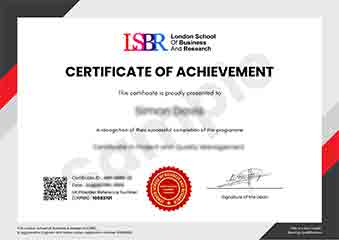
Sample Certificate
Preview the certificate you'll receive upon successful completion of this program.
Get Course Info
Receive the full course guide, pricing details, and enrolment instructions directly in your inbox.
Check your inbox!
Course details have been sent to your email.
Get Your Employer to Sponsor This Programme
Many employers offer professional development budgets. We make it easy for your company to invest in your growth with corporate invoicing and bulk enrolment options.
Email Template for Your Manager
Dear [Manager's Name],
I would like to request sponsorship for the Postgraduate Certificate in Calculus in Genetic Analysis and Modeling programme offered by LSBR London - Executive Education.
The programme costs $149 (one-time) and can be completed in 3-4 weeks alongside my regular duties.
Key benefits to our team:
- Immediately applicable skills
- Globally recognised certificate
- Corporate invoice available
Best regards,
[Your Name]
What Our Students Say
Hear from our students about their experience with the Postgraduate Certificate in Calculus in Genetic Analysis and Modeling at LSBR London - Executive Education.
Charlotte Williams
United Kingdom"The rigorous focus on stochastic modeling provided a deep understanding of how to quantify genetic variation, which was incredibly rewarding. I now feel confident applying these advanced calculus techniques to real-world genomic datasets, significantly boosting my technical proficiency in bioinformatics."
Ruby McKenzie
Australia"Mastering the calculus techniques for genetic modeling has allowed me to accurately predict hereditary patterns in my current role, bridging the gap between theoretical math and biological data. This specialized knowledge significantly boosted my credibility with clients and opened doors to senior analytical positions that require rigorous quantitative expertise."
Wei Ming Tan
Singapore"The logical progression from foundational calculus to complex genetic modeling provided a robust framework for understanding biological data. This structured approach significantly enhanced my ability to apply mathematical rigor to real-world genomic challenges, directly supporting my professional development in bioinformatics."
Your Certification Journey
Four simple steps from enrolment to your globally recognised certificate
Enrol Online
Complete your enrolment in under 2 minutes with secure checkout
Start Learning
Get instant access to all course materials and start at your own pace
Complete Modules
Work through the curriculum with expert support available throughout
Get Certified
Receive your LSBR London certificate recognised across 180+ countries
LSBR London by the Numbers
Join a global community of professionals advancing their careers
Students Enrolled
Countries Represented
Average Rating
Career Progression