
Postgraduate Certificate in Efficient Task Scheduling in Parallel Systems
This certificate equips professionals with advanced skills in optimizing task scheduling for parallel systems, enhancing computational efficiency and performance.
Postgraduate Certificate in Efficient Task Scheduling in Parallel Systems
Programme Overview
This course is for professionals and graduates keen on mastering task scheduling in parallel systems. First, you'll learn to identify and tackle bottlenecks in parallel processing. Next, you'll explore strategies to optimize task allocation. Furthermore, you'll gain hands-on experience with advanced scheduling algorithms. Finally, you'll understand how to evaluate and improve system performance.
In addition, you'll acquire skills in parallel programming paradigms. You will also learn to design and implement efficient scheduling solutions. Thus, you'll be well-prepared to enhance the performance of parallel systems. Furthermore, you'll boost your career prospects in fields requiring expertise in parallel computing and high-performance systems.
What You'll Learn
Dive into the future of computing with our Postgraduate Certificate in Efficient Task Scheduling in Parallel Systems. First, you'll explore the fundamentals of parallel computing. Next, you'll master advanced scheduling algorithms. Then, you'll gain hands-on experience with state-of-the-art tools and technologies.
Why choose this program? Firstly, you'll develop skills highly sought after in tech industries. Secondly, you'll learn to optimize performance in multi-core processors and distributed systems. Moreover, you'll open doors to exciting career opportunities. These include roles such as parallel computing specialist, systems architect, and high-performance computing engineer.
Furthermore, our unique approach combines theory with practical application. You'll work on real-world projects, ensuring you graduate with both knowledge and experience. In addition, our expert faculty will guide you every step of the way. Join us and become a leader in the dynamic field of parallel computing. Enroll now and take your career to the next level!
Programme Highlights
Industry-Aligned Curriculum
Developed with industry leaders to ensure practical, job-ready skills valued by employers worldwide.
Expert Faculty
Learn from experienced professionals with real-world expertise in your chosen field.
Flexible Learning
Study at your own pace, from anywhere in the world, with our flexible online platform.
Industry Focus
Practical, real-world knowledge designed to meet the demands of today's competitive job market.
Latest Curriculum
Stay ahead with constantly updated content reflecting the latest industry trends and best practices.
Career Advancement
Unlock new opportunities with a globally recognized qualification respected by employers.
Topics Covered
- Parallel System Architectures: Explore the fundamental designs and components of parallel systems.
- Task Scheduling Algorithms: Analyze various algorithms used for scheduling tasks in parallel environments.
- Performance Metrics and Analysis: Understand key metrics for evaluating the efficiency of task scheduling.
- Load Balancing Techniques: Investigate methods to distribute workloads evenly across parallel systems.
- Advanced Scheduling Strategies: Delve into sophisticated techniques for optimizing task scheduling.
- Case Studies and Practical Applications: Examine real-world examples and applications of efficient task scheduling.
Key Facts
### Key Facts: Postgraduate Certificate in Efficient Task Scheduling
Audience:
Professionals seeking to enhance task scheduling skills.
Engineers and IT specialists working with parallel systems.
Students aiming to specialize in parallel computing.
Prerequisites:
A bachelor's degree in computer science or a related field.
Basic understanding of parallel processing concepts.
Familiarity with programming languages such as C/C++ or Java.
Outcomes:
Students will master algorithms for efficient task scheduling.
They will gain hands-on experience with parallel system tools.
Participants will learn to optimize system performance through effective scheduling.
Graduates will be ready to implement advanced scheduling techniques in real-world scenarios.
Why This Course
Firstly, this program equips learners with in-demand skills. You will actively learn to manage tasks efficiently in parallel systems.
Furthermore, it offers flexibility. You can study at your own pace, balancing work and education.
Lastly, it opens doors to better job opportunities. Many industries need experts in parallel systems.
Programme Title
Postgraduate Certificate in Efficient Task Scheduling in Parallel Systems
Course Brochure
Download our comprehensive course brochure with all details
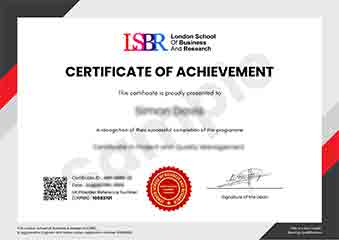
Sample Certificate
Preview the certificate you'll receive upon successful completion of this program.
Pay as an Employer
Request an invoice for your company to pay for this course. Perfect for corporate training and professional development.
What People Say About Us
Hear from our students about their experience with the Postgraduate Certificate in Efficient Task Scheduling in Parallel Systems at LSBR London - Executive Education.
Sophie Brown
United Kingdom"The course material was incredibly comprehensive, covering a wide range of algorithms and techniques for efficient task scheduling in parallel systems. I gained practical skills that I can directly apply to my current role, such as optimizing task allocation and reducing computational overhead, which has significantly enhanced my professional toolkit."
Charlotte Williams
United Kingdom"This course has been a game-changer for my career in systems engineering. The focus on practical applications of task scheduling in parallel systems has equipped me with industry-relevant skills that I can immediately apply to my work, leading to significant improvements in project efficiency."
Rahul Singh
India"The course structure was exceptionally well-organized, with a clear progression from fundamental concepts to advanced topics in parallel systems. The comprehensive content not only deepened my understanding of efficient task scheduling but also provided valuable insights into real-world applications, significantly enhancing my professional growth in the field."