
Postgraduate Certificate in Gene Replacement in Stem Cells for Disease Modeling
This program equips students with advanced skills in gene editing and stem cell technologies to model diseases and develop therapeutic strategies.
Postgraduate Certificate in Gene Replacement in Stem Cells for Disease Modeling
Programme Overview
This course targets professionals and researchers aiming to enhance their expertise in gene replacement techniques using stem cells.
First, participants will gain hands-on experience in advanced gene editing methods. They will learn to model diseases using stem cells. Meanwhile, learn to apply these skills to real-world research problems. Moreover, this course also provides the skills to implement CRISPR-Cas9 technology. This knowledge enables participants to contribute significantly to disease research and therapeutic development.
What You'll Learn
Embark on a transformative journey with our Postgraduate Certificate in Gene Replacement in Stem Cells for Disease Modeling. This cutting-edge program equips you with advanced skills in genetic engineering and stem cell technology. First, you'll dive deep into the fundamentals of gene replacement techniques. Next, you'll explore how these techniques can model and treat diseases.
Moreover, you'll gain hands-on experience in state-of-the-art laboratories. Furthermore, you'll collaborate with industry experts and researchers at the forefront of biomedical innovation.
Upon completion, you'll be uniquely positioned for careers in academic research, biotech companies, and pharmaceuticals. Additionally, you'll contribute to groundbreaking discoveries in personalized medicine and regenerative therapies. Don't just be part of the future of healthcare—shape it. Enroll today and become a pioneer in gene replacement and disease modeling.
Programme Highlights
Industry-Aligned Curriculum
Developed with industry leaders to ensure practical, job-ready skills valued by employers worldwide.
Expert Faculty
Learn from experienced professionals with real-world expertise in your chosen field.
Flexible Learning
Study at your own pace, from anywhere in the world, with our flexible online platform.
Industry Focus
Practical, real-world knowledge designed to meet the demands of today's competitive job market.
Latest Curriculum
Stay ahead with constantly updated content reflecting the latest industry trends and best practices.
Career Advancement
Unlock new opportunities with a globally recognized qualification respected by employers.
Topics Covered
- Introduction to Stem Cells and Gene Replacement: Overview of stem cell types and basic gene replacement techniques.
- Disease Modeling Fundamentals: Principles of using stem cells to model human diseases.
- Advanced Gene Editing Techniques: In-depth exploration of CRISPR/Cas9 and other gene editing tools.
- Stem Cell Differentiation and Applications: Methods for differentiating stem cells into specific cell types for disease modeling.
- Ethical and Regulatory Considerations: Ethical implications and regulatory frameworks governing stem cell research.
- Case Studies in Disease Modeling: Analysis of successful stem cell-based disease models and their clinical relevance.
Key Facts
Audience: This program suits biomedical scientists, researchers, and healthcare professionals.
First, it focuses on professionals who want to be at the forefront of modern biological research.
Next, it offers practical applications and cutting-edge techniques for stem cell gene replacement.
Prerequisites: First, a bachelor's degree in a related field is required. Moreover, basic knowledge of molecular biology is recommended.
Then, apply if you have a strong understanding of stem cell biology.
Finally, hands-on lab experience is a plus.
Outcomes: Next, participants can perform gene editing techniques with confidence. Moreover, they gain skills in designing disease models using stem cells.
First, they will be able to apply advanced gene replacement methods to model diseases.
Then, they can contribute to research and development in stem cell therapies.
Lastly, they can pursue further studies or advanced positions in the field.
Why This Course
Gain Expertise: First, learners will dive deep into gene replacement techniques. They will understand how to fix faulty genes in stem cells. This knowledge allows them to contribute to disease research.
Hands-On Experience: Next, learners will actively participate in lab work. They will model diseases using stem cells. This practical experience is invaluable for future careers in research or industry.
Networking Opportunities: Finally, learners will connect with experts and peers. They will join a community passionate about stem cell research. This network can open doors to collaborations and job opportunities.
Programme Title
Postgraduate Certificate in Gene Replacement in Stem Cells for Disease Modeling
Course Brochure
Download our comprehensive course brochure with all details
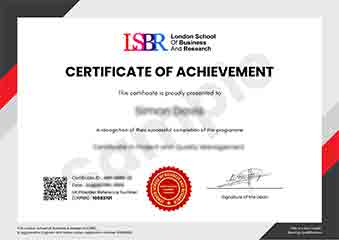
Sample Certificate
Preview the certificate you'll receive upon successful completion of this program.
Pay as an Employer
Request an invoice for your company to pay for this course. Perfect for corporate training and professional development.
What People Say About Us
Hear from our students about their experience with the Postgraduate Certificate in Gene Replacement in Stem Cells for Disease Modeling at LSBR London - Executive Education.
Oliver Davies
United Kingdom"The course content was incredibly comprehensive, covering everything from the fundamentals of gene replacement to the latest advancements in stem cell technology. I gained practical skills in designing and executing gene replacement experiments, which I believe will be invaluable for my future career in biomedical research."
Arjun Patel
India"This course has been instrumental in bridging the gap between theoretical knowledge and practical applications in gene replacement therapies. The skills I've developed have not only made me more competitive in the job market but have also opened up new avenues for career advancement, particularly in biotech startups focused on disease modeling."
Charlotte Williams
United Kingdom"The course structure was exceptionally well-organized, with each module building seamlessly on the previous one, which made complex topics in gene replacement and stem cell applications more digestible. The comprehensive content not only deepened my understanding of disease modeling but also provided invaluable insights into real-world applications, significantly enhancing my professional growth in the field."