
Postgraduate Certificate in Implementing Machine Learning in Scientific Research
Master machine learning to accelerate scientific discovery, enhance research accuracy, and drive innovation in your field.
Postgraduate Certificate in Implementing Machine Learning in Scientific Research
Programme Summary
The Postgraduate Certificate in Implementing Machine Learning in Scientific Research addresses the critical intersection of advanced computational methods and empirical inquiry. This rigorous qualification targets academic researchers, data scientists, and laboratory professionals seeking to integrate algorithmic decision-making into their workflows. Participants engage with supervised and unsupervised learning techniques tailored for complex datasets derived from physics, biology, and social sciences. The curriculum emphasises the practical deployment of Python-based libraries such as TensorFlow and PyTorch within controlled research environments. Candidates will examine ethical considerations surrounding algorithmic bias and data privacy in sensitive scientific contexts. This programme bridges the gap between theoretical computer science and applied experimental design, ensuring participants can navigate the nuances of high-dimensional data analysis with precision and rigour.
Learners acquire proficiency in constructing robust predictive models that enhance hypothesis testing and experimental validation. The syllabus covers essential preprocessing strategies, including feature engineering and noise reduction, to optimise model performance on sparse scientific data. Students master the art of hyperparameter tuning and cross-validation techniques to prevent overfitting in small-sample studies. Instruction includes the interpretation of black-box models through explainable AI frameworks, fostering transparency in peer-reviewed publications. Participants also develop competencies in cloud computing infrastructure, enabling scalable processing of large-scale genomic or climatic datasets. This technical foundation ensures researchers can independently deploy machine learning solutions without relying exclusively on external software engineering teams.
Graduates emerge as pivotal figures in modern research institutions, driving innovation through data-centric methodologies. Employers value the ability to translate raw experimental
Learning Outcomes
The Postgraduate Certificate in Implementing Machine Learning in Scientific Research addresses the critical intersection of advanced computational techniques and empirical inquiry. As data generation outpaces traditional analytical methods, researchers across disciplines require robust frameworks to extract meaningful insights from complex datasets. This programme equips participants with the technical proficiency and strategic understanding necessary to integrate machine learning algorithms into rigorous scientific workflows, thereby accelerating discovery and enhancing reproducibility.
Curriculum design emphasises practical application over theoretical abstraction. Students engage with supervised and unsupervised learning techniques, neural network architectures, and statistical validation methods tailored for high-dimensional scientific data. Modules explore data preprocessing, feature engineering, and model interpretability, ensuring that predictive outputs remain scientifically valid and ethically sound. Participants work with real-world datasets from fields such as genomics, climate science, and materials engineering, fostering a hands-on approach that bridges the gap between computer science and domain-specific expertise.
Graduates emerge capable of designing scalable analytical pipelines and communicating complex results to diverse stakeholders. They apply these skills to optimise experimental design, identify hidden patterns within large-scale observations, and automate repetitive analytical tasks. This capability is highly sought after in both academic institutions and industry R&D departments. Career prospects include roles as data scientists, computational researchers, and research analysts within pharmaceutical companies, environmental agencies, and technology firms. The certificate also supports progression to senior research positions where interdisciplinary collaboration is paramount. By mastering these tools, professionals position themselves at the forefront of the data-driven scientific revolution, driving innovation through precise, algorithm
Programme Features
Industry-Aligned Curriculum
Developed with industry leaders for job-ready skills
Globally Recognised Certificate
Recognised by employers across 180+ countries
Flexible Online Learning
Study at your own pace with lifetime access
Instant Access
Start learning immediately, no application process
Constantly Updated Content
Latest industry trends and best practices
Career Advancement
87% report measurable career progression within 6 months
Course Modules
- Mathematical Foundations for ML: Reviews linear algebra, calculus, and statistics essential for understanding algorithmic behavior.: Data Acquisition and Preprocessing: Teaches techniques for cleaning, normalizing, and feature engineering scientific datasets.
- Supervised Learning Algorithms: Explores regression, classification, and model selection methods for labeled scientific data.: Unsupervised Learning and Dimensionality Reduction: Covers clustering and manifold learning to discover hidden structures in complex experiments.
- Model Evaluation and Validation: Details rigorous statistical tests, cross-validation strategies, and error analysis specific to research contexts.: Deployment and Reproducibility: Focuses on version control, containerization, and documenting workflows to ensure research reproducibility.
What's Included in This Programme
Here is what you get when you enrol with LSBR London
Programme Facts
Audience: Research scientists seeking advanced computational methodology.
Prerequisites: Undergraduate degree in a STEM discipline.
Outcomes: Mastery of machine learning implementation in research.
Ready to advance your career?
Join thousands of professionals who have transformed their careers with LSBR London. Enrol today and start learning immediately.
Why Study This Programme
The Postgraduate Certificate in Implementing Machine Learning in Scientific Research offers a distinct strategic advantage for professionals seeking to bridge the gap between theoretical data science and practical scientific application. This programme is meticulously designed to enhance employability within high-growth sectors such as biotechnology, pharmaceuticals, and advanced materials engineering.
Participants acquire rigorous technical proficiency in deploying scalable machine learning models, directly addressing the industry demand for practitioners who can translate complex algorithms into actionable scientific insights. This hands-on experience ensures candidates can immediately contribute to R&D teams upon graduation.
The curriculum emphasises the ethical deployment of AI in sensitive research environments, a critical competency for roles requiring regulatory compliance and data integrity. Graduates emerge prepared to navigate the nuanced landscape of scientific ethics, thereby safeguarding institutional reputation and research validity.
By focusing on interdisciplinary collaboration, the course cultivates essential communication skills that enable professionals to articulate technical findings to non-specialist stakeholders. This ability to bridge disciplinary divides significantly accelerates project timelines and enhances cross-functional team efficiency.
The qualification serves as a robust credential that signals advanced competence to potential employers, distinguishing candidates in a competitive job market. It demonstrates a commitment to continuous professional development and mastery of emerging technologies that are reshaping the scientific enterprise.
Ultimately, this certificate equips professionals with the precise toolkit required to lead innovation in data-driven scientific fields, ensuring long-term career resilience and impact.
"This programme gave me the confidence and credentials to secure a senior role. Highly recommend LSBR London."
— Sarah M., United Kingdom
Course Brochure
Download our comprehensive course brochure with all details
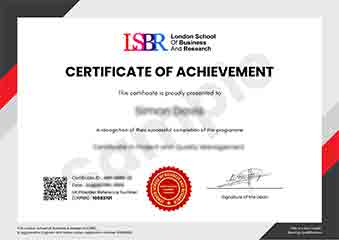
Sample Certificate
Preview the certificate you'll receive upon successful completion of this program.
Get Course Info
Receive the full course guide, pricing details, and enrolment instructions directly in your inbox.
Check your inbox!
Course details have been sent to your email.
Get Your Employer to Sponsor This Programme
Many employers offer professional development budgets. We make it easy for your company to invest in your growth with corporate invoicing and bulk enrolment options.
Email Template for Your Manager
Dear [Manager's Name],
I would like to request sponsorship for the Postgraduate Certificate in Implementing Machine Learning in Scientific Research programme offered by LSBR London - Executive Education.
The programme costs $149 (one-time) and can be completed in 3-4 weeks alongside my regular duties.
Key benefits to our team:
- Immediately applicable skills
- Globally recognised certificate
- Corporate invoice available
Best regards,
[Your Name]
What Our Students Say
Hear from our students about their experience with the Postgraduate Certificate in Implementing Machine Learning in Scientific Research at LSBR London - Executive Education.
James Thompson
United Kingdom"The curriculum strikes an excellent balance between theoretical foundations and hands-on application, allowing me to immediately deploy robust ML pipelines in my own research projects. Mastering these practical implementation skills has significantly accelerated my ability to analyze complex datasets and draw meaningful scientific conclusions."
Siti Abdullah
Malaysia"This program bridged the gap between theoretical algorithms and real-world scientific data, giving me the confidence to deploy robust ML models in my research lab. The practical focus on implementation directly accelerated my transition into a lead data scientist role, where I now drive predictive analytics for complex biological datasets."
Arjun Patel
India"The logical progression of modules provided a robust framework for integrating machine learning into my scientific workflow, ensuring complex concepts were accessible and immediately applicable. This structured approach significantly enhanced my ability to design rigorous computational experiments, bridging the gap between theoretical algorithms and tangible research outcomes."
Your Certification Journey
Four simple steps from enrolment to your globally recognised certificate
Enrol Online
Complete your enrolment in under 2 minutes with secure checkout
Start Learning
Get instant access to all course materials and start at your own pace
Complete Modules
Work through the curriculum with expert support available throughout
Get Certified
Receive your LSBR London certificate recognised across 180+ countries
LSBR London by the Numbers
Join a global community of professionals advancing their careers
Students Enrolled
Countries Represented
Average Rating
Career Progression