
Postgraduate Certificate in Mathematical Biomechanics for Medical Devices
This program equips students with advanced mathematical and biomechanical skills to innovate medical devices, enhancing patient care and treatment efficacy.
Postgraduate Certificate in Mathematical Biomechanics for Medical Devices
Programme Summary
The Postgraduate Certificate in Mathematical Biomechanics for Medical Devices is designed for professionals and students seeking to enhance their understanding of the intricate interplay between mathematics and biomechanics in the development and optimization of medical devices. This program covers advanced mathematical models and computational techniques applied to the analysis of biological systems and medical devices, including topics such as fluid dynamics, solid mechanics, and tissue engineering. By integrating theoretical knowledge with practical applications, the program equips learners with the skills necessary to innovate in the design and testing of medical devices, ensuring they meet the highest standards of safety and efficacy.
Participants will develop a robust set of skills, including proficiency in mathematical modeling, computational simulation, and data analysis relevant to biomedical applications. They will also gain an in-depth understanding of the biological principles underlying medical device design and the ability to apply these principles to solve complex problems. The curriculum emphasizes hands-on experience with state-of-the-art software tools and experimental methods, preparing learners to contribute effectively to multidisciplinary teams in the healthcare and biomedical engineering sectors.
The career impact of this program is significant, offering graduates the opportunity to advance in roles such as biomedical engineer, medical device researcher, or clinical engineer. They will be well-prepared to lead innovative projects, contribute to the development of new medical devices, and enhance patient care through the application of mathematical and biomechanical principles. Alumni of this program are likely to find themselves at the forefront of technological and clinical advancements, driving innovation in the field of medical device development and healthcare
Learning Outcomes
The Postgraduate Certificate in Mathematical Biomechanics for Medical Devices is a specialized program designed to equip professionals with the advanced skills needed to advance medical device design and development. This program integrates mathematical and biomechanical principles to analyze the interaction between medical devices and the human body, fostering innovation in medical technology.
Key topics include the application of mathematical models to understand biomechanical processes, the design and optimization of medical devices, and the integration of these devices in clinical settings. Students will gain hands-on experience using computational tools and software to simulate and analyze the behavior of medical devices under various conditions.
Graduates of this program are well-prepared to contribute to the design and development of medical devices that enhance patient care and improve clinical outcomes. They can apply their skills to roles in medical device manufacturing, research and development, and clinical engineering. Opportunities also exist in academia for those interested in furthering the field through research and teaching. This program offers a unique blend of theoretical knowledge and practical skills, making it an invaluable asset for professionals aiming to drive advancements in medical technology.
Programme Features
Industry-Aligned Curriculum
Developed with industry leaders for job-ready skills
Globally Recognised Certificate
Recognised by employers across 180+ countries
Flexible Online Learning
Study at your own pace with lifetime access
Instant Access
Start learning immediately, no application process
Constantly Updated Content
Latest industry trends and best practices
Career Advancement
87% report measurable career progression within 6 months
Course Modules
- Mathematical Foundations: Covers core principles of calculus, linear algebra, and differential equations essential for biomechanics.: Biomechanics Fundamentals: Introduces the biomechanical properties of tissues and organs.
- Medical Device Design: Focuses on the design and development processes for medical devices.: Computational Biomechanics: Explores computational methods and software tools for biomechanical analysis.
- Clinical Applications: Discusses the application of mathematical biomechanics in clinical settings.: Research Methods: Teaches methodologies for conducting research in mathematical biomechanics.
What's Included in This Programme
Here is what you get when you enrol with LSBR London
Programme Facts
For professionals in medical device industry
Bachelor's degree in engineering or mathematics
Enhanced skills in biomechanical modeling
Knowledge in medical device design
Ability to apply mathematical techniques
Prepare for advanced research roles
Ready to advance your career?
Join thousands of professionals who have transformed their careers with LSBR London. Enrol today and start learning immediately.
Why Study This Programme
Enhance Expertise in Biomechanics: A Postgraduate Certificate in Mathematical Biomechanics for Medical Devices equips professionals with advanced knowledge in the application of mathematical models to understand and predict the behavior of medical devices within biological systems. This expertise is crucial for innovating and improving medical devices, ensuring they are both safe and effective.
Career Advancement: The specialized skills gained can lead to higher-level positions in research, development, and engineering within the medical device industry. Professionals can take on roles that demand a deeper understanding of how medical devices interact with the human body, positioning them for leadership opportunities and increased responsibility.
Interdisciplinary Collaboration: The program fosters collaboration between mathematicians, engineers, and medical professionals, enhancing the ability to work in multidisciplinary teams. This skill is invaluable in the medical device sector, where cross-disciplinary teamwork is essential for developing cutting-edge products that meet complex healthcare needs.
Regulatory Compliance: Understanding the biomechanical principles and mathematical modeling techniques is critical for navigating regulatory requirements. This knowledge enables professionals to design and test medical devices that comply with stringent safety standards, ensuring they meet the rigorous FDA and international guidelines for medical device approval.
"This programme gave me the confidence and credentials to secure a senior role. Highly recommend LSBR London."
— Sarah M., United Kingdom
Course Brochure
Download our comprehensive course brochure with all details
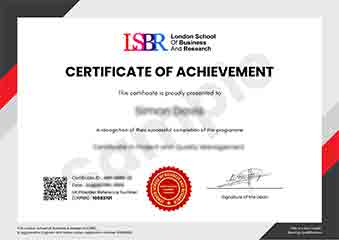
Sample Certificate
Preview the certificate you'll receive upon successful completion of this program.
Get Course Info
Receive the full course guide, pricing details, and enrolment instructions directly in your inbox.
Check your inbox!
Course details have been sent to your email.
Get Your Employer to Sponsor This Programme
Many employers offer professional development budgets. We make it easy for your company to invest in your growth with corporate invoicing and bulk enrolment options.
Email Template for Your Manager
Dear [Manager's Name],
I would like to request sponsorship for the Postgraduate Certificate in Mathematical Biomechanics for Medical Devices programme offered by LSBR London - Executive Education.
The programme costs $149 (one-time) and can be completed in 3-4 weeks alongside my regular duties.
Key benefits to our team:
- Immediately applicable skills
- Globally recognised certificate
- Corporate invoice available
Best regards,
[Your Name]
What Our Students Say
Hear from our students about their experience with the Postgraduate Certificate in Mathematical Biomechanics for Medical Devices at LSBR London - Executive Education.
Oliver Davies
United Kingdom"The course content is incredibly thorough and well-researched, providing a solid foundation in mathematical biomechanics that has significantly enhanced my analytical skills. I've gained practical knowledge that is directly applicable to developing medical devices, which I believe will be invaluable in my future career."
Oliver Davies
United Kingdom"This course has significantly enhanced my understanding of how mathematical models can be applied to improve medical devices, making me a more competitive candidate in the industry. The practical projects have bridged the gap between theory and real-world applications, positioning me well for advanced roles in biomedical engineering."
James Thompson
United Kingdom"The course structure is well-organized, providing a comprehensive understanding of mathematical biomechanics and its applications in medical devices, which has significantly enhanced my ability to analyze and solve complex real-world problems in the field."
Your Certification Journey
Four simple steps from enrolment to your globally recognised certificate
Enrol Online
Complete your enrolment in under 2 minutes with secure checkout
Start Learning
Get instant access to all course materials and start at your own pace
Complete Modules
Work through the curriculum with expert support available throughout
Get Certified
Receive your LSBR London certificate recognised across 180+ countries
LSBR London by the Numbers
Join a global community of professionals advancing their careers
Students Enrolled
Countries Represented
Average Rating
Career Progression