
Postgraduate Certificate in Mathematical Journalism Techniques
Enhance your mathematical skills and journalistic techniques for data-driven storytelling with this comprehensive postgraduate certificate.
Postgraduate Certificate in Mathematical Journalism Techniques
Programme Overview
The Postgraduate Certificate in Mathematical Journalism Techniques is designed for journalists, data analysts, and professionals aiming to enhance their ability to communicate complex mathematical and statistical information effectively to diverse audiences. This program focuses on the integration of advanced mathematical concepts with journalistic practices, equipping learners with the skills to analyze, interpret, and present numerical data in a compelling and accessible manner.
Learners will develop a robust understanding of statistical methods, data visualization, and computational tools essential for modern journalism. Key skills include data storytelling, the ethical use of data, and the ability to critique and communicate the implications of mathematical models and algorithms. Through hands-on projects, case studies, and collaborative assignments, students will practice translating complex mathematical information into clear, engaging narratives that inform and engage the public.
The program significantly impacts career trajectories by preparing graduates to take on roles where they can lead in data journalism, investigative reporting, and content creation that relies on quantitative analysis. Graduates are well-suited for positions in news organizations, research institutions, government agencies, and non-profit organizations, where the ability to bridge the gap between data and public understanding is crucial.
What You'll Learn
The Postgraduate Certificate in Mathematical Journalism Techniques is a unique and highly sought-after program designed to equip students with the skills necessary to communicate complex mathematical and statistical concepts to a broad audience. This program is invaluable for journalists, data analysts, and anyone passionate about bridging the gap between technical information and public understanding.
Key topics include the fundamentals of statistics, data visualization, and the ethical considerations of reporting on numbers. Students learn to interpret and explain mathematical models, understand the nuances of statistical analysis, and craft compelling narratives around data-driven stories. The curriculum also emphasizes the importance of critical thinking and the ability to discern the reliability of data sources.
Graduates of this program are well-prepared to apply their skills in various media settings, from traditional print and broadcast to online platforms and interactive media. They can work as data journalists, specialize in investigative reporting involving quantitative analysis, or contribute to educational content aimed at making complex subjects accessible to the general public.
Career opportunities are expansive, ranging from positions in news organizations and media outlets to roles in public policy, academia, and non-profit organizations. Graduates are also equipped to pursue further education in fields such as data science, communication studies, or quantitative journalism. This program not only enhances professional skills but also fosters a deeper appreciation for the power and precision of mathematical storytelling.
Programme Highlights
Industry-Aligned Curriculum
Developed with industry leaders for job-ready skills
Globally Recognised Certificate
Recognised by employers across 180+ countries
Flexible Online Learning
Study at your own pace with lifetime access
Instant Access
Start learning immediately, no application process
Constantly Updated Content
Latest industry trends and best practices
Career Advancement
87% report measurable career progression within 6 months
Topics Covered
- Data Analysis Techniques: Covers statistical methods and data visualization tools.: Narrative Writing: Focuses on crafting compelling stories with mathematical content.
- Media Ethics: Discusses ethical considerations in reporting quantitative data.: Interactive Content: Teaches the creation of engaging multimedia content.
- Research Methods: Introduces quantitative and qualitative research methodologies.: Case Studies: Analyzes real-world examples of mathematical journalism.
Everything Included in Your Enrolment
Here is what you get when you enrol with LSBR London
Key Facts
For experienced journalists and mathematicians
No specific prerequisites required
Develops skills in data storytelling
Enhances understanding of statistical techniques
Equips with tools for data visualization
Prepares for careers in mathematical journalism
Ready to advance your career?
Join thousands of professionals who have transformed their careers with LSBR London. Enrol today and start learning immediately.
Why This Course
Enhancing Data Interpretation Skills: The Postgraduate Certificate in Mathematical Journalism Techniques equips professionals with advanced tools to interpret complex data sets. This is crucial for journalists who aim to present nuanced stories backed by precise, understandable statistics. For instance, understanding how to use regression analysis can help in uncovering trends or correlations in data, which is vital for investigative reporting.
Elevating Storytelling Capabilities: By integrating mathematical concepts into journalism, professionals can create more compelling narratives. The course teaches techniques such as data visualization and narrative structuring, which help in presenting information in a more engaging and accessible manner. This enhances the reader's engagement and retention of information.
Expanding Career Opportunities: Acquiring this specialized knowledge can significantly broaden career prospects. It opens doors to roles that demand a deeper understanding of numerical data and its implications, such as data journalism, financial journalism, and quantitative journalism. Employers increasingly seek journalists who can handle and analyze large data sets, a skill set that this certificate provides.
Strengthening Analytical Rigor: The program instills a strong analytical mindset, enabling professionals to critically evaluate data and information sources. This is essential for producing credible and accurate reports. For example, learning about statistical significance can help in distinguishing between meaningful data and random noise, ensuring that the journalism produced is both rigorous and reliable.
"This programme gave me the confidence and credentials to secure a senior role. Highly recommend LSBR London."
— Sarah M., United Kingdom
Course Brochure
Download our comprehensive course brochure with all details
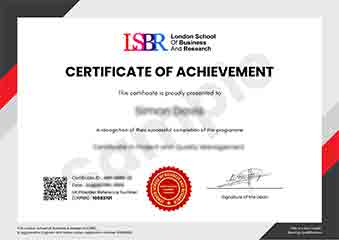
Sample Certificate
Preview the certificate you'll receive upon successful completion of this program.
Get Course Info
Receive the full course guide, pricing details, and enrolment instructions directly in your inbox.
Check your inbox!
Course details have been sent to your email.
Get Your Employer to Sponsor This Programme
Many employers offer professional development budgets. We make it easy for your company to invest in your growth with corporate invoicing and bulk enrolment options.
Email Template for Your Manager
Dear [Manager's Name],
I would like to request sponsorship for the Postgraduate Certificate in Mathematical Journalism Techniques programme offered by LSBR London - Executive Education.
The programme costs $149 (one-time) and can be completed in 3-4 weeks alongside my regular duties.
Key benefits to our team:
- Immediately applicable skills
- Globally recognised certificate
- Corporate invoice available
Best regards,
[Your Name]
What People Say About Us
Hear from our students about their experience with the Postgraduate Certificate in Mathematical Journalism Techniques at LSBR London - Executive Education.
Sophie Brown
United Kingdom"The course content is incredibly rich and well-structured, providing a solid foundation in the technical aspects of mathematical journalism. Gaining skills to analyze data and present it effectively has been incredibly beneficial, opening up new avenues for my career in data storytelling."
Kavya Reddy
India"The Postgraduate Certificate in Mathematical Journalism Techniques has been instrumental in enhancing my ability to analyze complex data and present it in a clear, engaging manner. This course has not only made my resume more industry-relevant but has also opened up new career opportunities in data journalism and analytics."
Klaus Mueller
Germany"The course structure is meticulously organized, providing a comprehensive overview of mathematical journalism techniques that are both theoretical and practical, enhancing my ability to apply these skills in real-world scenarios."
Your Path to Certification
Four simple steps from enrolment to your globally recognised certificate
Enrol Online
Complete your enrolment in under 2 minutes with secure checkout
Start Learning
Get instant access to all course materials and start at your own pace
Complete Modules
Work through the curriculum with expert support available throughout
Get Certified
Receive your LSBR London certificate recognised across 180+ countries
LSBR London by the Numbers
Join a global community of professionals advancing their careers
Students Enrolled
Countries Represented
Average Rating
Career Progression
Join Thousands Who Transformed Their Careers
Our graduates consistently report measurable career growth and professional advancement after completing their programmes.
Still deciding?
Join 23,000+ professionals who advanced their careers. Enroll today and start learning immediately.
Enroll NowSecure payment • Instant access • Certificate included