
Postgraduate Certificate in Medical Anthropology: Data Analysis for Publication
Learn to analyze medical anthropology data and prepare it for publication, enhancing your research skills and academic credentials.
Postgraduate Certificate in Medical Anthropology: Data Analysis for Publication
Programme Overview
This course is for postgraduates in medical anthropology and healthcare professionals. You will learn to analyze data effectively. You will translate complex data into clear, publishable findings. First you will learn the basics of statistical analysis. Then you will understand how to interpret results accurately.
Next you will learn to communicate findings effectively through writing and visual aids. You will gain confidence in presenting your data. In addition you will learn to peer review others' work, enhancing your critical thinking skills. Ultimately, you will be ready to publish your findings in academic journals, contributing to the field of medical anthropology.
What You'll Learn
Dive into the fascinating world of health and culture with our Postgraduate Certificate in Medical Anthropology: Data Analysis for Publication. First, you'll develop a deep understanding of how cultural beliefs and practices shape health outcomes. Next, you'll learn to collect, analyze, and interpret complex data, transforming it into compelling narratives. Meanwhile, you'll gain hands-on experience with the latest software tools, ensuring you stay ahead in the field. Moreover, you'll refine your writing skills, learning to craft publishable papers that make a real impact. Ultimately, this program opens doors to diverse careers in academia, public health, and global health organizations. Furthermore, it equips you to contribute meaningfully to policy development and community health initiatives. Join us to bridge the gap between theory and practice in medical anthropology.
Programme Highlights
Industry-Aligned Curriculum
Developed with industry leaders to ensure practical, job-ready skills valued by employers worldwide.
Expert Faculty
Learn from experienced professionals with real-world expertise in your chosen field.
Flexible Learning
Study at your own pace, from anywhere in the world, with our flexible online platform.
Industry Focus
Practical, real-world knowledge designed to meet the demands of today's competitive job market.
Latest Curriculum
Stay ahead with constantly updated content reflecting the latest industry trends and best practices.
Career Advancement
Unlock new opportunities with a globally recognized qualification respected by employers.
Topics Covered
- Ethics in Medical Research: Understand ethical considerations in medical research and data analysis.
- Qualitative Data Analysis: Learn methods for analyzing qualitative data in medical anthropology.
- Quantitative Data Analysis: Explore statistical techniques for analyzing quantitative data in medical research.
- Data Management and Cleaning: Develop skills in managing and cleaning data for accurate analysis.
- Mixed Methods Research: Combine qualitative and quantitative methods for comprehensive data analysis.
- Preparing Manuscripts for Publication: Gain knowledge in writing and formatting manuscripts for academic journals.
Key Facts
Audience
This program is for professionals and students already working or interested to work in the field of biomedical research or health sciences. You should have background knowledge of medical anthropology. It's suitable for those wishing to enhance their data analysis skills for publication. It's great for anyone eager to gain insights into qualitative research methodologies.
Prerequisites
First, you need a bachelor's degree in a related field. Next, you must have an academic background in medical anthropology. Then, you should have basic statistical knowledge. Lastly, you need proficiency in English for academic writing.
Outcomes
First, you will learn to analyze qualitative data effectively. Then, you will gain skills in publishing research findings. Next, you will enhance your understanding of medical anthropology. Furthermore, you will develop critical thinking and problem-solving abilities. Lastly, you will be able to apply these skills in real-world healthcare settings.
Why This Course
Gain specialized skills in medical anthropology. Firstly, the program equips learners with tools to analyze data effectively. Additionally, it empowers you to translate complex findings into publishable work.
Develop interdisciplinary approaches. Furthermore, you'll learn to integrate insights from anthropology and health sciences to tackle real-world issues.
Contribute to the field. Finally, after acquiring these skills, learners will be able to contribute to the field of medical anthropology by publishing their research.
Programme Title
Postgraduate Certificate in Medical Anthropology: Data Analysis for Publication
Course Brochure
Download our comprehensive course brochure with all details
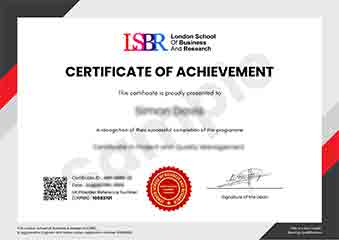
Sample Certificate
Preview the certificate you'll receive upon successful completion of this program.
Pay as an Employer
Request an invoice for your company to pay for this course. Perfect for corporate training and professional development.
What People Say About Us
Hear from our students about their experience with the Postgraduate Certificate in Medical Anthropology: Data Analysis for Publication at LSBR London - Executive Education.
James Thompson
United Kingdom"The course content was incredibly comprehensive, covering a wide range of data analysis techniques specifically tailored for medical anthropology. I gained practical skills in statistical software and qualitative analysis methods that have already proven invaluable in my research and have significantly enhanced my career prospects."
Anna Schmidt
Germany"This course has been instrumental in honing my data analysis skills, making me more confident in interpreting complex medical data and presenting it in a publishable format. The practical applications I've learned have already proven valuable in my current role, opening up new opportunities for career advancement in medical research."
Greta Fischer
Germany"The course structure was exceptionally well-organized, with each module building seamlessly on the previous one, which made complex data analysis concepts much more digestible. The comprehensive content not only deepened my understanding of medical anthropology but also provided practical tools that I can directly apply in my research, enhancing my professional growth."