
Postgraduate Certificate in Medical Anthropology in Disaster and Humanitarian Aid
This program equips students with the skills to analyze and address health challenges in disaster and humanitarian contexts, enhancing their ability to contribute effectively to global health initiatives.
Postgraduate Certificate in Medical Anthropology in Disaster and Humanitarian Aid
Programme Overview
This course is for healthcare professionals, aid workers, and anthropologists seeking to enhance their skills in disaster and humanitarian aid. You will delve into the complexities of healthcare delivery in crises. First, you will explore the cultural aspects of disasters. Then, you will learn to develop effective, culturally-sensitive aid strategies. Moreover, you will understand how to navigate ethical challenges in humanitarian work.
Throughout, you will gain practical tools for community engagement. You will also learn to design and implement culturally aware aid programs. Finally, you will be better prepared to collaborate with diverse communities in crisis situations.
What You'll Learn
Embark on a transformative journey with our Postgraduate Certificate in Medical Anthropology in Disaster and Humanitarian Aid. Firstly, gain a deep understanding of how cultures and communities respond to crises. Learn how to bridge gaps between medical science and cultural practices. Moreover, explore real-world case studies, including natural disasters and conflict zones. Then, develop practical skills in needs assessment, program design, and evaluation.
Benefits:
Enhance your career prospects and contribute to global aid efforts. First, master field research techniques. Second, gain insights into ethical considerations. Finally, become a valuable asset to NGOs and governmental organizations.
Career Opportunities:
Graduates actively engage in frontline humanitarian work, policy development, and academic research. Open doors to roles such as disaster response coordinator, public health specialist, and humanitarian program manager.
Unique Features:
Join our dynamic cohort of students and faculty. Furthermore, gain hands-on experience through field placements. Finally, stay updated with the latest trends through interactive workshops and seminars.
Don't just study disasters; make a difference. Join us today and become a catalyst for change in a world in need.
Programme Highlights
Industry-Aligned Curriculum
Developed with industry leaders to ensure practical, job-ready skills valued by employers worldwide.
Expert Faculty
Learn from experienced professionals with real-world expertise in your chosen field.
Flexible Learning
Study at your own pace, from anywhere in the world, with our flexible online platform.
Industry Focus
Practical, real-world knowledge designed to meet the demands of today's competitive job market.
Latest Curriculum
Stay ahead with constantly updated content reflecting the latest industry trends and best practices.
Career Advancement
Unlock new opportunities with a globally recognized qualification respected by employers.
Topics Covered
- Anthropological Theory and Methods: Introduction to key theories and research methods in medical anthropology.
- Health and Illness in Cultural Context: Exploration of cultural beliefs and practices related to health and illness.
- Disaster and Resilience: Study of community resilience and response to disasters from an anthropological perspective.
- Humanitarian Aid and Ethics: Ethical considerations and challenges in humanitarian aid and intervention.
- Global Health Systems and Policies: Analysis of global health systems, policies, and their impact on vulnerable populations.
- Fieldwork and Applied Research: Practical training in conducting fieldwork and applied research in disaster and humanitarian settings.
Key Facts
Audience
Firstly, this course welcomes healthcare professionals. Additionally, it is open to anyone interested in disaster management. Moreover, students passionate about humanitarian aid are encouraged to apply.
Prerequisites
First, a bachelor's degree is required. Next, applicants should have relevant work experience. Furthermore, proficiency in English is mandatory.
Outcomes
Upon completion, students will understand disaster impacts. Additionally, they will actively apply anthropological methods. Furthermore, graduates will be able to work effectively in humanitarian settings.
Why This Course
First, gain expertise in a growing field. Medical Anthropology is a unique discipline. This program delves into this field in disaster and humanitarian aid. Consequently, you'll stand out as a specialist.
Next, enhance your employability. Many sectors need skilled professionals in disaster response. Additionally, it opens doors to opportunities in NGOs, governments, and international organizations. Hence, you'll be in high demand.
Finally, develop practical skills. This program involves hands-on training. Moreover, you'll learn how to apply anthropological knowledge to real-world situations. Therefore, you'll be ready to tackle complex issues in humanitarian aid.
Programme Title
Postgraduate Certificate in Medical Anthropology in Disaster and Humanitarian Aid
Course Brochure
Download our comprehensive course brochure with all details
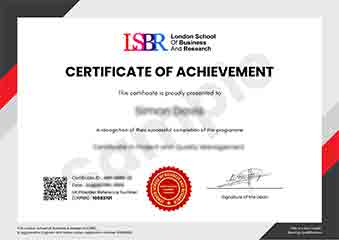
Sample Certificate
Preview the certificate you'll receive upon successful completion of this program.
Pay as an Employer
Request an invoice for your company to pay for this course. Perfect for corporate training and professional development.
What People Say About Us
Hear from our students about their experience with the Postgraduate Certificate in Medical Anthropology in Disaster and Humanitarian Aid at LSBR London - Executive Education.
Sophie Brown
United Kingdom"The course content was incredibly comprehensive, covering a wide range of topics from cultural understandings of health to the practical aspects of humanitarian aid. I gained invaluable practical skills in conducting anthropological research in disaster settings, which I believe will significantly enhance my career prospects in the humanitarian sector."
Charlotte Williams
United Kingdom"The Postgraduate Certificate in Medical Anthropology in Disaster and Humanitarian Aid has equipped me with invaluable skills that are directly applicable to real-world scenarios, making me a more effective practitioner in the field. This course has significantly enhanced my career prospects by providing me with a deep understanding of cultural dynamics in disaster settings, which has opened up new opportunities for leadership roles in humanitarian organizations."
Wei Ming Tan
Singapore"The course structure was exceptionally well-organized, with each module building logically on the previous one, which made complex topics in medical anthropology and disaster management much more digestible. The comprehensive content not only deepened my theoretical understanding but also provided practical insights that I can directly apply to my future career in humanitarian aid, making me feel more prepared for real-world scenarios."