
Postgraduate Certificate in Planning Health Interventions: Community Engagement
Gain practical skills in community engagement to design and implement effective health interventions.
Postgraduate Certificate in Planning Health Interventions: Community Engagement
Programme Overview
The Postgraduate Certificate in Planning Health Interventions: Community Engagement is designed for health professionals, community workers, and anyone involved in public health. This means that you can expect to gain practical knowledge. First, you will learn how to engage communities effectively. Then, you will design and implement health interventions. Finally, you will evaluate their impact.
Next, you will develop essential skills. You will learn to collaborate with diverse communities. Moreover, you will gain tools to address health disparities. Furthermore, you will enhance your ability to plan and manage health programs. In addition, you will gain confidence in advocating for community health.
What You'll Learn
Dive into the dynamic world of community health with our Postgraduate Certificate in Planning Health Interventions: Community Engagement. First, you'll gain essential skills to assess community health needs and design impactful interventions. Next, you'll learn to engage communities effectively—ensuring your interventions are not just planned, but owned by those they aim to serve. Moreover, this program stands out with real-world projects and interactive workshops. This isn’t just about learning; it’s about doing. Consequently, you’ll graduate ready to make a tangible difference. Career opportunities abound in public health, non-profits, and government agencies. Don’t just study community health—become a catalyst for change. Enroll today and start your journey towards creating healthier, more empowered communities.
Programme Highlights
Industry-Aligned Curriculum
Developed with industry leaders to ensure practical, job-ready skills valued by employers worldwide.
Expert Faculty
Learn from experienced professionals with real-world expertise in your chosen field.
Flexible Learning
Study at your own pace, from anywhere in the world, with our flexible online platform.
Industry Focus
Practical, real-world knowledge designed to meet the demands of today's competitive job market.
Latest Curriculum
Stay ahead with constantly updated content reflecting the latest industry trends and best practices.
Career Advancement
Unlock new opportunities with a globally recognized qualification respected by employers.
Topics Covered
- Community Health Needs Assessment: Evaluate and understand community health needs through data collection and analysis.
- Stakeholder Engagement Strategies: Develop strategies for effective engagement with community stakeholders.
- Health Promotion and Education: Design and implement health promotion programs and educational campaigns.
- Community Assessment and Planning: Conduct comprehensive assessments and develop plans for community health interventions.
- Social Determinants of Health: Analyze social and environmental factors influencing community health outcomes.
- Monitoring and Evaluating Health Interventions: Develop methods to monitor and evaluate the effectiveness of health interventions.
Key Facts
Audience: This course is for health professionals and community workers seeking to enhance their skills in planning effective health interventions.
Prerequisites: First, you need a bachelor's degree in a health-related field. Additionally, some work experience in community health is beneficial but not required.
Outcomes: Furthermore, you will gain knowledge on engaging communities in health planning. Moreover, you will develop skills to design and evaluate health interventions. Finally, you will be equipped to foster community participation and collaboration.
Why This Course
Learners should consider the 'Postgraduate Certificate in Planning Health Interventions: Community Engagement'. Firstly, this course equips you with practical skills. You will actively learn how to engage communities effectively. This means you can make a real difference in public health. Secondly, it offers flexible learning options. You can study part-time or online. This allows you to balance work, travel or family commitments. Finally, it provides networking opportunities. You will connect with professionals from diverse backgrounds. Moreover, you can share insights and collaborate on projects.
Programme Title
Postgraduate Certificate in Planning Health Interventions: Community Engagement
Course Brochure
Download our comprehensive course brochure with all details
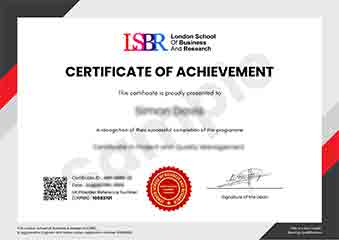
Sample Certificate
Preview the certificate you'll receive upon successful completion of this program.
Pay as an Employer
Request an invoice for your company to pay for this course. Perfect for corporate training and professional development.
What People Say About Us
Hear from our students about their experience with the Postgraduate Certificate in Planning Health Interventions: Community Engagement at LSBR London - Executive Education.
James Thompson
United Kingdom"The course content was incredibly comprehensive, covering a wide range of community engagement strategies and health intervention models that I found directly applicable to my work. I particularly valued the practical skills in stakeholder analysis and community assessment, which have already proven beneficial in my current role and will undoubtedly enhance my future career prospects."
Liam O'Connor
Australia"This course has been instrumental in equipping me with the practical skills needed to design and implement health interventions that truly engage communities. The industry-relevant content has not only enhanced my understanding but also opened up new career opportunities, allowing me to make a tangible impact in public health."
Jia Li Lim
Singapore"The course structure was exceptionally well-organized, with each module building logically on the previous one, which made the learning process smooth and engaging. The comprehensive content not only deepened my understanding of community engagement in health interventions but also provided practical tools that I can directly apply in my professional role, enhancing my ability to design and implement effective health programs."