
Postgraduate Certificate in Spatial Modeling and Simulation Techniques
This program equips students with advanced skills in spatial modeling and simulation techniques, enhancing analytical capabilities for real-world applications.
Postgraduate Certificate in Spatial Modeling and Simulation Techniques
Programme Overview
The Postgraduate Certificate in Spatial Modeling and Simulation Techniques is designed for professionals and researchers in fields such as urban planning, environmental science, transportation, and geographic information systems (GIS). This program equips learners with advanced skills in spatial data analysis, modeling techniques, and simulation methodologies, tailored to address complex spatial problems through interdisciplinary approaches. Key courses include Geographic Information Systems (GIS), Geographic Analysis, Spatial Statistics, Agent-Based Modeling, and System Dynamics. By the end of the program, learners will have a comprehensive understanding of spatial modeling and simulation tools and their applications, along with proficiency in using software such as ArcGIS, R, and NetLogo.
Students will develop critical skills in analyzing and visualizing spatial data, creating predictive models, and simulating environmental, social, and economic systems. They will learn to harness spatial data to inform decision-making processes, optimize resource allocation, and design sustainable urban and environmental solutions. Additionally, the program emphasizes the integration of qualitative and quantitative data, fostering a holistic approach to problem-solving. Graduates will be well-prepared to tackle real-world challenges in their careers, whether in academia, industry, or public sector organizations, and to contribute to the development of innovative spatial solutions.
What You'll Learn
The Postgraduate Certificate in Spatial Modeling and Simulation Techniques is a comprehensive program designed to equip students with the advanced skills necessary for analyzing and predicting spatial dynamics in various environments, from urban planning to environmental conservation. This program emphasizes the integration of spatial data with computational models to solve complex real-world problems.
Key topics include geographic information systems (GIS), agent-based modeling, network analysis, and spatial statistics. Students learn to use cutting-edge software and tools to create and refine models that simulate human and environmental interactions, enhancing their ability to make informed decisions in urban design, public health, and natural resource management.
Graduates apply these skills to a wide range of sectors. Urban planners use spatial models to design sustainable cities, while environmental scientists model ecosystem impacts. In health sciences, graduates analyze disease spread patterns to inform public health strategies. The program also prepares students for careers in academia, government agencies, and private sector organizations focused on spatial analysis and simulation.
With a robust skill set in spatial modeling and simulation, graduates are well-positioned to pursue careers as data analysts, urban planners, environmental consultants, and spatial data scientists, contributing to fields that require sophisticated spatial analysis and predictive modeling.
Programme Highlights
Industry-Aligned Curriculum
Developed with industry leaders for job-ready skills
Globally Recognised Certificate
Recognised by employers across 180+ countries
Flexible Online Learning
Study at your own pace with lifetime access
Instant Access
Start learning immediately, no application process
Constantly Updated Content
Latest industry trends and best practices
Career Advancement
87% report measurable career progression within 6 months
Topics Covered
- Foundational Concepts: Covers the core principles and key terminology.: Geographic Information Systems (GIS): Introduces GIS technology and its applications.
- Agent-Based Modeling: Explains the theory and practice of agent-based models.: Network Analysis: Focuses on spatial network structures and analysis techniques.
- Statistical Methods: Provides tools for analyzing spatial data.: Case Studies: Analyzes real-world applications of spatial modeling and simulation.
Everything Included in Your Enrolment
Here is what you get when you enrol with LSBR London
Key Facts
For professionals, researchers, or graduates
Basic programming and GIS knowledge required
Develops skills in spatial modeling
Enhances ability in simulation techniques
Understands spatial data analysis
Prepares for advanced spatial research
Ready to advance your career?
Join thousands of professionals who have transformed their careers with LSBR London. Enrol today and start learning immediately.
Why This Course
Enhance Career Flexibility: Pursuing a Postgraduate Certificate in Spatial Modeling and Simulation Techniques equips professionals with advanced skills in analyzing and predicting spatial data. This expertise is highly sought after in various fields, including urban planning, environmental science, and geographic information systems (GIS). For instance, urban planners can use spatial modeling to forecast population growth and optimize land use, enhancing project feasibility and sustainability.
Boost Data Analysis Skills: The certificate program focuses on developing robust data analysis skills, particularly in handling large datasets and implementing computational techniques. These skills are crucial for professionals looking to improve their data-driven decision-making abilities. For example, a geospatial analyst could use these techniques to create predictive models for disaster management, aiding in more effective and timely disaster response.
Accelerate Problem-Solving Capabilities: This program teaches sophisticated simulation techniques that enable professionals to model complex scenarios and test potential outcomes before implementing them in the real world. This is invaluable in fields such as logistics, where professionals could simulate supply chain movements to identify bottlenecks and optimize routes, leading to significant cost savings and improved efficiency.
Elevate Technical Knowledge: By deepening understanding of spatial modeling and simulation, professionals can stay ahead of technological advancements and innovate within their industries. For instance, a researcher in environmental science might leverage these skills to develop more accurate models for predicting climate change impacts, contributing to more effective policy-making and conservation efforts.
"This programme gave me the confidence and credentials to secure a senior role. Highly recommend LSBR London."
— Sarah M., United Kingdom
Course Brochure
Download our comprehensive course brochure with all details
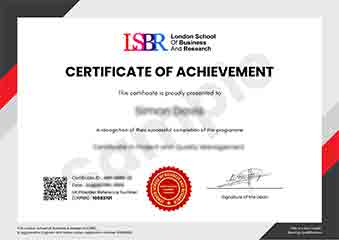
Sample Certificate
Preview the certificate you'll receive upon successful completion of this program.
Get Course Info
Receive the full course guide, pricing details, and enrolment instructions directly in your inbox.
Check your inbox!
Course details have been sent to your email.
Get Your Employer to Sponsor This Programme
Many employers offer professional development budgets. We make it easy for your company to invest in your growth with corporate invoicing and bulk enrolment options.
Email Template for Your Manager
Dear [Manager's Name],
I would like to request sponsorship for the Postgraduate Certificate in Spatial Modeling and Simulation Techniques programme offered by LSBR London - Executive Education.
The programme costs $149 (one-time) and can be completed in 3-4 weeks alongside my regular duties.
Key benefits to our team:
- Immediately applicable skills
- Globally recognised certificate
- Corporate invoice available
Best regards,
[Your Name]
What People Say About Us
Hear from our students about their experience with the Postgraduate Certificate in Spatial Modeling and Simulation Techniques at LSBR London - Executive Education.
Charlotte Williams
United Kingdom"The course content is incredibly thorough and well-structured, providing a solid foundation in spatial modeling and simulation techniques that have directly enhanced my analytical skills. Gaining hands-on experience with advanced software tools has been invaluable, and I feel much more prepared for roles that require spatial data analysis."
Isabella Dubois
Canada"This course has significantly enhanced my ability to apply spatial modeling techniques in real-world scenarios, making me a more competitive candidate in the job market. The hands-on projects have provided practical experience that I can directly apply to advance my career in urban planning."
Siti Abdullah
Malaysia"The course structure is well-organized, providing a comprehensive understanding of spatial modeling and simulation techniques that are directly applicable to real-world scenarios, significantly enhancing my professional skills and knowledge."
Your Path to Certification
Four simple steps from enrolment to your globally recognised certificate
Enrol Online
Complete your enrolment in under 2 minutes with secure checkout
Start Learning
Get instant access to all course materials and start at your own pace
Complete Modules
Work through the curriculum with expert support available throughout
Get Certified
Receive your LSBR London certificate recognised across 180+ countries
LSBR London by the Numbers
Join a global community of professionals advancing their careers
Students Enrolled
Countries Represented
Average Rating
Career Progression
Join Thousands Who Transformed Their Careers
Our graduates consistently report measurable career growth and professional advancement after completing their programmes.
Still deciding?
Join 23,000+ professionals who advanced their careers. Enroll today and start learning immediately.
Enroll NowSecure payment • Instant access • Certificate included