
Professional Certificate in Community-Based Participatory Research Methods
Gain hands-on skills in collaborative research methods to address community health issues and drive meaningful change.
Professional Certificate in Community-Based Participatory Research Methods
Programme Overview
This course is for professionals, researchers, and community members interested in collaborative research methods. It empowers participants to engage communities in research. First, you will explore the principles of Community-Based Participatory Research (CBPR).
Next, you will learn how to apply CBPR methods to real-world projects. Additionally, you will gain skills in community engagement, data collection, and analysis. Finally, you will develop the ability to evaluate and improve community programs and policies.
What You'll Learn
Ready to make a real difference in your community? Join our 'Professional Certificate in Community-Based Participatory Research Methods'! First, you'll learn to collaborate with community members. Next, you'll actively engage in research that truly matters. Finally, you'll gain hands-on experience in designing and implementing projects. You'll become a skilled researcher and a community leader.
This program offers unique benefits. For instance, you'll work alongside diverse communities. Moreover, you'll develop practical skills. Additionally, you'll create meaningful change. Career opportunities are abundant. For example, you could become a community organizer, public health advocate, or policy analyst. First, however, you must take action. Enroll now and start your journey to empower communities and drive impactful research!
Programme Highlights
Industry-Aligned Curriculum
Developed with industry leaders to ensure practical, job-ready skills valued by employers worldwide.
Expert Faculty
Learn from experienced professionals with real-world expertise in your chosen field.
Flexible Learning
Study at your own pace, from anywhere in the world, with our flexible online platform.
Industry Focus
Practical, real-world knowledge designed to meet the demands of today's competitive job market.
Latest Curriculum
Stay ahead with constantly updated content reflecting the latest industry trends and best practices.
Career Advancement
Unlock new opportunities with a globally recognized qualification respected by employers.
Topics Covered
- Introduction to Community-Based Participatory Research: Define CBPR principles and its significance in community health and research.
- Building Effective Community-Academic Partnerships: Learn strategies for establishing and maintaining successful partnerships.
- Developing Community Research Agendas: Identify community needs and priorities to shape research questions.
- Data Collection and Analysis in CBPR: Gain skills in collecting, analyzing, and interpreting community data.
- Ethical Considerations in Community-Based Research: Explore ethical issues and guidelines for conducting responsible CBPR.
- Dissemination and Implementation of CBPR Findings: Learn effective ways to share research findings and drive community change.
Key Facts
Audience:
This certificate is for professionals and community members who engage in research and health promotion. It is for those who want to create meaningful change in their communities.
Prerequisites:
Before you start, you should have a basic understanding of research methods. Additionally, prior experience in community work is encouraged.
Outcomes:
Firstly, you will learn to collaborate with communities in research. Next, you will design participatory research projects effectively. Finally, you will gain skills to evaluate and advocate for your community projects. You will also learn to apply these methods to real-world problems.
You will leave with the ability to conduct research that truly benefits communities.
Why This Course
Gain Practical Skills: First, you'll learn hands-on methods. These skills are directly applicable to real-world projects. This ensures you can start making a difference immediately.
Collaborative Learning: Next, you'll join a community of learners. Together, you'll work on projects that matter to real communities. This fosters a sense of collective responsibility and shared progress.
Build Credibility: Finally, you'll earn a recognized certification. This adds value to your resume. It shows employers and community partners that you're serious about participatory research methods.
Programme Title
Professional Certificate in Community-Based Participatory Research Methods
Course Brochure
Download our comprehensive course brochure with all details
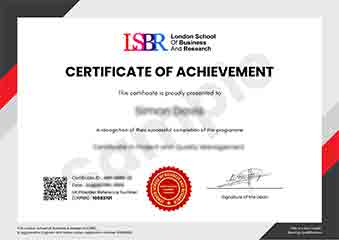
Sample Certificate
Preview the certificate you'll receive upon successful completion of this program.
Pay as an Employer
Request an invoice for your company to pay for this course. Perfect for corporate training and professional development.
What People Say About Us
Hear from our students about their experience with the Professional Certificate in Community-Based Participatory Research Methods at LSBR London - Executive Education.
Oliver Davies
United Kingdom"The course material was incredibly comprehensive, covering a wide range of community-based participatory research methods that I can immediately apply to my work. I gained practical skills in designing and implementing community-driven research projects, which I believe will significantly enhance my career prospects in public health."
Hans Weber
Germany"This course has been a game-changer for my career in public health. The practical applications of community-based participatory research methods have given me a new set of tools to engage communities effectively, making me a more valuable asset to my organization. The skills I've developed have not only enhanced my industry relevance but also opened up new opportunities for career advancement."
Hans Weber
Germany"The course structure was exceptionally well-organized, with each module building logically on the previous one, making complex concepts in community-based participatory research methods accessible and easy to understand. The comprehensive content not only deepened my theoretical knowledge but also provided practical tools that I can directly apply in my professional setting, enhancing my ability to engage communities effectively in research initiatives."