
Professional Certificate in Ethnographic Methods in Clinical Settings
Gain hands-on skills in ethnographic research to improve patient care and healthcare delivery in clinical settings.
Professional Certificate in Ethnographic Methods in Clinical Settings
Programme Overview
This course is for healthcare professionals eager to improve patient care. First, it equips you with ethnographic methods, like participant observation and interviewing techniques. Next, it teaches you how to apply these methods in clinical settings.
Moreover, you will gain the skills to gather and analyze patient data. Furthermore, you will learn to translate findings into actionable insights. Finally, you will contribute to better healthcare practices.
What You'll Learn
Dive into the fascinating world of ethnographic methods tailored for clinical settings. This Professional Certificate empowers you to understand and improve healthcare experiences. First, you'll learn to observe, interview, and analyze patient and provider interactions. Next, you'll apply these skills to real-world clinical scenarios. Moreover, you'll gain hands-on experience with data collection and analysis tools. Additionally, you'll explore ethical considerations and best practices. Upon completion, you'll be equipped to enhance patient care, inform healthcare policy, and drive organizational change.
Career opportunities abound in healthcare, such as patient experience roles, healthcare consulting, and clinical research. Furthermore, you'll join a supportive community of professionals passionate about improving healthcare. Enroll now to transform your career and make a meaningful impact in clinical settings.
Programme Highlights
Industry-Aligned Curriculum
Developed with industry leaders to ensure practical, job-ready skills valued by employers worldwide.
Expert Faculty
Learn from experienced professionals with real-world expertise in your chosen field.
Flexible Learning
Study at your own pace, from anywhere in the world, with our flexible online platform.
Industry Focus
Practical, real-world knowledge designed to meet the demands of today's competitive job market.
Latest Curriculum
Stay ahead with constantly updated content reflecting the latest industry trends and best practices.
Career Advancement
Unlock new opportunities with a globally recognized qualification respected by employers.
Topics Covered
- Introduction to Ethnographic Methods: Understand the fundamentals of ethnographic research and its applications in clinical settings.
- Data Collection Techniques: Learn various methods for gathering ethnographic data in healthcare environments.
- Ethical Considerations in Clinical Ethnography: Explore the ethical guidelines and challenges specific to conducting ethnographic research in clinical settings.
- Analyzing Ethnographic Data: Develop skills in analyzing qualitative data obtained from ethnographic studies in healthcare.
- Applying Ethnographic Findings: Discuss how to translate ethnographic insights into practical improvements in clinical practice and policy.
- Case Studies in Clinical Ethnography: Examine real-world examples of ethnographic research in clinical settings and their impacts.
Key Facts
Audience: This certificate is for healthcare professionals, researchers, and students. It is designed for those interested in understanding patient experiences and health systems. Those who are seeking to enhance their qualitative research skills should consider this program.
Prerequisites: First, applicants need a bachelor's degree in a related field. Moreover, basic research methods knowledge is required. However, no prior ethnographic experience is necessary.
Outcomes: Upon completion, participants will actively apply ethnographic techniques. They will also design and conduct studies in clinical settings. Finally, participants will critically analyze healthcare practices and patient experiences.
Why This Course
Gain practical skills. This certificate first equips learners with hands-on tools. These tools can be immediately applied to clinical settings. Thus, you will be ready to contribute effectively from day one.
Understand diverse perspectives. Next, learners engage with ethnographic methods. These methods help in viewing healthcare through various cultural lenses. Consequently, you will foster inclusive care environments.
Enhance research capabilities. Lastly, the program strengthens research prowess. This enables you to actively drive improvements in clinical settings. Therefore, you will make a significant impact in your field.
Programme Title
Professional Certificate in Ethnographic Methods in Clinical Settings
Course Brochure
Download our comprehensive course brochure with all details
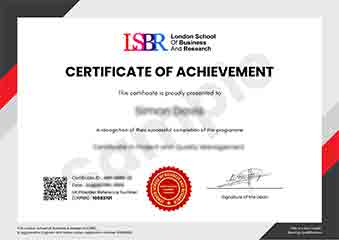
Sample Certificate
Preview the certificate you'll receive upon successful completion of this program.
Pay as an Employer
Request an invoice for your company to pay for this course. Perfect for corporate training and professional development.
What People Say About Us
Hear from our students about their experience with the Professional Certificate in Ethnographic Methods in Clinical Settings at LSBR London - Executive Education.
Charlotte Williams
United Kingdom"The course material was incredibly comprehensive, covering a wide range of ethnographic techniques tailored for clinical settings. I gained practical skills in data collection and analysis that I believe will be invaluable in my future career in healthcare research."
Charlotte Williams
United Kingdom"The Professional Certificate in Ethnographic Methods in Clinical Settings has been instrumental in equipping me with practical skills that are highly relevant in today's healthcare industry. Since completing the course, I've seen a significant boost in my career, as I am now able to apply ethnographic methods to improve patient care and healthcare delivery, making me a more valuable asset to my team."
Anna Schmidt
Germany"The course structure was exceptionally well-organized, with each module building logically on the previous one, which made the learning process smooth and engaging. The comprehensive content not only provided a deep understanding of ethnographic methods but also offered practical insights into real-world clinical settings, significantly enhancing my professional growth and ability to apply these methods in my future career."