
Professional Certificate in Secure Software Development Lifecycle
This certificate equips professionals with the skills to integrate security into every phase of software development, enhancing software resilience and reducing vulnerabilities.
Professional Certificate in Secure Software Development Lifecycle
Programme Overview
This course is for developers, testers, and project managers aiming to enhance software security. First, you will understand the basics of secure software development. Next, you will learn to identify and mitigate security risks throughout the software lifecycle.
You will gain practical skills in threat modeling, secure coding practices, and security testing. Moreover, you will learn to integrate security into agile development processes. Additionally, you will earn a professional certificate validating your expertise in secure software development.
What You'll Learn
Ready to fortify your software development skills? Dive into our 'Professional Certificate in Secure Software Development Lifecycle'! First, learn the foundational principles of secure coding. Then, master the art of integrating security measures throughout the entire software development lifecycle. This journey will arm you with practical skills to identify, mitigate, and prevent security vulnerabilities. Additionally, you'll gain hands-on experience with cutting-edge tools and techniques. Moreover, you'll collaborate with industry experts and peers, expanding your professional network.
Upon completion, you'll be primed for high-demand roles such as Security Software Developer, Secure Coding Specialist, and Cybersecurity Analyst. Furthermore, you'll enhance your employability and earning potential. Don't miss this chance to elevate your career. Enroll today and become a champion of secure software development!
Programme Highlights
Industry-Aligned Curriculum
Developed with industry leaders for job-ready skills
Globally Recognised Certificate
Recognised by employers across 180+ countries
Flexible Online Learning
Study at your own pace with lifetime access
Instant Access
Start learning immediately, no application process
Constantly Updated Content
Latest industry trends and best practices
Career Advancement
87% report measurable career progression within 6 months
Topics Covered
- Secure Software Development Fundamentals: Learn the basics of secure software development principles and practices.
- Threat Modeling and Risk Assessment: Identify and evaluate potential security threats and risks in software development.
- Secure Coding Practices: Implement secure coding techniques to prevent common software vulnerabilities.
- Security Testing and Validation: Conduct comprehensive security testing to ensure software robustness against attacks.
- Secure Software Deployment: Apply best practices for deploying software securely in various environments.
- Continuous Security in DevOps: Integrate security into the DevOps pipeline for ongoing protection throughout the software lifecycle.
Everything Included in Your Enrolment
Here is what you get when you enrol with LSBR London
Key Facts
Audience:
Software developers seeking to enhance security skills.
IT professionals aiming to advance their careers.
Teams looking to improve overall security practices.
Prerequisites:
Basic understanding of software development.
Familiarity with at least one programming language.
No prior security knowledge required.
First, you'll gain:
Hands-on experience with secure coding practices.
Knowledge of common security threats and vulnerabilities.
Next, you'll be able to:
Implement security measures throughout the software lifecycle.
Ensure compliance with industry standards and regulations.
Ready to advance your career?
Join thousands of professionals who have transformed their careers with LSBR London. Enrol today and start learning immediately.
Why This Course
First, this certificate equips learners with critical skills. It covers the entire software development lifecycle. This means learners gain a comprehensive understanding, not just isolated skills.
Next, it empowers learners to identify and mitigate security risks. This proactive approach helps create secure software. Consequently, learners can protect sensitive data and prevent breaches.
Finally, it enhances career prospects. This certificate validates expertise in secure software development. As a result, learners can stand out to employers and pursue roles in cybersecurity.
"This programme gave me the confidence and credentials to secure a senior role. Highly recommend LSBR London."
— Sarah M., United Kingdom
Course Brochure
Download our comprehensive course brochure with all details
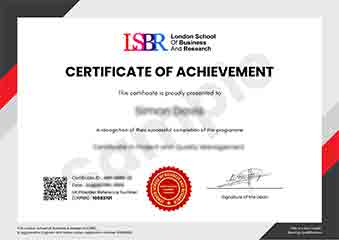
Sample Certificate
Preview the certificate you'll receive upon successful completion of this program.
Get Course Info
Receive the full course guide, pricing details, and enrolment instructions directly in your inbox.
Check your inbox!
Course details have been sent to your email.
Get Your Employer to Sponsor This Programme
Many employers offer professional development budgets. We make it easy for your company to invest in your growth with corporate invoicing and bulk enrolment options.
Email Template for Your Manager
Dear [Manager's Name],
I would like to request sponsorship for the Professional Certificate in Secure Software Development Lifecycle programme offered by LSBR London - Executive Education.
The programme costs $149 (one-time) and can be completed in 3-4 weeks alongside my regular duties.
Key benefits to our team:
- Immediately applicable skills
- Globally recognised certificate
- Corporate invoice available
Best regards,
[Your Name]
What People Say About Us
Hear from our students about their experience with the Professional Certificate in Secure Software Development Lifecycle at LSBR London - Executive Education.
Charlotte Williams
United Kingdom"The course content is incredibly comprehensive, covering everything from secure coding practices to threat modeling, which has given me a robust understanding of the secure software development lifecycle. I've gained practical skills that I can immediately apply in my current role, making me more confident in identifying and mitigating security risks in software development projects."
Mei Ling Wong
Singapore"This course has been a game-changer for my career. The curriculum is incredibly relevant to today's industry standards, and I've gained practical skills in secure software development that have already helped me advance in my current role. I feel much more confident in my ability to implement secure practices throughout the software development lifecycle, which has opened up new opportunities for me."
Oliver Davies
United Kingdom"The course structure was incredibly well-organized, with each module seamlessly building on the previous one, which made complex topics in secure software development much easier to grasp. The comprehensive content not only provided a solid foundation in secure development practices but also offered real-world applications that I could immediately apply in my professional projects, enhancing my ability to develop secure software."
Your Path to Certification
Four simple steps from enrolment to your globally recognised certificate
Enrol Online
Complete your enrolment in under 2 minutes with secure checkout
Start Learning
Get instant access to all course materials and start at your own pace
Complete Modules
Work through the curriculum with expert support available throughout
Get Certified
Receive your LSBR London certificate recognised across 180+ countries
LSBR London by the Numbers
Join a global community of professionals advancing their careers
Students Enrolled
Countries Represented
Average Rating
Career Progression
Join Thousands Who Transformed Their Careers
Our graduates consistently report measurable career growth and professional advancement after completing their programmes.
Still deciding?
Join 23,000+ professionals who advanced their careers. Enroll today and start learning immediately.
Enroll NowSecure payment • Instant access • Certificate included