
Undergraduate Certificate in Advanced Techniques in Gene Editing for Skin Disorders
Gain hands-on experience in cutting-edge gene editing techniques to advance treatments for skin disorders.
Undergraduate Certificate in Advanced Techniques in Gene Editing for Skin Disorders
Programme Overview
This course is for undergraduate students and professionals in biology, genetics, and dermatology. Additionally, it is for those eager to learn advanced gene-editing techniques to address skin disorders.
First, students will gain hands-on experience with CRISPR-Cas9 and other cutting-edge technologies. Students will then learn to apply these techniques to understand and treat skin disorders. Furthermore, they will explore ethical considerations and future directions in gene editing. Finally, students will develop skills to contribute to research and clinical applications in dermatology. In conclusion, this certificate will equip students with the knowledge and skills to make a meaningful impact in the field of gene editing and skin disorders.
What You'll Learn
Embark on a transformative journey with our 'Undergraduate Certificate in Advanced Techniques in Gene Editing for Skin Disorders'. Firstly, dive into cutting-edge CRISPR-Cas9 technology and beyond. Moreover, learn to apply these techniques to target specific skin disorders. Consequently, you’ll gain hands-on experience in a state-of-the-art lab. First, you’ll explore the fundamentals of gene editing. Next, you’ll move on to complex applications. Finally, you’ll tackle real-world challenges. Hence, this program prepares you for exciting careers in biotech, pharmaceuticals, and dermatological research. Additionally, you will contribute to groundbreaking treatments. Hence, this inclusive program is for passionate students ready to shape the future of dermatology.
Enroll today and become a pioneer in gene editing for skin disorders.
Programme Highlights
Industry-Aligned Curriculum
Developed with industry leaders for job-ready skills
Globally Recognised Certificate
Recognised by employers across 180+ countries
Flexible Online Learning
Study at your own pace with lifetime access
Instant Access
Start learning immediately, no application process
Constantly Updated Content
Latest industry trends and best practices
Career Advancement
87% report measurable career progression within 6 months
Topics Covered
- Introduction to Genetic Engineering: An overview of the principles and tools of genetic engineering.
- CRISPR-Cas9 Gene Editing Technology: Detailed look at the CRISPR-Cas9 system and its applications in gene editing.
- Advanced Gene Editing Techniques: Explore novel gene editing methods beyond CRISPR, such as base editing and prime editing.
- Molecular Biology of Skin Disorders: Understand the genetic basis of common skin disorders and diseases.
- Gene Editing for Therapeutic Applications: Learn how gene editing can be applied to treat skin disorders and diseases.
- Ethical and Regulatory Considerations in Gene Editing: Examine the ethical implications and regulatory frameworks governing gene editing research and therapies.
Everything Included in Your Enrolment
Here is what you get when you enrol with LSBR London
Key Facts
Audience:
Targets undergraduate students and professionals in biology, medicine, and related fields.
Open to anyone with a keen interest in gene editing and dermatology.
Prerequisites:
First, complete an undergraduate degree or relevant professional qualification.
Next, demonstrate foundational knowledge in biology or a related subject.
Finally, submit a statement of interest and academic references.
Outcomes:
First, gain hands-on experience with cutting-edge gene editing tools.
Then, learn to apply these techniques specifically to skin disorders.
Finally, develop critical thinking skills to advance research in dermatology.
Ready to advance your career?
Join thousands of professionals who have transformed their careers with LSBR London. Enrol today and start learning immediately.
Why This Course
Firstly, let's consider the unique benefits of the 'Undergraduate Certificate in Advanced Techniques in Gene Editing for Skin Disorders'. Firstly, this program offers hands-on training. This allows learners to gain practical skills. Secondly, it fosters a supportive community. Moreover, it opens doors to networking opportunities. Lastly, it provides a pathway to further education.
"This programme gave me the confidence and credentials to secure a senior role. Highly recommend LSBR London."
— Sarah M., United Kingdom
Course Brochure
Download our comprehensive course brochure with all details
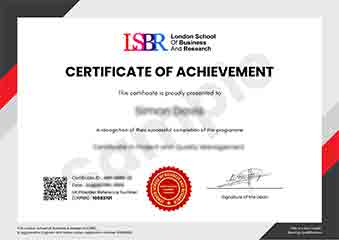
Sample Certificate
Preview the certificate you'll receive upon successful completion of this program.
Get Course Info
Receive the full course guide, pricing details, and enrolment instructions directly in your inbox.
Check your inbox!
Course details have been sent to your email.
Get Your Employer to Sponsor This Programme
Many employers offer professional development budgets. We make it easy for your company to invest in your growth with corporate invoicing and bulk enrolment options.
Email Template for Your Manager
Dear [Manager's Name],
I would like to request sponsorship for the Undergraduate Certificate in Advanced Techniques in Gene Editing for Skin Disorders programme offered by LSBR London - Executive Education.
The programme costs $99 (one-time) and can be completed in 3-4 weeks alongside my regular duties.
Key benefits to our team:
- Immediately applicable skills
- Globally recognised certificate
- Corporate invoice available
Best regards,
[Your Name]
What People Say About Us
Hear from our students about their experience with the Undergraduate Certificate in Advanced Techniques in Gene Editing for Skin Disorders at LSBR London - Executive Education.
James Thompson
United Kingdom"The course content was incredibly comprehensive, covering the latest advancements in gene editing techniques specifically tailored for skin disorders, which has significantly enhanced my understanding of the field. The practical skills I gained, such as designing CRISPR experiments and analyzing genetic data, have made me more confident in my ability to contribute effectively to research projects and have opened up new career opportunities in biotechnology."
Zoe Williams
Australia"This course has equipped me with cutting-edge skills in gene editing techniques specifically tailored to skin disorders, making me highly competitive in the biotech industry. The practical applications I learned have already opened doors to advanced research opportunities, significantly boosting my career prospects."
Isabella Dubois
Canada"The course structure was exceptionally well-organized, with each module building logically on the previous one, which made complex topics in gene editing accessible and engaging. The comprehensive content not only deepened my understanding of advanced techniques but also highlighted their real-world applications in treating skin disorders, significantly enhancing my professional growth and career prospects."
Your Path to Certification
Four simple steps from enrolment to your globally recognised certificate
Enrol Online
Complete your enrolment in under 2 minutes with secure checkout
Start Learning
Get instant access to all course materials and start at your own pace
Complete Modules
Work through the curriculum with expert support available throughout
Get Certified
Receive your LSBR London certificate recognised across 180+ countries
LSBR London by the Numbers
Join a global community of professionals advancing their careers
Students Enrolled
Countries Represented
Average Rating
Career Progression
Join Thousands Who Transformed Their Careers
Our graduates consistently report measurable career growth and professional advancement after completing their programmes.
Still deciding?
Join 23,000+ professionals who advanced their careers. Enroll today and start learning immediately.
Enroll NowSecure payment • Instant access • Certificate included