
Undergraduate Certificate in Dynamic System Modeling with Vectors
Gain skills in dynamic system modeling using vectors for analysis and prediction in engineering and science.
Undergraduate Certificate in Dynamic System Modeling with Vectors
Programme Overview
The Undergraduate Certificate in Dynamic System Modeling with Vectors is designed to equip students with advanced mathematical and computational skills in the field of dynamic system modeling. This program is ideal for students with a background in mathematics, engineering, or physics, as well as professionals seeking to enhance their skills in system analysis and modeling. The curriculum integrates theoretical knowledge with practical applications, focusing on the use of vector calculus and differential equations to model and analyze dynamic systems.
Key skills and knowledge developed through this program include proficiency in vector calculus, linear algebra, and differential equations, enabling learners to model complex systems and predict their behavior under various conditions. Students will also gain expertise in using vector-based software tools for data analysis and simulation, which are essential for real-world applications in engineering, physics, and data science. The program emphasizes problem-solving and critical thinking, preparing learners to tackle complex modeling challenges in their respective fields.
Upon completion, graduates will be well-prepared to enter careers in engineering, physics, data science, and related fields, where they can apply their modeling skills to design, analyze, and optimize dynamic systems. Common career paths include roles such as systems engineer, data analyst, research scientist, and operations researcher, where the ability to model and understand dynamic systems is highly valued.
What You'll Learn
The Undergraduate Certificate in Dynamic System Modeling with Vectors is a comprehensive program designed for students eager to master the art of modeling complex systems. This program equips you with advanced skills in vector calculus, differential equations, and computer modeling, enabling you to analyze and predict the behavior of dynamic systems in various fields. Key topics include the application of vector algebra, solving systems of differential equations, and using computational tools for modeling.
Through hands-on projects and real-world case studies, you will learn to apply these skills in diverse areas such as environmental science, economics, and engineering. For instance, you might model the spread of diseases in a population or optimize traffic flow in urban areas. This program also emphasizes the integration of theoretical knowledge with practical problem-solving, enhancing your ability to contribute to research and development in your chosen field.
Graduates of this program are well-prepared for a variety of career opportunities, including roles in data analysis, systems engineering, and research. Many find fulfilling positions in industries like aerospace, finance, and technology, where dynamic system modeling is crucial. The program’s focus on both theoretical understanding and practical application ensures that you are not only knowledgeable but also capable of applying your skills in real-world settings, making you a valuable asset in any field that requires advanced modeling expertise.
Programme Highlights
Industry-Aligned Curriculum
Developed with industry leaders for job-ready skills
Globally Recognised Certificate
Recognised by employers across 180+ countries
Flexible Online Learning
Study at your own pace with lifetime access
Instant Access
Start learning immediately, no application process
Constantly Updated Content
Latest industry trends and best practices
Career Advancement
87% report measurable career progression within 6 months
Topics Covered
- Vector Algebra: Introduces the fundamental operations and properties of vectors.: Linear Transformations: Explores transformations in vector spaces and their applications.
- Differential Equations: Covers first and second-order differential equations and solutions.: System Dynamics: Analyzes the behavior of dynamic systems over time.
- Numerical Methods: Discusses computational techniques for solving dynamic systems.: Case Studies: Applies modeling techniques to real-world dynamic systems.
Everything Included in Your Enrolment
Here is what you get when you enrol with LSBR London
Key Facts
Audience: Students, professionals in STEM fields
Prerequisites: High school math, basic algebra
Outcomes: Proficient in vector calculus, system modeling skills
Ready to advance your career?
Join thousands of professionals who have transformed their careers with LSBR London. Enrol today and start learning immediately.
Why This Course
Enhanced Career Versatility: An undergraduate certificate in Dynamic System Modeling with Vectors equips professionals with a robust foundation in mathematical modeling and vector analysis. This skill set is highly valued across various industries, including engineering, physics, and data science. For instance, in the aerospace industry, professionals can model aircraft dynamics, optimizing performance and safety. Similarly, in finance, this knowledge can be applied to model market dynamics and predict economic trends.
Advanced Problem-Solving Skills: The coursework focuses on dynamic systems, which involves analyzing and predicting the behavior of systems over time. This training enhances analytical and problem-solving abilities, enabling professionals to tackle complex real-world challenges. For example, in healthcare, professionals can model the spread of infectious diseases, helping predict and mitigate risks.
Technical Proficiency in Vector Analysis: The certificate program includes extensive training in vector analysis, a fundamental tool in many scientific and engineering disciplines. This proficiency allows professionals to analyze and manipulate data effectively, which is crucial in fields like computer graphics and robotics. For instance, in robotics, understanding vector analysis is essential for designing algorithms that control robot movements and interactions with the environment.
Interdisciplinary Application: The skills gained are highly transferable across multiple disciplines. Dynamic system modeling and vector analysis can be applied in environmental science to model climate change, in civil engineering to assess structural integrity, and in social sciences to analyze population dynamics. This interdisciplinary approach broadens career opportunities and fosters innovation by integrating diverse areas
"This programme gave me the confidence and credentials to secure a senior role. Highly recommend LSBR London."
— Sarah M., United Kingdom
Course Brochure
Download our comprehensive course brochure with all details
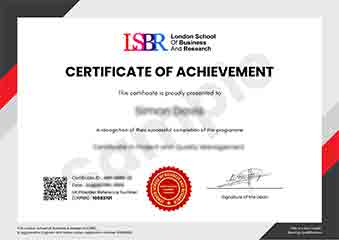
Sample Certificate
Preview the certificate you'll receive upon successful completion of this program.
Get Course Info
Receive the full course guide, pricing details, and enrolment instructions directly in your inbox.
Check your inbox!
Course details have been sent to your email.
Get Your Employer to Sponsor This Programme
Many employers offer professional development budgets. We make it easy for your company to invest in your growth with corporate invoicing and bulk enrolment options.
Email Template for Your Manager
Dear [Manager's Name],
I would like to request sponsorship for the Undergraduate Certificate in Dynamic System Modeling with Vectors programme offered by LSBR London - Executive Education.
The programme costs $99 (one-time) and can be completed in 3-4 weeks alongside my regular duties.
Key benefits to our team:
- Immediately applicable skills
- Globally recognised certificate
- Corporate invoice available
Best regards,
[Your Name]
What People Say About Us
Hear from our students about their experience with the Undergraduate Certificate in Dynamic System Modeling with Vectors at LSBR London - Executive Education.
Sophie Brown
United Kingdom"The course provided high-quality material that not only deepened my understanding of dynamic system modeling but also equipped me with practical skills in vector analysis, which I find incredibly valuable for my career in engineering."
Emma Tremblay
Canada"This course has been incredibly valuable, equipping me with the skills to model complex systems using vectors, which is directly applicable in my field of engineering. It has opened up new opportunities for me to take on more challenging projects and has significantly enhanced my career prospects."
Isabella Dubois
Canada"The course structure is well-organized, providing a comprehensive foundation in dynamic system modeling with vectors that seamlessly bridges theoretical concepts with practical applications, enhancing my ability to analyze and solve real-world problems effectively."
Your Path to Certification
Four simple steps from enrolment to your globally recognised certificate
Enrol Online
Complete your enrolment in under 2 minutes with secure checkout
Start Learning
Get instant access to all course materials and start at your own pace
Complete Modules
Work through the curriculum with expert support available throughout
Get Certified
Receive your LSBR London certificate recognised across 180+ countries
LSBR London by the Numbers
Join a global community of professionals advancing their careers
Students Enrolled
Countries Represented
Average Rating
Career Progression
Join Thousands Who Transformed Their Careers
Our graduates consistently report measurable career growth and professional advancement after completing their programmes.
Still deciding?
Join 23,000+ professionals who advanced their careers. Enroll today and start learning immediately.
Enroll NowSecure payment • Instant access • Certificate included