
Undergraduate Certificate in Gene Amplification for Next-Generation Sequencing
This certificate equips students with specialized skills in gene amplification techniques, enhancing their proficiency in next-generation sequencing for advanced research and diagnostic applications.
Undergraduate Certificate in Gene Amplification for Next-Generation Sequencing
Programme Overview
This course is for undergraduate students and professionals in biology, biotechnology, and related fields. It caters to those eager to dive into gene amplification and next-generation sequencing. First, you'll gain a solid understanding of gene amplification techniques.
Next, you'll learn to apply these techniques in next-generation sequencing. You'll actively engage with hands-on labs and real-world case studies. You'll develop practical skills in experimental design and data analysis
What You'll Learn
Dive into the cutting-edge world of genomics with our Undergraduate Certificate in Gene Amplification for Next-Generation Sequencing. Firstly, you'll gain hands-on experience with the latest sequencing technologies. Additionally, you'll learn to amplify and analyze genes, unlocking the secrets of DNA. Our expert instructors guide you through real-world applications. First, you'll master techniques like PCR and qPCR. Next, you'll dive into data analysis, interpreting genetic information with confidence. Moreover, you'll be equipped for careers in biotechnology, research, and diagnostics. This program stands out with its state-of-the-art facilities and industry partnerships. Finally, join us and become a pioneer in genetic discovery! Enroll now and take the first step towards an exciting career in genomics!
Programme Highlights
Industry-Aligned Curriculum
Developed with industry leaders to ensure practical, job-ready skills valued by employers worldwide.
Expert Faculty
Learn from experienced professionals with real-world expertise in your chosen field.
Flexible Learning
Study at your own pace, from anywhere in the world, with our flexible online platform.
Industry Focus
Practical, real-world knowledge designed to meet the demands of today's competitive job market.
Latest Curriculum
Stay ahead with constantly updated content reflecting the latest industry trends and best practices.
Career Advancement
Unlock new opportunities with a globally recognized qualification respected by employers.
Topics Covered
- Introduction to Molecular Biology: Understanding the fundamentals of molecular biology and genetic principles.
- Principles of PCR: Learning the theory and practice of polymerase chain reaction (PCR).
- Next-Generation Sequencing Technologies: Exploring the latest technologies and applications in next-generation sequencing.
- Gene Amplification Techniques: Analyzing various methods for amplifying specific genetic sequences.
- Data Analysis in Genetic Sequencing: Interpreting and analyzing data generated from genetic sequencing experiments.
- Ethical and Safety Considerations: Examining the ethical implications and safety protocols in genetic research.
Key Facts
#### Audience
Who will benefit? Scientists, researchers, and technicians. Additionally, students in life sciences and biotechnology.
Who should enroll? Individuals seeking to advance their skills in gene amplification and sequencing techniques.
#### Prerequisites
First, have a bachelor’s degree in a related field.
Next, possess basic knowledge of molecular biology and genetics.
Finally, be familiar with laboratory techniques and protocols.
#### Outcomes
Gain hands-on experience in gene amplification methods. Firstly, learn PCR, qPCR, and other amplification techniques.
Master next-generation sequencing technologies. Secondly, understand data analysis and interpretation.
Apply knowledge in real-world research settings. Lastly, develop skills for further study or job opportunities.
Why This Course
Learners should pick the 'Undergraduate Certificate in Gene Amplification for Next-Generation Sequencing' for several compelling reasons. Firstly, this certificate equips students with in-demand skills. Students will learn to amplify and sequence genes. This prepares them for careers in biotechnology. Moreover, the program leverages cutting-edge technology. Therefore, students will gain hands-on experience with next-generation sequencing. Lastly, the course fosters a supportive learning environment. Students will connect with peers and industry experts. In turn, this builds a strong professional network.
Programme Title
Undergraduate Certificate in Gene Amplification for Next-Generation Sequencing
Course Brochure
Download our comprehensive course brochure with all details
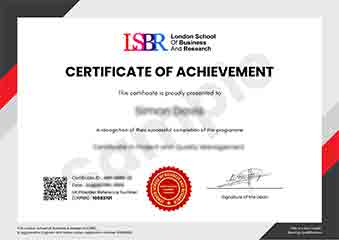
Sample Certificate
Preview the certificate you'll receive upon successful completion of this program.
Pay as an Employer
Request an invoice for your company to pay for this course. Perfect for corporate training and professional development.
What People Say About Us
Hear from our students about their experience with the Undergraduate Certificate in Gene Amplification for Next-Generation Sequencing at LSBR London - Executive Education.
Sophie Brown
United Kingdom"The course material was incredibly comprehensive, covering everything from basic principles to advanced techniques in gene amplification. I gained practical skills that are directly applicable to my lab work, and the knowledge I acquired has significantly boosted my confidence in handling next-generation sequencing projects."
Emma Tremblay
Canada"The Undergraduate Certificate in Gene Amplification for Next-Generation Sequencing has been incredibly valuable for my career, providing me with industry-relevant skills that I can directly apply in my lab work. The course has significantly enhanced my ability to design and optimize gene amplification protocols, making me a more confident and competent professional in the field of genomics."
Tyler Johnson
United States"The course structure was exceptionally well-organized, with each module building seamlessly on the previous one, which made complex topics in gene amplification accessible. The comprehensive content not only covered theoretical aspects but also delved into real-world applications, significantly enhancing my understanding and professional growth in the field of next-generation sequencing."