
Undergraduate Certificate in Medical Anthropology in Disaster and Humanitarian Settings
Gain practical skills and cultural insights to effectively respond to disasters and humanitarian crises.
Undergraduate Certificate in Medical Anthropology in Disaster and Humanitarian Settings
Programme Overview
The Undergraduate Certificate in Medical Anthropology in Disaster and Humanitarian Settings is for undergraduate students and professionals seeking to understand health and humanitarian issues. First, you will explore cultural perspectives on health, illness, and healing. Next, you will dive into disaster management and humanitarian aid, focusing on real-world applications. Furthermore, you will gain practical skills in research, fieldwork, and program design. You'll learn how to navigate complex situations, collaborate with diverse communities, and make a difference in crisis situations.
Moreover, this certificate equips you with the tools to analyze health systems and policies. Then, you will assess the impact of disasters on communities and health systems. Finally, you will design and evaluate programs that address health needs in disaster and humanitarian settings.
What You'll Learn
Dive into the dynamic field of medical anthropology with our Undergraduate Certificate in Medical Anthropology in Disaster and Humanitarian Settings. First, you'll explore the intersection of culture, health, and catastrophe. Next, gain practical skills to assess and respond to health crises. Moreover, learn from experts who have worked in real-world scenarios. Furthermore, understand the unique challenges faced by vulnerable populations.
This certificate equips you with tools to make a tangible difference. Consequently, graduates can pursue careers in NGOs, international health organizations, and public health sectors. Also, gain a competitive edge in fields such as global health, emergency management, and social work. Finally, join a community committed to improving lives in the most challenging environments. Enroll now and become a champion of health and resilience.
Programme Highlights
Industry-Aligned Curriculum
Developed with industry leaders for job-ready skills
Globally Recognised Certificate
Recognised by employers across 180+ countries
Flexible Online Learning
Study at your own pace with lifetime access
Instant Access
Start learning immediately, no application process
Constantly Updated Content
Latest industry trends and best practices
Career Advancement
87% report measurable career progression within 6 months
Topics Covered
- Introduction to Medical Anthropology: Explores the foundations of medical anthropology and its relevance to healthcare and disasters.
- Anthropology of Disaster: Analyzes cultural responses and community resilience in the face of disasters.
- Humanitarian Aid and Ethics: Examines ethical considerations and principles guiding humanitarian interventions.
- Health Systems in Crises: Investigates the impacts of disasters on healthcare systems and their responses.
- Field Methods in Disaster Settings: Teaches practical research methods for conducting fieldwork in disaster and humanitarian contexts.
- Global Health and Disaster Management: Explores the intersection of global health policies and disaster management strategies.
Everything Included in Your Enrolment
Here is what you get when you enrol with LSBR London
Key Facts
Audience
This undergraduate certificate is for students and professionals aiming to understand the human impact of disasters. Additionally, it is ideal for those interested in humanitarian work. We welcome applicants from diverse backgrounds and experiences.
Prerequisites
Firstly, applicants must have a high school diploma. Next, a solid grasp of basic social sciences is also required. Meanwhile, no prior anthropology or disaster studies background is necessary. However, applicants should have a strong command of English. Furthermore, applicants will need access to a computer and the internet.
Outcomes
Upon completion, graduates will grasp the basics of medical anthropology. Furthermore, they will evaluate the impact of disasters on communities. In addition, they will gain valuable skills in humanitarian response and intervention. Ultimately, graduates will be prepared to actively contribute to disaster preparedness and response efforts.
Ready to advance your career?
Join thousands of professionals who have transformed their careers with LSBR London. Enrol today and start learning immediately.
Why This Course
Learners should pick 'Undergraduate Certificate in Medical Anthropology in Disaster and Humanitarian Settings' for several reasons. First, this certificate equips you with a deep understanding of cultural and social factors influencing health. Meanwhile, you will gain practical skills for addressing health challenges in crisis situations. Moreover, this program actively involves fieldwork and real-world case studies. Thus, prepare to engage in hands-on learning that applies theoretical knowledge. As a result, you'll be ready to make a tangible difference in disaster-stricken and humanitarian settings.
3-4 Weeks
Study at your own pace
"This programme gave me the confidence and credentials to secure a senior role. Highly recommend LSBR London."
— Sarah M., United Kingdom
Course Brochure
Download our comprehensive course brochure with all details
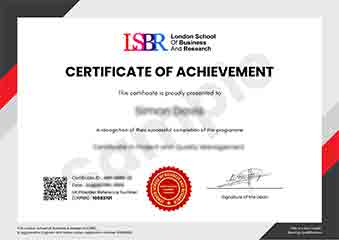
Sample Certificate
Preview the certificate you'll receive upon successful completion of this program.
Get Course Info
Receive the full course guide, pricing details, and enrolment instructions directly in your inbox.
Check your inbox!
Course details have been sent to your email.
Get Your Employer to Sponsor This Programme
Many employers offer professional development budgets. We make it easy for your company to invest in your growth with corporate invoicing and bulk enrolment options.
Email Template for Your Manager
Dear [Manager's Name],
I would like to request sponsorship for the Undergraduate Certificate in Medical Anthropology in Disaster and Humanitarian Settings programme offered by LSBR London - Executive Education.
The programme costs $99 (one-time) and can be completed in 3-4 weeks alongside my regular duties.
Key benefits to our team:
- Immediately applicable skills
- Globally recognised certificate
- Corporate invoice available
Best regards,
[Your Name]
Your Path to Certification
Four simple steps from enrolment to your globally recognised certificate
Enrol Online
Complete your enrolment in under 2 minutes with secure checkout
Start Learning
Get instant access to all course materials and start at your own pace
Complete Modules
Work through the curriculum with expert support available throughout
Get Certified
Receive your LSBR London certificate recognised across 180+ countries
LSBR London by the Numbers
Join a global community of professionals advancing their careers
Students Enrolled
Countries Represented
Average Rating
Career Progression
What People Say About Us
Hear from our students about their experience with the Undergraduate Certificate in Medical Anthropology in Disaster and Humanitarian Settings at LSBR London - Executive Education.
Sophie Brown
United Kingdom"The course content was incredibly comprehensive, covering a wide range of topics from cultural perspectives on health to the logistics of humanitarian aid. I gained practical skills in conducting field research and analyzing data, which I believe will be invaluable in my future career in public health."
Arjun Patel
India"This certificate has been instrumental in honing my skills in understanding cultural nuances in disaster response, making me more effective in my role as a humanitarian aid worker. The practical applications of medical anthropology have significantly enhanced my ability to navigate complex humanitarian settings, leading to better career opportunities and a more profound impact in the field."
Oliver Davies
United Kingdom"The course structure was exceptionally well-organized, with modules that flowed seamlessly from one topic to the next, making complex concepts in medical anthropology accessible and engaging. The comprehensive content not only deepened my understanding of disaster and humanitarian settings but also provided practical insights that I can directly apply to my future career in global health."