
Undergraduate Certificate in Microbe Plant Symbiosis Dynamics
Gain expertise in microbe-plant symbiosis dynamics, earning an Undergraduate Certificate with knowledge in microbial interactions and plant health.
Undergraduate Certificate in Microbe Plant Symbiosis Dynamics
Programme Summary
The Undergraduate Certificate in Microbe Plant Symbiosis Dynamics is an intensive, interdisciplinary programme designed for students with a foundational interest in biology, ecology, or environmental sciences, aiming to deepen their understanding of the intricate relationships between microorganisms and plants. This programme delves into the molecular, physiological, and ecological aspects of symbiotic interactions, including mycorrhizal associations, rhizobia interactions, and endophyte relationships, and their significance in ecosystem health and global plant productivity.
Students in this programme will develop a robust set of knowledge and skills, including the ability to analyze and interpret complex data from molecular and ecological studies, understand the genetic mechanisms underlying symbiotic relationships, and apply this knowledge to real-world problems. They will also learn to conduct field and laboratory research, analyze experimental data, and communicate scientific findings effectively through written and oral presentations.
This programme has a significant impact on career prospects, preparing graduates for roles in research institutions, governmental agencies, environmental consulting firms, and agricultural biotechnology companies. Graduates will be well-equipped to contribute to advancements in sustainable agriculture, bioremediation, and conservation biology, as well as to pursue further studies in advanced degrees such as a Master’s or Ph.D. in microbiology, plant science, or related fields.
Learning Outcomes
Explore the intricate relationships between microorganisms and plants in the 'Undergraduate Certificate in Microbe Plant Symbiosis Dynamics.' This program equips you with a deep understanding of microbial ecology, plant biology, and symbiotic interactions, providing a solid foundation for advanced research and practical applications. Key topics include the physiology and genetics of microbial and plant interactions, the role of symbiosis in nutrient cycling, and environmental impacts on microbial communities.
You'll learn how to conduct laboratory experiments and field studies to analyze microbial diversity and its effects on plant health. This knowledge is crucial for developing sustainable agricultural practices, enhancing crop resilience, and mitigating environmental challenges such as soil degradation and climate change. Graduates are well-prepared to work in research institutions, government agencies, and private sector companies focused on biotechnology, environmental conservation, and agricultural innovation.
This certificate not only fosters scientific curiosity and critical thinking but also enhances your career prospects in academia, industry, and public service. Whether you aim to pursue a doctoral degree, shape agricultural policies, or innovate in biotech, this program provides the essential skills and knowledge to thrive in a rapidly evolving field.
Programme Features
Industry-Aligned Curriculum
Developed with industry leaders for job-ready skills
Globally Recognised Certificate
Recognised by employers across 180+ countries
Flexible Online Learning
Study at your own pace with lifetime access
Instant Access
Start learning immediately, no application process
Constantly Updated Content
Latest industry trends and best practices
Career Advancement
87% report measurable career progression within 6 months
Course Modules
- Introduction to Microbes and Plants: Introduces the basic characteristics, roles, and interactions between microbes and plants.: Symbiotic Relationships: Explores various types of symbiotic relationships and their importance in plant health and ecosystem function.
- Molecular Basis of Symbiosis: Discusses the molecular mechanisms underlying symbiotic interactions, including gene regulation and signaling pathways.: Ecological Impacts of Symbiosis: Analyzes the ecological effects of microbial-plant symbioses, including nutrient cycling and biodiversity.
- Case Studies in Symbiosis: Examines real-world examples of successful and problematic symbiotic relationships in different plant and microbial systems.: Conservation Strategies for Symbiotic Systems: Covers strategies for conserving and managing symbiotic relationships to support sustainable agriculture and ecosystem health.
What's Included in This Programme
Here is what you get when you enrol with LSBR London
Programme Facts
Audience: Undergraduate students in biology, botany
Prerequisites: Completion of introductory biology and chemistry
Outcomes: Understand symbiotic relationships, analyze microbial dynamics
Ready to advance your career?
Join thousands of professionals who have transformed their careers with LSBR London. Enrol today and start learning immediately.
Why Study This Programme
Enhanced Specialization in Microbial and Plant Science: An Undergraduate Certificate in Microbe Plant Symbiosis Dynamics provides professionals with a deep understanding of the complex interactions between microorganisms and plants. This specialization can be particularly valuable in fields such as agriculture, where understanding these symbiotic relationships can lead to more sustainable and productive crop management practices.
Skill Development in Research and Analysis: The program equips students with advanced skills in research methodologies, data analysis, and scientific inquiry. These skills are crucial for careers in academia, agricultural research, and biotechnology, where professionals need to analyze data, develop new hypotheses, and contribute to scientific knowledge.
Career Opportunities in Diverse Sectors: Graduates can pursue careers in various sectors, including academia, government agencies, and private industry. For example, roles in environmental consulting, biotechnology firms, and agricultural research organizations often require a strong background in microbe-plant dynamics. The certificate also opens doors to further education, such as graduate programs, where specialized knowledge can be further developed.
Innovation in Sustainable Practices: Knowledge gained from this certificate can drive innovation in sustainable agricultural practices. Understanding symbiotic relationships can lead to the development of new biofertilizers, pest control methods, and crop improvement strategies that reduce reliance on chemical inputs, thereby contributing to environmental sustainability and food security.
"This programme gave me the confidence and credentials to secure a senior role. Highly recommend LSBR London."
— Sarah M., United Kingdom
Course Brochure
Download our comprehensive course brochure with all details
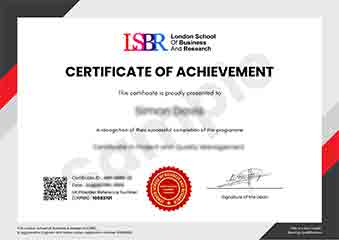
Sample Certificate
Preview the certificate you'll receive upon successful completion of this program.
Get Course Info
Receive the full course guide, pricing details, and enrolment instructions directly in your inbox.
Check your inbox!
Course details have been sent to your email.
Get Your Employer to Sponsor This Programme
Many employers offer professional development budgets. We make it easy for your company to invest in your growth with corporate invoicing and bulk enrolment options.
Email Template for Your Manager
Dear [Manager's Name],
I would like to request sponsorship for the Undergraduate Certificate in Microbe Plant Symbiosis Dynamics programme offered by LSBR London - Executive Education.
The programme costs $99 (one-time) and can be completed in 3-4 weeks alongside my regular duties.
Key benefits to our team:
- Immediately applicable skills
- Globally recognised certificate
- Corporate invoice available
Best regards,
[Your Name]
What Our Students Say
Hear from our students about their experience with the Undergraduate Certificate in Microbe Plant Symbiosis Dynamics at LSBR London - Executive Education.
James Thompson
United Kingdom"The course content is incredibly thorough, covering a wide range of microbial interactions with plants, which has significantly enhanced my understanding of ecological dynamics. Gaining hands-on experience in fieldwork and lab techniques has been invaluable, providing practical skills that are directly applicable to research and potential career paths in environmental science."
Kai Wen Ng
Singapore"This course has been instrumental in bridging the gap between theoretical knowledge and practical applications in the field of microbiology and plant science. It has significantly enhanced my understanding of microbial plant symbiosis, making me more competitive in the biotech industry and opening up new career opportunities in research and development."
James Thompson
United Kingdom"The course structure is well-organized, providing a clear pathway from foundational concepts to advanced topics in microbe-plant symbiosis dynamics, which has greatly enhanced my understanding of the subject and its real-world applications in agriculture and ecology."
Your Certification Journey
Four simple steps from enrolment to your globally recognised certificate
Enrol Online
Complete your enrolment in under 2 minutes with secure checkout
Start Learning
Get instant access to all course materials and start at your own pace
Complete Modules
Work through the curriculum with expert support available throughout
Get Certified
Receive your LSBR London certificate recognised across 180+ countries
LSBR London by the Numbers
Join a global community of professionals advancing their careers
Students Enrolled
Countries Represented
Average Rating
Career Progression