
Undergraduate Certificate in Nonlinear Signal Processing Methods
This certificate equips students with advanced skills in nonlinear signal processing, enhancing data analysis and problem-solving capabilities in engineering and technology.
Undergraduate Certificate in Nonlinear Signal Processing Methods
Programme Overview
The Undergraduate Certificate in Nonlinear Signal Processing Methods is designed for students with a background in mathematics, engineering, or a related field who are eager to deepen their understanding of advanced signal processing techniques. This program delves into the core principles and methodologies of nonlinear signal processing, including time-frequency analysis, adaptive filtering, and machine learning algorithms tailored for signal processing. It provides a comprehensive framework for analyzing and processing complex, nonlinear signals, which are prevalent in various applications such as telecommunications, biomedical engineering, and financial market analysis.
Learners will develop a robust set of skills in mathematical modeling, algorithm design, and computational techniques essential for analyzing nonlinear signals. The curriculum emphasizes practical applications and hands-on experience through projects and case studies that involve real-world data analysis, enabling students to apply theoretical knowledge to solve intricate problems in signal processing. Additionally, the program equips students with the ability to design and implement advanced signal processing systems, write efficient code, and conduct rigorous data analysis.
This program significantly enhances career opportunities in a range of industries, including telecommunications, aerospace, biotechnology, and finance. Graduates will be well-prepared to work as signal processing engineers, data scientists, or researchers, contributing to the development of innovative technologies and solutions. The skills acquired through this program are highly valued in the job market, as they are crucial for addressing the growing demand for sophisticated signal processing techniques in modern technological environments.
What You'll Learn
The Undergraduate Certificate in Nonlinear Signal Processing Methods equips students with advanced skills in analyzing and processing complex signals. This program delves into cutting-edge techniques for data analysis, essential for addressing real-world challenges in telecommunications, biomedical engineering, and beyond. Key topics include nonlinear dynamics, chaos theory, and advanced filtering techniques, providing a solid foundation in both theoretical principles and practical applications.
Students learn to apply these methods through hands-on projects, utilizing state-of-the-art software tools and real-world data sets. The program emphasizes the development of problem-solving skills and the ability to innovate in signal processing, preparing graduates for careers in research, industry, and academia. Graduates are well-prepared to work on developing algorithms for signal detection, enhancing communication systems, and advancing medical imaging technologies.
Upon completion, students can pursue careers as signal processing engineers, data analysts, or researchers, contributing to advancements in fields like artificial intelligence, cybersecurity, and renewable energy. The program also lays a strong groundwork for those considering further studies in engineering, mathematics, or related disciplines at the graduate level.
Programme Highlights
Industry-Aligned Curriculum
Developed with industry leaders for job-ready skills
Globally Recognised Certificate
Recognised by employers across 180+ countries
Flexible Online Learning
Study at your own pace with lifetime access
Instant Access
Start learning immediately, no application process
Constantly Updated Content
Latest industry trends and best practices
Career Advancement
87% report measurable career progression within 6 months
Topics Covered
- Signal Representation: Introduces various ways signals are mathematically represented and analyzed.: Frequency Domain Analysis: Focuses on techniques for analyzing signals in the frequency domain.
- Time-Frequency Analysis: Covers methods for analyzing non-stationary signals.: Nonlinear Dynamical Systems: Examines the behavior of nonlinear systems and their applications.
- Adaptive Filtering: Discusses algorithms for adaptive filtering and their applications.: Machine Learning in Signal Processing: Explores the use of machine learning techniques in signal processing.
Everything Included in Your Enrolment
Here is what you get when you enrol with LSBR London
Key Facts
Audience: Undergraduate students, professionals seeking certification
Prerequisites: Basic math, signal processing knowledge
Outcomes: Proficient in nonlinear signal analysis, practical processing skills
Ready to advance your career?
Join thousands of professionals who have transformed their careers with LSBR London. Enrol today and start learning immediately.
Why This Course
Enhanced Career Opportunities: Acquiring an Undergraduate Certificate in Nonlinear Signal Processing Methods equips professionals with specialized skills in handling complex data signals. This skill set is highly valuable in fields like telecommunications, medical imaging, and aerospace engineering, where processing non-linear signals is crucial for improving product performance and efficiency.
Advanced Problem-Solving Capabilities: The curriculum focuses on advanced mathematical models and algorithms used in signal processing. These skills not only enhance problem-solving abilities but also enable professionals to innovate and develop new methodologies to address complex challenges in their respective industries.
Industry-Relevant Expertise: The certificate program is designed in collaboration with industry experts, ensuring that the curriculum aligns with current and future industry needs. This alignment helps professionals stay abreast of the latest technologies and trends, making them more competitive in the job market and better equipped to lead cutting-edge projects.
Career Advancement: By mastering nonlinear signal processing, professionals can advance to more senior roles that require deep technical expertise. This could lead to positions such as senior data analysts, signal processing engineers, or technical leads in research and development departments. The certificate can serve as a catalyst for upward mobility within their organizations or for transitioning to new, more advanced roles.
"This programme gave me the confidence and credentials to secure a senior role. Highly recommend LSBR London."
— Sarah M., United Kingdom
Course Brochure
Download our comprehensive course brochure with all details
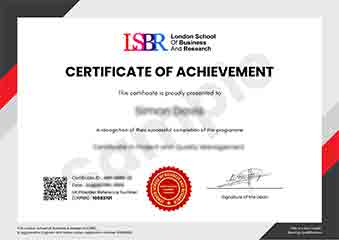
Sample Certificate
Preview the certificate you'll receive upon successful completion of this program.
Get Course Info
Receive the full course guide, pricing details, and enrolment instructions directly in your inbox.
Check your inbox!
Course details have been sent to your email.
Get Your Employer to Sponsor This Programme
Many employers offer professional development budgets. We make it easy for your company to invest in your growth with corporate invoicing and bulk enrolment options.
Email Template for Your Manager
Dear [Manager's Name],
I would like to request sponsorship for the Undergraduate Certificate in Nonlinear Signal Processing Methods programme offered by LSBR London - Executive Education.
The programme costs $99 (one-time) and can be completed in 3-4 weeks alongside my regular duties.
Key benefits to our team:
- Immediately applicable skills
- Globally recognised certificate
- Corporate invoice available
Best regards,
[Your Name]
What People Say About Us
Hear from our students about their experience with the Undergraduate Certificate in Nonlinear Signal Processing Methods at LSBR London - Executive Education.
Charlotte Williams
United Kingdom"The course content is comprehensive and well-structured, providing a solid foundation in nonlinear signal processing methods that are highly relevant to real-world applications. Gaining hands-on experience with these techniques has significantly enhanced my ability to analyze complex signals, which is incredibly beneficial for my career in telecommunications."
Rahul Singh
India"This course has been instrumental in bridging the gap between theoretical knowledge and practical applications in signal processing. It has significantly enhanced my ability to analyze complex signals, making me more competitive in the job market and opening up new career opportunities in tech and engineering sectors."
Ahmad Rahman
Malaysia"The course structure is well-organized, providing a comprehensive foundation in nonlinear signal processing that seamlessly bridges theoretical concepts with practical applications, significantly enhancing my understanding and preparing me for real-world challenges."
Your Path to Certification
Four simple steps from enrolment to your globally recognised certificate
Enrol Online
Complete your enrolment in under 2 minutes with secure checkout
Start Learning
Get instant access to all course materials and start at your own pace
Complete Modules
Work through the curriculum with expert support available throughout
Get Certified
Receive your LSBR London certificate recognised across 180+ countries
LSBR London by the Numbers
Join a global community of professionals advancing their careers
Students Enrolled
Countries Represented
Average Rating
Career Progression
Join Thousands Who Transformed Their Careers
Our graduates consistently report measurable career growth and professional advancement after completing their programmes.
Still deciding?
Join 23,000+ professionals who advanced their careers. Enroll today and start learning immediately.
Enroll NowSecure payment • Instant access • Certificate included