
Undergraduate Certificate in Understanding Health Inequities Through Anthropology
Gain a deep understanding of health disparities and their cultural, social, and political determinants to drive meaningful change.
Undergraduate Certificate in Understanding Health Inequities Through Anthropology
Programme Summary
This course is meant for anyone eager to understand why health varies across different groups. Students will start by exploring key concepts in anthropology. Next, they will learn how these concepts apply to health disparities. Meanwhile, students will develop skills in critical thinking and cultural sensitivity.
First, students will gain a solid grounding in anthropology. Then, they will actively apply this knowledge to real-world health issues. By the end, students will be better equipped to address health inequities. Thus, they will be able to contribute to creating a more just and healthy world.
Learning Outcomes
Dive into the Undergraduate Certificate in Understanding Health Inequities Through Anthropology. This program equips you with the tools to explore and address health disparities. First, you will gain a deep understanding of how culture, society, and biology intersect. Next, you will learn to apply anthropological methods to real-world health issues. Moreover, you will develop critical thinking skills to analyze health inequities. This program offers flexible online learning. Consequently, this allows you to balance your studies with other commitments.
Upon completion, you will be well-prepared for careers in public health, social work, and policy-making. Additionally, you will have the chance to make a tangible difference in communities. Furthermore, you will gain a unique perspective on health, enhancing your employability. Join us to actively contribute to a healthier, more equitable world.
Programme Features
Industry-Aligned Curriculum
Developed with industry leaders for job-ready skills
Globally Recognised Certificate
Recognised by employers across 180+ countries
Flexible Online Learning
Study at your own pace with lifetime access
Instant Access
Start learning immediately, no application process
Constantly Updated Content
Latest industry trends and best practices
Career Advancement
87% report measurable career progression within 6 months
Course Modules
- Introduction to Medical Anthropology: An overview of key concepts and methods in medical anthropology.
- Cultural Beliefs and Health Practices: Exploring how cultural beliefs influence health behaviors and outcomes.
- Social Determinants of Health: Understanding the impact of social and economic factors on health inequities.
- Global Health and Anthropology: Examining global health issues through an anthropological lens.
- Health Inequities and Marginalized Populations: Investigating health disparities experienced by marginalized communities.
- Research Methods in Medical Anthropology: Practical training in methods for conducting anthropological health research.
What's Included in This Programme
Here is what you get when you enrol with LSBR London
Programme Facts
Audience: Open to all students interested in health and society. Ideal for anyone wishing to make a difference in health disparities.
Prerequisites: None. First-year students welcome. Basic computer skills required for online modules.
Outcomes: Students will gain critical thinking skills. They will understand cultural influences on health. Students will learn to identify and address health inequities. By the end of the course, students will be empowered to advocate for health equity and social justice.
Ready to advance your career?
Join thousands of professionals who have transformed their careers with LSBR London. Enrol today and start learning immediately.
Why Study This Programme
Gain a unique perspective on health. This certificate goes beyond medical facts. It dives deep into how culture, society, and personal experiences shape health. This approach helps you understand health problems in new ways. Understand the wider world and the factors that influence health and well-being.
Learn to make a difference. First, develop critical thinking skills. Then, apply them to real-world health issues. Work on projects that tackle health inequalities. Develop skills that empower you to advocate for change. Stand up for those who face barriers to good health.
Prepare for various careers. This certificate opens many doors. It can be a path to further study in anthropology or public health, for example. Also, it can enhance your current role. Gain skills in communication, research, and cultural understanding. These skills help you work well with diverse people.
"This programme gave me the confidence and credentials to secure a senior role. Highly recommend LSBR London."
— Sarah M., United Kingdom
Course Brochure
Download our comprehensive course brochure with all details
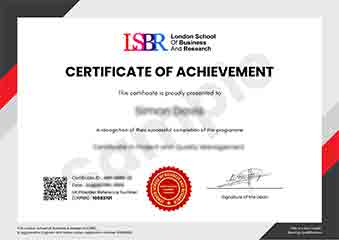
Sample Certificate
Preview the certificate you'll receive upon successful completion of this program.
Get Course Info
Receive the full course guide, pricing details, and enrolment instructions directly in your inbox.
Check your inbox!
Course details have been sent to your email.
Get Your Employer to Sponsor This Programme
Many employers offer professional development budgets. We make it easy for your company to invest in your growth with corporate invoicing and bulk enrolment options.
Email Template for Your Manager
Dear [Manager's Name],
I would like to request sponsorship for the Undergraduate Certificate in Understanding Health Inequities Through Anthropology programme offered by LSBR London - Executive Education.
The programme costs $99 (one-time) and can be completed in 3-4 weeks alongside my regular duties.
Key benefits to our team:
- Immediately applicable skills
- Globally recognised certificate
- Corporate invoice available
Best regards,
[Your Name]
What Our Students Say
Hear from our students about their experience with the Undergraduate Certificate in Understanding Health Inequities Through Anthropology at LSBR London - Executive Education.
James Thompson
United Kingdom"The course material was incredibly comprehensive, covering a wide range of topics that truly deepened my understanding of health inequities from an anthropological perspective. I gained practical skills in analyzing cultural and social factors that influence health outcomes, which I believe will be invaluable in my future career."
Brandon Wilson
United States"This course has been instrumental in equipping me with a deep understanding of health inequities, which has significantly enhanced my ability to apply anthropological insights to real-world public health challenges. The practical skills I've developed have not only made me more competitive in the job market but have also allowed me to contribute more effectively to initiatives aimed at reducing health disparities in my community."
Sophie Brown
United Kingdom"The course structure was exceptionally well-organized, with modules that flowed seamlessly from one topic to the next, making complex concepts in health inequities accessible. The comprehensive content not only deepened my understanding of anthropological perspectives but also provided practical insights that I can directly apply in my future career, enhancing my professional growth."
Your Certification Journey
Four simple steps from enrolment to your globally recognised certificate
Enrol Online
Complete your enrolment in under 2 minutes with secure checkout
Start Learning
Get instant access to all course materials and start at your own pace
Complete Modules
Work through the curriculum with expert support available throughout
Get Certified
Receive your LSBR London certificate recognised across 180+ countries
LSBR London by the Numbers
Join a global community of professionals advancing their careers
Students Enrolled
Countries Represented
Average Rating
Career Progression